

Will Epoxy Flooring Adhere Over Existing Epoxy Flooring?
Epoxy can be applied over any properly prepped substrate flooring. YES! Epoxy flooring can be placed over existing epoxy flooring under certain conditions, which Jersey Epoxy, the epoxy floor installation professionals for 20+ years, will explain in this article.
Epoxy flooring has gained popularity from its once strictly industrial use. Homeowners and commercial businesses love epoxy flooring for its smooth, seamless durability and its many color and design options, which add aesthetic appeal. Epoxy flooring can be installed over stained concrete garage floors, basement floors, backyard patios, and concrete pool decks. Epoxy flooring can be placed over existing tile floors, vinyl, or linoleum floors, and over properly primed and sanded wood floors free of rot or warping.
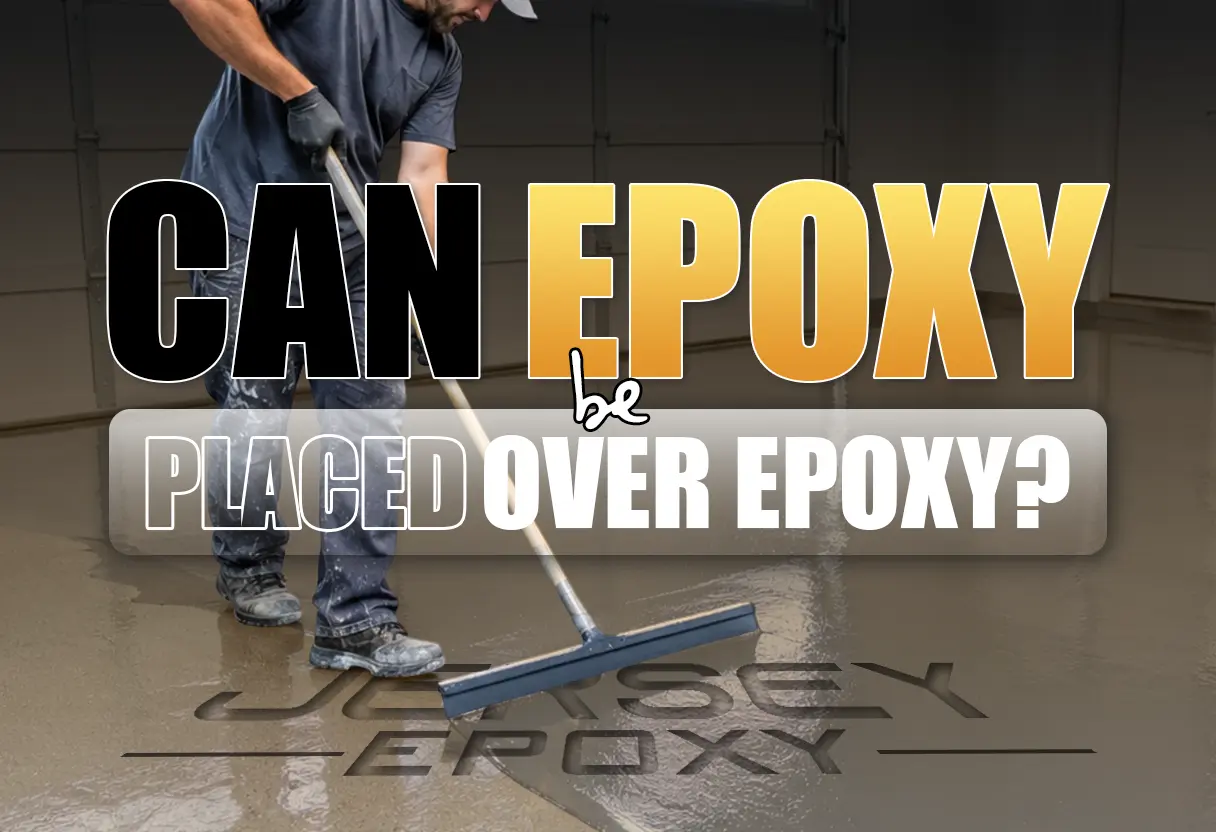
What Is The Process Of Recoating Epoxy Floors?
The scientific description for the durable epoxy flooring material, bringing aesthetic appeal to industrial, retail, and residential floors: 'a thermoset plastic material created by the reaction of two chemical compounds, a pre-polymer liquid or solid base resin, and chemical agent added to the resin to begin the hardening, aka curing, process.
Yes, epoxy floor material is durable, aesthetically pleasing when applied properly, resists stains, spills, and dirt, and is easy to maintain. However, as with everything on planet earth — 'stuff can happen,' even to that beautiful, durable epoxy flooring! The main factors behind changes to an epoxy floor are its age and how much use it receives. With normal aging, the once-glossy sheen of an epoxy floor can fade because daily foot traffic, vehicle movement, and microscopic dust particles reduce that original high-gloss shine over time. A recoat of epoxy can be done every 3 to 5 years, depending on the amount of traffic the floor receives daily! Homeowners can also change their minds about the epoxy color they chose years ago. YES — epoxy floor refinishing by placing new epoxy over old epoxy is possible!
Re-coating an epoxy floor begins with an assessment of the epoxy floor:
- Floor condition: The entire epoxy floor is examined for epoxy adhesion issues. A professional and experienced epoxy floor installer will run a putty knife across suspicious areas, apply tape over the cuts, and lift the tape to check the epoxy. If the original epoxy remains in place, it is safe to re-coat over the epoxy. If the coating lifts easily, you'll need to remove the flooring completely rather than simply applying epoxy over epoxy. The floor assessment also includes checking for surface cracks wider than hairline cracks and looking for the original epoxy floor separating from the concrete substrate. The professional epoxy technician will shine a light at floor level to look for uneven floor textures; as any flaws found will prevent bonding new epoxy to old epoxy.
- Epoxy Surface Preparation: If the original epoxy floor has 'dulled in its original shine,' with very light surface scratches, then a recoating of epoxy over epoxy can be done. This involves thoroughly washing and degreasing the floor to remove chemical residue, tire marks (if it is a garage or industrial warehouse floor), oil, and microscopic dust particles. The floor is then completely rinsed of the degreaser, and the floor is left to dry completely. Not rinsing off the degreaser can also hinder proper epoxy adhesion.
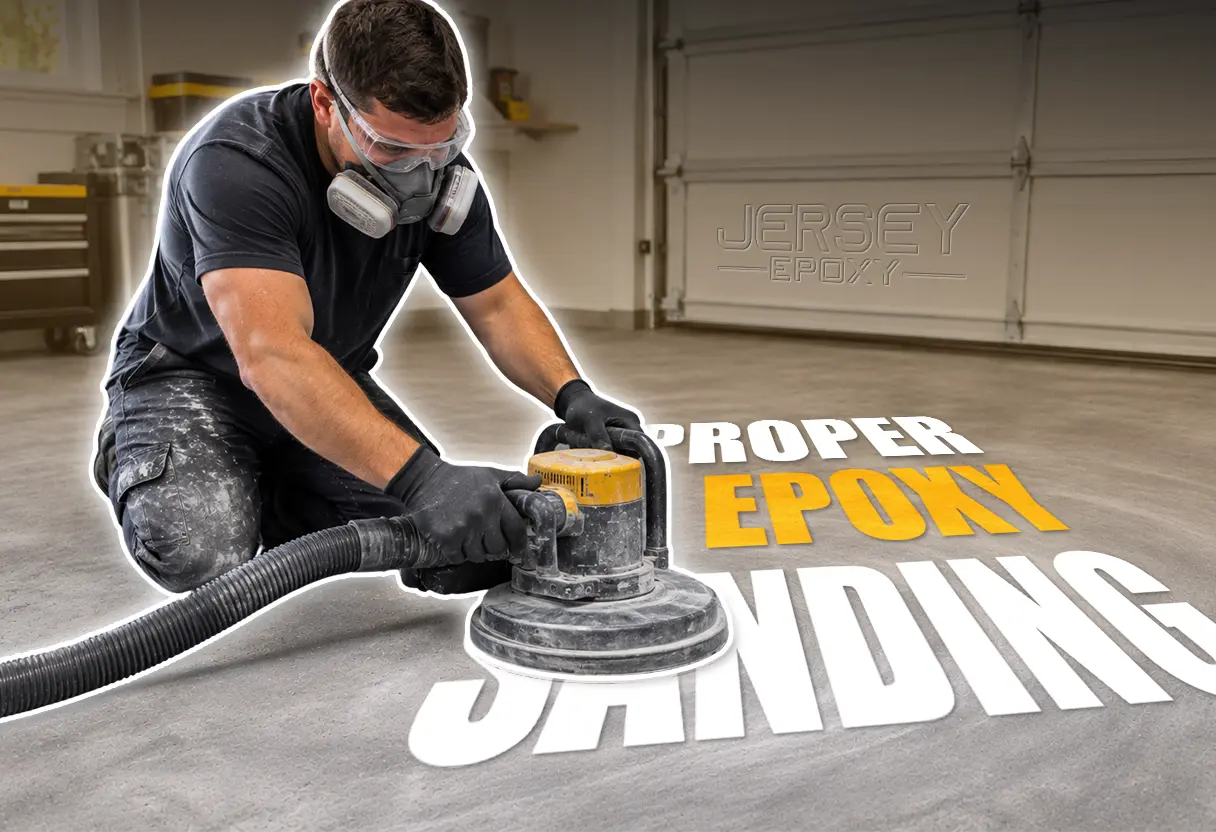
- Mechanical Abrasion: This is an essential step in ensuring epoxy adheres over epoxy. The goal of mechanical abrasion is not to remove all the flooring, but to remove the smooth surface shine for effective epoxy adhesion and bonding. Epoxy needs a rough surface to create a strong physical bond. This surface sanding is done using 60 to 120 grit sandpaper, a scuff pad, or a diamond grinder.
- Vacuum, Surface Wipe, Repair: All sanded dust must be vacuumed, the surface wiped clean in accordance with the epoxy coating instructions of the epoxy manufacturer, along with floor repair patching of any tiny hairline cracks or chips with a compatible material to the original floor. Missing the finest dust particles on the floor will weaken the bonding of epoxy over epoxy! The new epoxy must then be sanded flush with the surrounding original epoxy floor!
What Are Five Common Mistakes Leading To Epoxy Re-Coating Failure?
- Inadequate Surface Preparation: Proper surface preparation for new epoxy is common knowledge to the trained and experienced epoxy floor installer. A dirty, oily, or improperly prepared floor surface is the main reason epoxy floor restoration fails to adhere and bond properly.
- Moisture Vapor Transmission: Epoxy adhesion is guaranteed to fail if an inexperienced epoxy contractor, or a homeowner attempting a DIY epoxy install, fails to understand moisture vapor transmission. A concrete floor is porous, and that porous slab sits on natural soil containing moisture. When an epoxy floor is installed over the concrete slab, the epoxy is great for protecting the concrete slab from corrosion from above — BUT the moisture in the soil will continue to travel up through the concrete slab where that moisture becomes a moisture vapor 'gas' and gets 'trapped' between the concrete and the impenetrable epoxy flooring. Applying a new epoxy topcoat over the existing epoxy floor creates a double-sealed trap, allowing vapor pressure to build and causing serious epoxy-over-epoxy recoat failure as the epoxy flooring cracks, bubbles, and blisters!
- Incorrect Mixing Ratio: Any deviation from the mix ratio of the two chemical compounds, resin and chemical hardener, will upset the chemical balance that prevents proper ‘curing’ (hardening) of the epoxy floor. The result will be failure of the epoxy over epoxy floor to adhere and bond.
- Applying Epoxy Re-Coat Outside Re-coat Window: If applying a new epoxy layer over the cured epoxy flooring without mechanical abrasion, aka sanding the established smooth hardened epoxy — the epoxy recoating will not adhere! Mechanical abrasion is a MUST to allow epoxy to adhere to cured epoxy surfaces.
- Applying Epoxy In Wrong Environmental Conditions: Epoxy must always be stored in an environment with moderate temperature before use. The trained and experienced Epoxy floor technicians must sometimes be like that childhood storybook character, Goldilocks, and state the reality: 'the outside or indoor temperature is TOO HOT, or TOO COLD, or TOO HUMID — humidity which brings about excess moisture! At any such temperature extremes, the epoxy material will not cure properly! If conditions are too cold, the epoxy will be too thick to cure properly; if it is too hot, the epoxy will set too quickly or trap air bubbles.
Why Is Professional Epoxy Floor Repair Better Than DIY?
As noted in previous articles, Top Reasons To Use An Epoxy Flooring Contractor, and Top 6 Most Common Epoxy Mistakes, we hope this article has clarified that epoxy floor installation is best handled by the trained and experienced professional technician. In short, the garage, basement, pool deck, outdoor patio, or any room of the home will NOT have that epoxy aesthetic appeal — if it begins to crack, bubble, and peel!
Keep in mind these four critical factors for why professional epoxy floor repair is better than DIY:
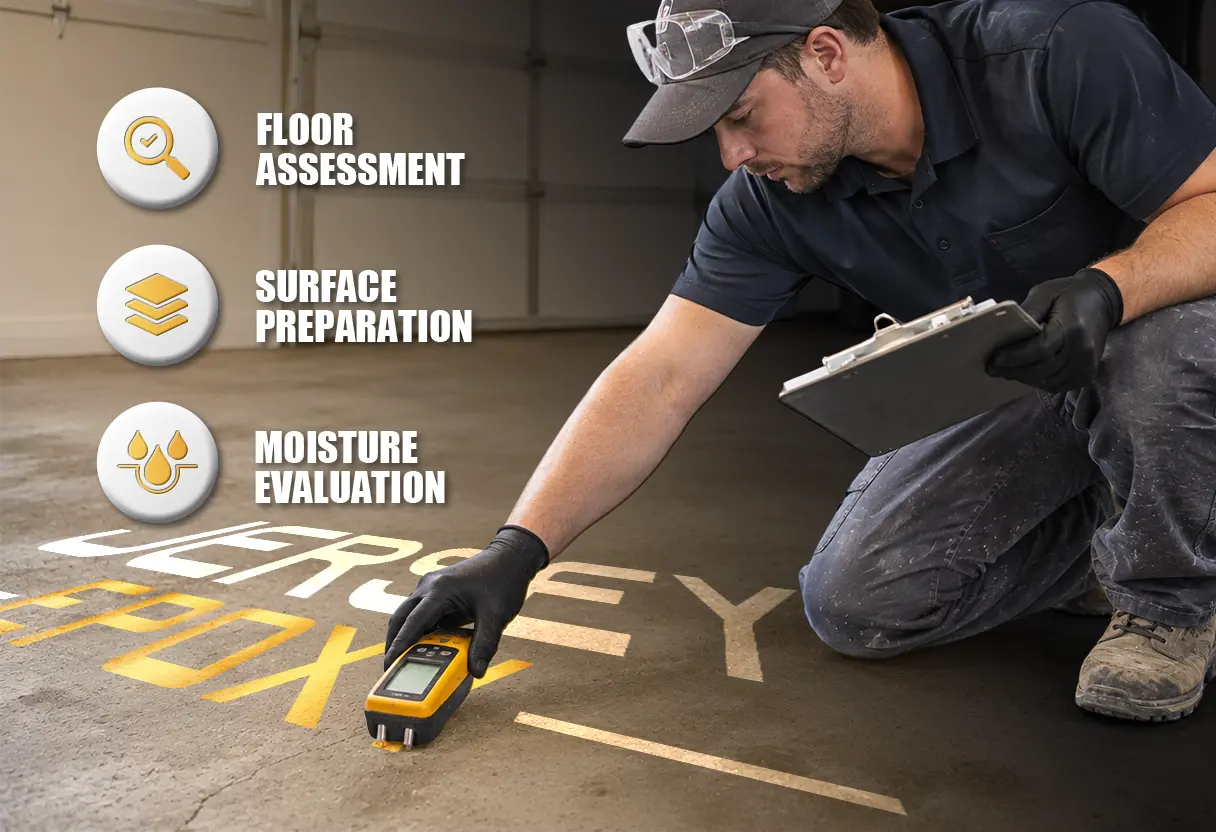
- Proper Floor Assessment: To ensure proper adhesion and bonding when placing epoxy over epoxy, the trained and experienced professional epoxy technician understands how to assess the condition of the entire floor, checking for hairline or larger cracks, bubbles, and blistering. This assessment lets the technician know if epoxy can be placed over epoxy, or requires full removal of the original epoxy floor.
- Proper Surface Preparation: The professional epoxy technician understands the original epoxy floor requires mechanical abrasion. Surface preparation begins with thorough degreasing of the original epoxy floor to remove oils, curing agents, and sealers, followed by a thorough wash to remove ALL dirt and microscopic dust particles! Once the cleaning is complete and the floor is fully dry, the professional epoxy installer will mechanically abrade the original epoxy floor using industrial-grade diamond grinding to create a rough surface for bonding the new epoxy to the old epoxy.
- Proper Moisture Evaluation: A professional contractor will always perform a moisture test with a special moisture meter and knows how to install moisture barriers that end moisture vapor transmission — preventing epoxy coating or recoating floor failure!
- Safety: Last, but NOT LEAST of the reasons for hiring a trained and experienced Epoxy Floor Contractor is safety! The professional epoxy contractor understands epoxy floor installation is an ‘exacting science’ of properly mixing the resin and hardening agent to get correct ‘curing’ of the epoxy. They understand that ‘uncured’ epoxy and its hardeners release VOCs (Volatile Organic Compounds) and chemical fumes that bring respiratory issues and skin irritation. The professional contractor comes prepared with personal protective clothing and equipment: thick nitrile gloves to protect against direct skin contact, protective chemical splash goggles or safety glasses to protect the eyes from accidental splashes during pouring, mixing, or sanding; and a respirator mask with organic vapor and particulate cartridges when working in poorly ventilated areas or sanding cured epoxy.
Choose a professional epoxy contractor with 20+ years of experience for your epoxy floor refinishing project, and enjoy a durable, seamless, and aesthetically appealing residential, commercial retail, or industrial epoxy floor restoration!
Contact
Don't sweat or fret by attempting a DIY epoxy-over-epoxy floor recoating! Call Jersey Epoxy at 877-376-9965, send an email, or use our web contact form to get a free evaluation and price quote for the epoxy over epoxy floor re-finishing you have in mind. Your floor will shine again — with Jersey Epoxy!