


Data Center & Static-Control Floor Coatings
ESD static-control and dust-free floor systems for data centers, server rooms, and network closets across New Jersey and eastern Pennsylvania. Engineered to bleed static safely to ground, keep particulates out of the air handling, and carry the point loads of fully populated racks without giving up uptime.
- ESD & dust-free resinous systems
- NJ + Eastern PA
- 20+ years installing
- Free on-site assessment
- Static-Control Capable
- Systems specifiable to ANSI/ESD S20.20 with grounding
- Dust-Free & Sealed
- Stops slab particulate reaching air handling
- 20+ Years Experience
- Resinous & high-build epoxy installs
- Phased Around Uptime
- We work your maintenance windows
The data center floor problem
Bare slab puts your hardware at risk in two quiet ways
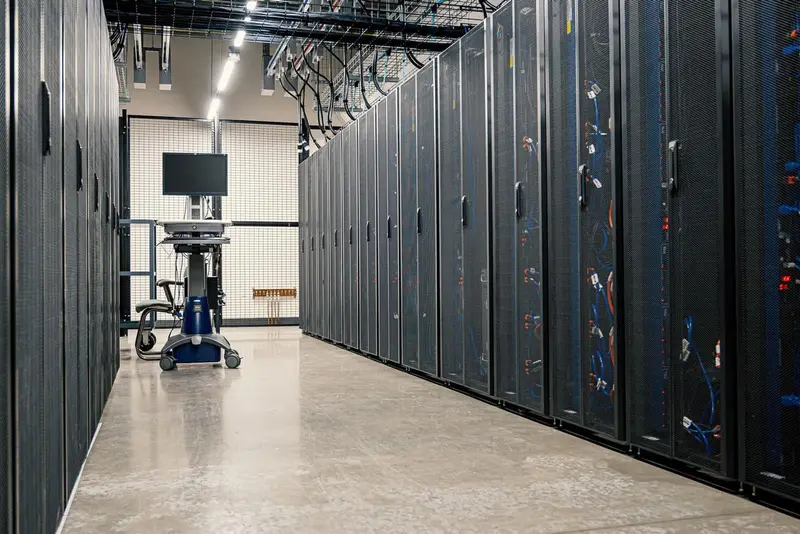
A data center floor sits under millions of dollars of static-sensitive electronics, and the two threats it has to answer for are invisible until something fails: electrostatic discharge and airborne dust. An untreated or worn slab generates and holds a charge as people and carts move across it, and that charge can find a path through a rack and into a component.
The second threat is the slab itself. Bare and dusting concrete sheds fine particulate that gets pulled into server intakes, hot aisles, and CRAC units, where it coats boards and clogs filters. Add the concentrated point loads of fully loaded cabinets and PDUs rolling in on a pallet jack, and an unprepared floor abrades, cracks, and keeps feeding the room the dust it cannot afford.

Zone-by-zone
We spec each area of the building for the job it actually does
No single coating is right everywhere. Here is how we read a data hall and match the chemistry to the punishment.
Material choice
Why a sealed ESD system, not a coat of paint
Static control is not a product you brush on, it is a circuit. An ESD floor only performs when the conductive resin, the grounding connections, and the people and footwear on it work together as a system, which is why a single qualified resistance number on a data sheet means nothing without the grounding scoped to your room. We map the static-control zone, design the ground path, and verify the installed floor, rather than assuming a coating alone will protect the hardware.
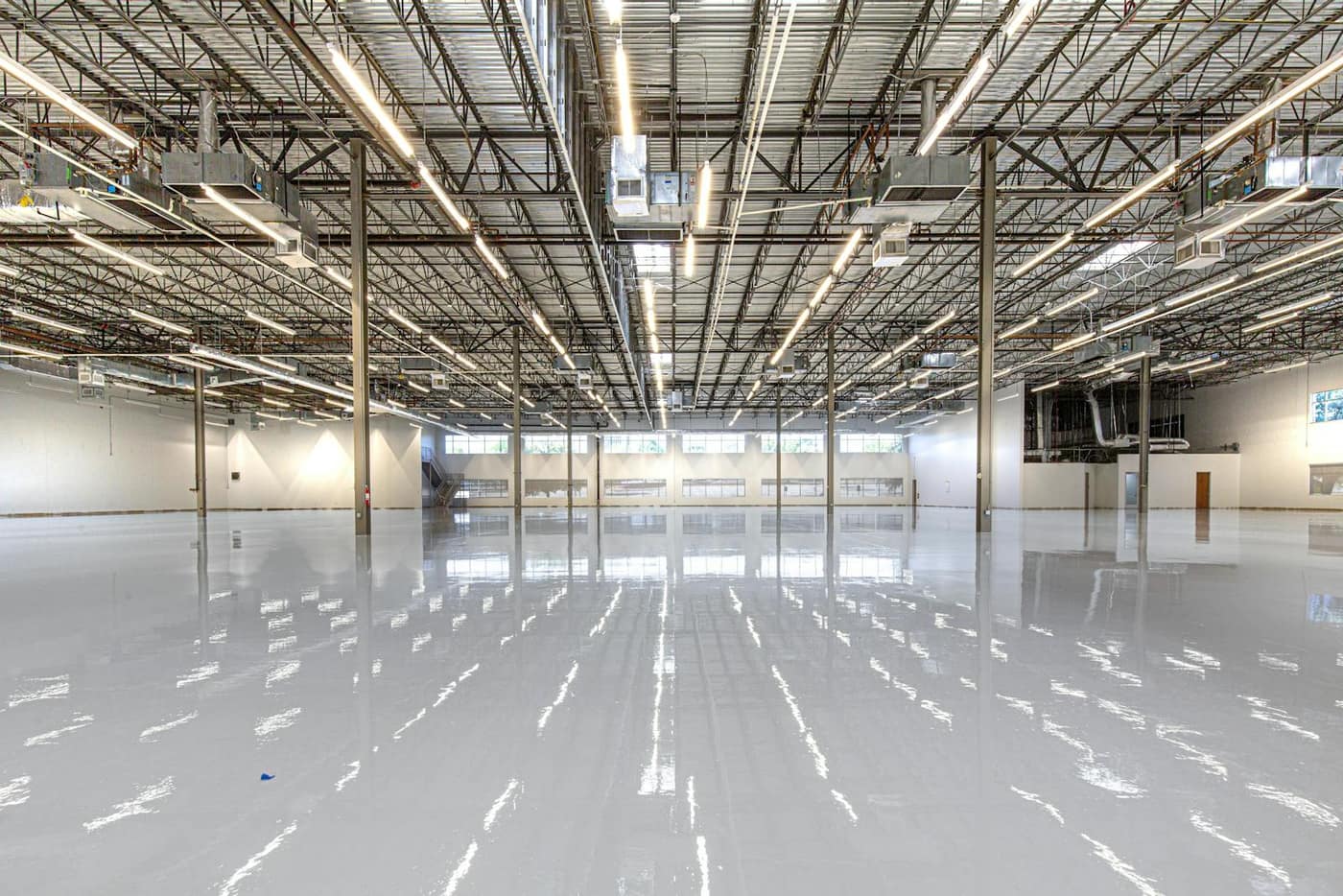
For the server hall we reach for a static-dissipative resinous system tied to ground, sealing the slab so it stops shedding dust while keeping the floor inside the dissipative resistance window. Across staging, electrical, and battery rooms we shift to high-build and chemical-resistant epoxy that carries cabinet point loads and resists incidental exposure, and in offices and corridors a sealed polished or coated surface keeps the whole footprint clean and grounded.
- Static-dissipative range. Conductive resin and a designed ground path keep the installed floor within the dissipative window of roughly 1 x 10^6 to under 1 x 10^9 ohms. [ANSI/ESD STM7.1]
- Low charge generation. A qualified ESD floor and footwear system targets walking body voltage under 100 volts so a person crossing the room does not build a damaging charge. [ANSI/ESD STM97.2]
- Dust-free, sealed surface that locks down the fine particulate bare concrete sheds into server intakes and CRAC filtration. [Sika · Sherwin-Williams]
- Abrasion and point-load build measured for organic floor coatings, sized for loaded cabinets, PDUs, and pallet-jack moves. [ASTM D4060 Taber]
How it works
From your first call to the final coat
We map the whole job before we touch the floor, then phase the work around your production.
- Free Quote(877) 376-9965No-cost on-site assessmentGet my quote
Call or Contact Us
Tell us about your facility and timeline.
- Walk-through
- Server hall
- Staging room
- NOC
Consultation
A free walk-through and a per-zone floor spec.
- Slab PrepProfiledDry & sound
Preparation
Slab profiled and confirmed dry and sound before coating.
- Sealed
Installation
Seamless system installed, phased around your operations.
Standards & specifications
Built to the standards a critical room is held to
ESD qualification belongs to the installed floor and the program around it, never to a contractor, so we never call Jersey Epoxy itself certified. What we do is build a floor that the facility can verify against these standards, and we are specific about which test answers which question.
ESD program standard
The umbrella standard for an electrostatic discharge control program. The flooring contributes to it as a qualified part of a system that includes footwear, grounding, and handling, not as a floor in isolation. [ANSI/ESD S20.20]
Floor resistance
Point-to-point and surface-to-ground resistance verified on the installed floor, targeting the dissipative window above 1 x 10^6 and below 1 x 10^9 ohms, with conductive options where a room calls for them. [ANSI/ESD STM7.1]
Charge generation
Walking body voltage measured for the floor and footwear together, targeting under 100 volts so movement across the room does not build a charge that can reach a component. [ANSI/ESD STM97.2]
Abrasion & wear
High-build resinous and epoxy systems selected for measured abrasion resistance under the Taber method, sized for the rolling and point loads of populated racks and equipment moves. [ASTM D4060]
Slab moisture testing
Moisture moving up through the slab can blister a resin floor and break the grounding path an ESD system depends on, so the slab has to be dry and sound before any coating is bonded down. Where the water table runs high or a room sits low or below grade, a moisture test is worth doing first: in-situ relative-humidity probes set into the concrete (F2170) and, where called for, anhydrous calcium-chloride moisture-vapor-emission tests (F1869). [ASTM F2170 / F1869]
Jersey Epoxy installs flooring that can be qualified within an ANSI/ESD S20.20 program and tested to STM7.1 and STM97.2. We do not market the company itself as certified, because ESD qualification applies to the installed system and the program around it, verified by the facility.
Benefits
A properly specified data center floor protects the hardware and the uptime
Static Bled to Ground
A dissipative resin floor tied into a designed ground path carries static safely away before it can find a path through a rack and into a component.
Dust-Free Air
Sealing the slab stops the fine concrete dust that otherwise gets pulled into server intakes, hot aisles, and CRAC filtration.
Carries Rack Point Loads
High-build systems take the concentrated loads of fully populated cabinets and PDUs and the pallet-jack traffic that delivers them.
Seamless & Cleanable
A non-porous surface with no grout lines or open joints keeps a controlled room genuinely cleanable and contaminant-free.
Scoped to Your Room
We size the static-control zone and grounding to your space and risk, rather than over-building a closet or under-building a hall.
Installed Around Uptime
We phase the work into maintenance windows and use fast-cure options where a room cannot go offline, so the floor never costs you availability.
Recommended systems
The systems we reach for in a data center
Three resin systems we mix and match across a single data center, each grounded and sealed for the zone it sits in.
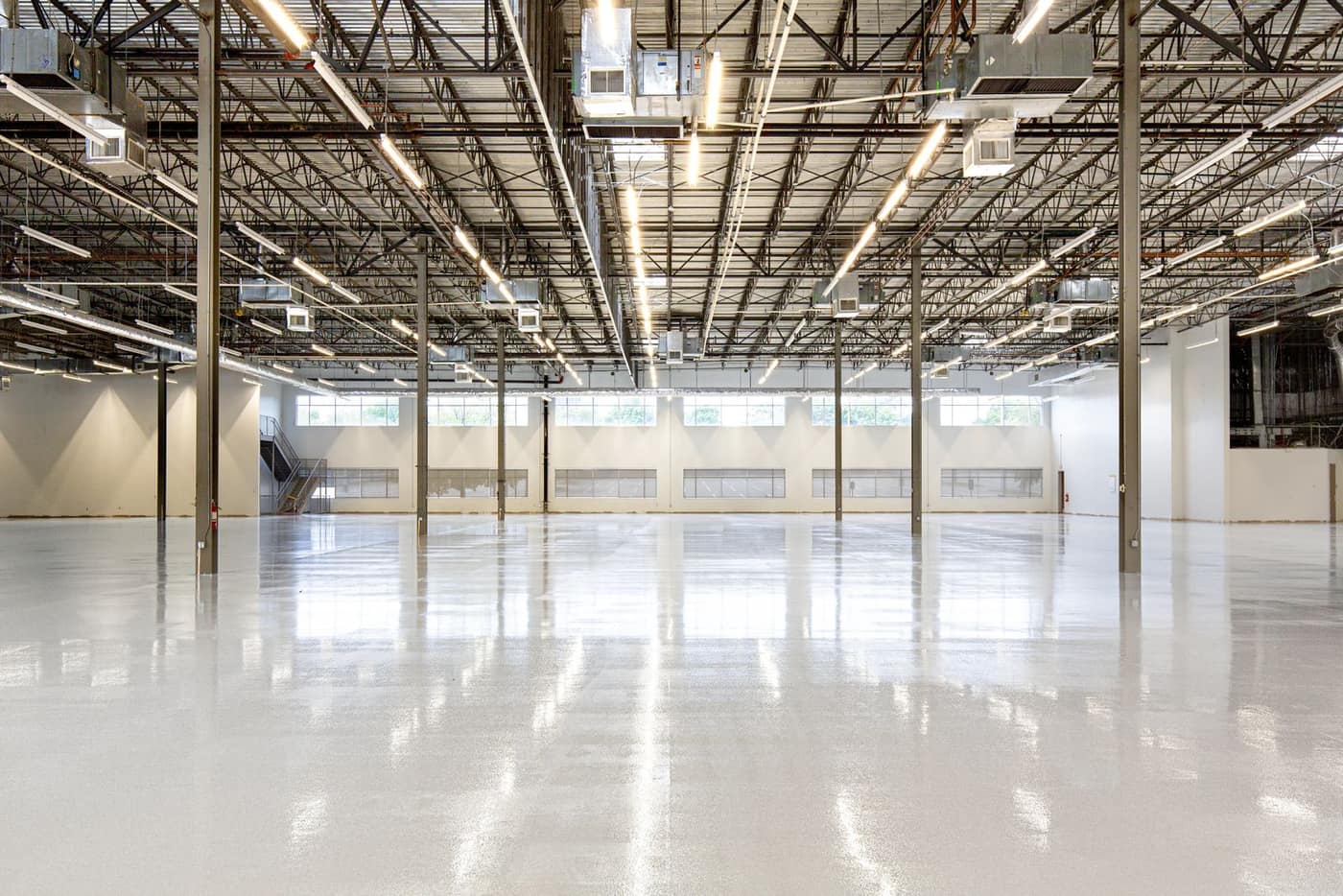
Resinous Flooring
Seamless, sealed, and groundable: the static-dissipative backbone for server halls and cold aisles where dust and ESD cannot be tolerated.
Explore system
Epoxy Flooring
A hard, high-build base for staging, electrical, and battery rooms that carry cabinet point loads and incidental exposure.
Explore system
Polished Concrete
A sealed, dust-locked finish for NOC floors and corridors that keeps the whole footprint clean and low-maintenance.
Explore systemProudly Serving New Jersey & Eastern PA
Our crews are on the road daily. Select your region to see our coverage.

New Jersey
Statewide Coverage- Monmouth & Ocean County
- Bergen & Essex County
- Middlesex & Mercer County
- Atlantic & Cape May County
- Morris & Somerset County
FAQ
Data center flooring questions, answered straight
Do we actually need ESD flooring in our server room?
Wherever static-sensitive electronics are handled or moved, controlling static is the cheapest insurance you can buy against an intermittent, hard-to-trace hardware failure. We install static-dissipative systems that can be qualified within an ANSI/ESD S20.20 program and tested to STM7.1, scoped to your specific room and its grounding.
How is an ESD floor grounded?
It works as a circuit, not a coating. Conductive resin is tied to ground through copper grounding strips and connection points designed into the layout, so static has a defined path to earth. We design that ground path and coordinate it with your electrical and facility requirements as part of the scope.
Will it stop our concrete from dusting?
Yes. Sealing the slab with a resinous system locks down the fine particulate bare concrete sheds, which is what otherwise gets pulled into server intakes, hot aisles, and CRAC filtration in a room that depends on clean air.
Can it carry fully loaded racks and PDUs?
Yes. We specify high-build systems sized for the concentrated point loads of populated cabinets and the pallet-jack traffic that delivers them, selected against measured abrasion resistance under the ASTM D4060 Taber method.
Can you install over a raised access floor?
We coat the structural slab. Whether your room runs on a raised access floor or slab-on-grade, we specify the static-control and dust-free system to suit the surface beneath, including the subfloor under an access-floor plenum.
How do you protect our uptime during the install?
We phase the work zone by zone into your maintenance windows, work off-hours where needed, and use fast-cure options so a critical room returns to service quickly instead of going dark for a floor job.
Get started
Let us spec a floor that protects your hardware and your uptime
Free on-site assessment, honest per-zone recommendations, and a precise quote. Phased into your maintenance windows so the room never goes dark.
(877) 376-9965 · talk to an installerRated 5 stars by New Jersey homeowners & businesses
Powered by Google
 No Obligation