



Pharmacy & Compounding Cleanroom Floor Coatings
Seamless, non-shedding, coved resinous floor systems for retail pharmacies, hospital pharmacies, and sterile and hazardous-drug compounding suites across New Jersey and eastern Pennsylvania. Detailed to be cleaned, disinfected, and held to inspection.
- Resinous & ESD-capable systems
- NJ + Eastern PA
- 20+ years installing
- Free on-site assessment
- Built for Inspection
- Smooth, impervious, non-shedding surfaces
- Seamless & Coved
- Integral cove base from floor to wall
- 20+ Years Experience
- Resinous & cleanroom-grade installs
- Phased Around Operations
- We work around the controlled space
The pharmacy floor problem
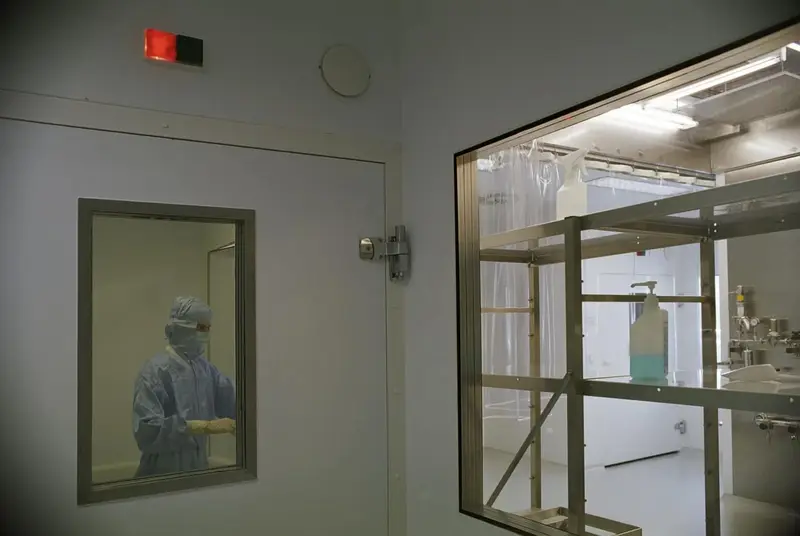
In a compounding suite the floor is a contamination-control surface
A compounding cleanroom floor is not a finish, it is part of how the facility passes inspection. USP <797> for sterile preparations and USP <800> for hazardous drugs treat surfaces as a contamination-control element, calling for them to be smooth, seamless or coved, non-shedding, impervious, and resistant to the cleaning agents used in the room. Tile, VCT, and sheet goods with seams give particulates and microbes a place to collect and quietly defeat that standard.
The pressure is constant. The room is wiped and disinfected on a schedule with sporicidal and peroxide-based agents, foot and cart traffic never stops, and many hazardous-drug suites that handle flammable solvents need a floor that also controls static. A coating that chalks, shells, or drifts out of its resistance band turns the floor into the reason a six-month recertification fails.

Zone-by-zone
We spec each area of the building for the job it actually does
No single coating is right everywhere. Here is how we read a pharmacy floor and match the chemistry to the punishment.
Material choice
Why seamless resinous is the default in a compounding suite
Most controlled-space floor problems trace back to prep, coving detail, or a chemistry that cannot stand the disinfectant regimen, more than the resin grade itself. We profile the slab first, detail the cove correctly, then specify each area for the standard it is actually held to. The slab has to be dry and sound before we coat, and a moisture test is worth doing where the water table runs high.
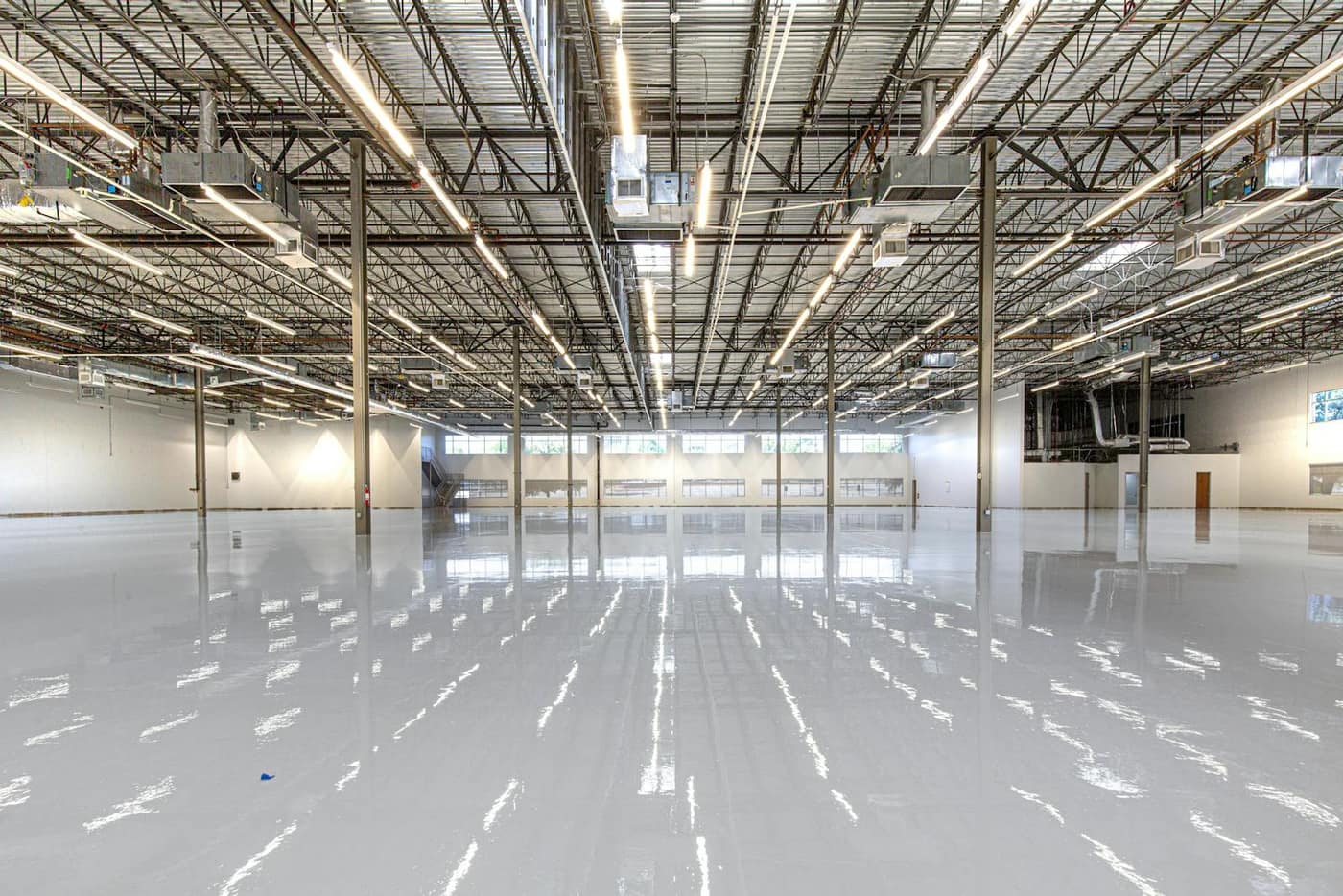
Across buffer rooms, anterooms, and dispensing areas, seamless self-leveling resinous and epoxy systems give a smooth, impervious, non-shedding surface with an integral cove base, so the room cleans as one continuous plane from floor to wall. In hazardous-drug suites that handle flammable solvents, a static-dissipative or conductive epoxy can be specified to keep the floor inside its measured resistance band while staying fully cleanable.
- Smooth, impervious, non-shedding surface with integral coving, the surface character compounding rooms are held to. [USP <797> · USP <800>]
- Disinfectant compatibility with the sporicidal, peroxide, and quaternary cleaners used to wipe the room, specified so the floor does not chalk or degrade. [Sherwin-Williams · Sika]
- Static control where required. ESD systems can be specified to the recognized static-dissipative band of 10^6 to 10^9 ohms. [ANSI/ESD S20.20]
- Slab dry and sound before any coating goes down, with a moisture test worth doing to recognized ASTM methods where the water table runs high. [ASTM F2170 · F1869]
How it works
From your first call to the final coat
We map the whole job before we touch the floor, then phase the work around your production.
- Free Quote(877) 376-9965No-cost on-site assessmentGet my quote
Call or Contact Us
Tell us about your facility and timeline.
- Walk-through
- Anteroom
- Buffer room
- Dispensing
Consultation
A free walk-through and a per-zone floor spec.
- Slab PrepProfiledDry & sound
Preparation
Slab profiled and confirmed dry and sound before coating.
- Sealed
Installation
Seamless system installed, phased around operations.
Standards & specifications
Built to the standards a compounding pharmacy is held to
We do not claim certifications we do not hold. We install systems that can be specified to meet the requirements that govern a controlled pharmacy space, and we name the standards behind them.
Compounding surface requirements
Seamless, coved, smooth, impervious, and non-shedding surfaces resistant to the cleaning agents used in the room, the surface character sterile (USP <797>) and hazardous-drug (USP <800>) compounding areas are held to. [USP <797> / USP <800>]
Cleanroom classification
Compounding suites are classified by particle count: ISO 5 in the primary engineering control, ISO 7 in the buffer room, and ISO 8 in the anteroom. A non-shedding, seam-free floor supports holding that class at recertification. [ISO 14644-1]
Static control
Where flammable solvents or sensitive processes call for it, we can specify static-dissipative systems targeting the recognized 10^6 to 10^9 ohm band, with conductive systems reserved for narrow cases. [ANSI/ESD S20.20]
Slab moisture testing
The slab has to be dry and sound before coating, and where the water table runs high or a lot of the room is below-grade a moisture test is worth doing to recognized methods such as in-situ relative-humidity probes (F2170) and anhydrous calcium-chloride MVER (F1869). [ASTM F2170 / F1869]
Slip resistance (wet)
Where wet cleaning or gowning areas call for it, we broadcast fine aggregate and tune traction toward the ANSI A326.3 wet DCOF benchmark of 0.42, kept fine enough to stay cleanable, and we stay honest that no floor is ever fully slip-proof. [ANSI A326.3]
Coating adhesion & GMP surfaces
Coating adhesion can be verified by cross-hatch testing (ASTM D3359) so the film does not delaminate under repeated wet cleaning, and systems can be specified to meet the smooth, easy-to-clean surface expectations of FDA current good manufacturing practice for compounding areas. [ASTM D3359 · FDA cGMP]
We install products that carry recognized credentials and specify systems that can be built to meet USP, ISO, and ESD requirements. We do not market Jersey Epoxy as USP- or ESD-certified, because those credentials are issued to products and facilities, and final cleanroom classification is confirmed by your certifier and compliance team.
Benefits
A properly specified pharmacy floor supports sanitation and passes inspection
Seamless & Non-Shedding
No grout lines, seams, or square corners, so particulates and microbes have nowhere to collect and the surface stays non-shedding the way a controlled room requires.
Integral Coving
The floor turns up the wall in a sealed curve, removing the right-angle joint at the base so the room cleans as one continuous, wipeable surface.
Disinfectant Compatibility
We specify a chemistry that withstands repeated wipe-down with sporicidal, peroxide, and quaternary agents without chalking, hazing, or degrading.
Static Control Options
For hazardous-drug suites handling flammable solvents, ESD systems can be specified to hold a measured resistance band underfoot.
Specifiable to USP Surface Rules
Systems can be built to meet the smooth, impervious, non-shedding surface requirements that govern sterile and hazardous-drug compounding.
Fast Return to Service
Rapid-cure options shorten the window a controlled space is offline, so a floor project does not stall your recertification or dispensing.
Recommended systems
The systems we reach for in a pharmacy
Curated for controlled pharmacy environments. Explore the chemistry behind each.
Resinous Flooring
Seamless, non-shedding, and impervious with integral coving: the backbone system for buffer rooms, anterooms, and dispensing areas.
Explore system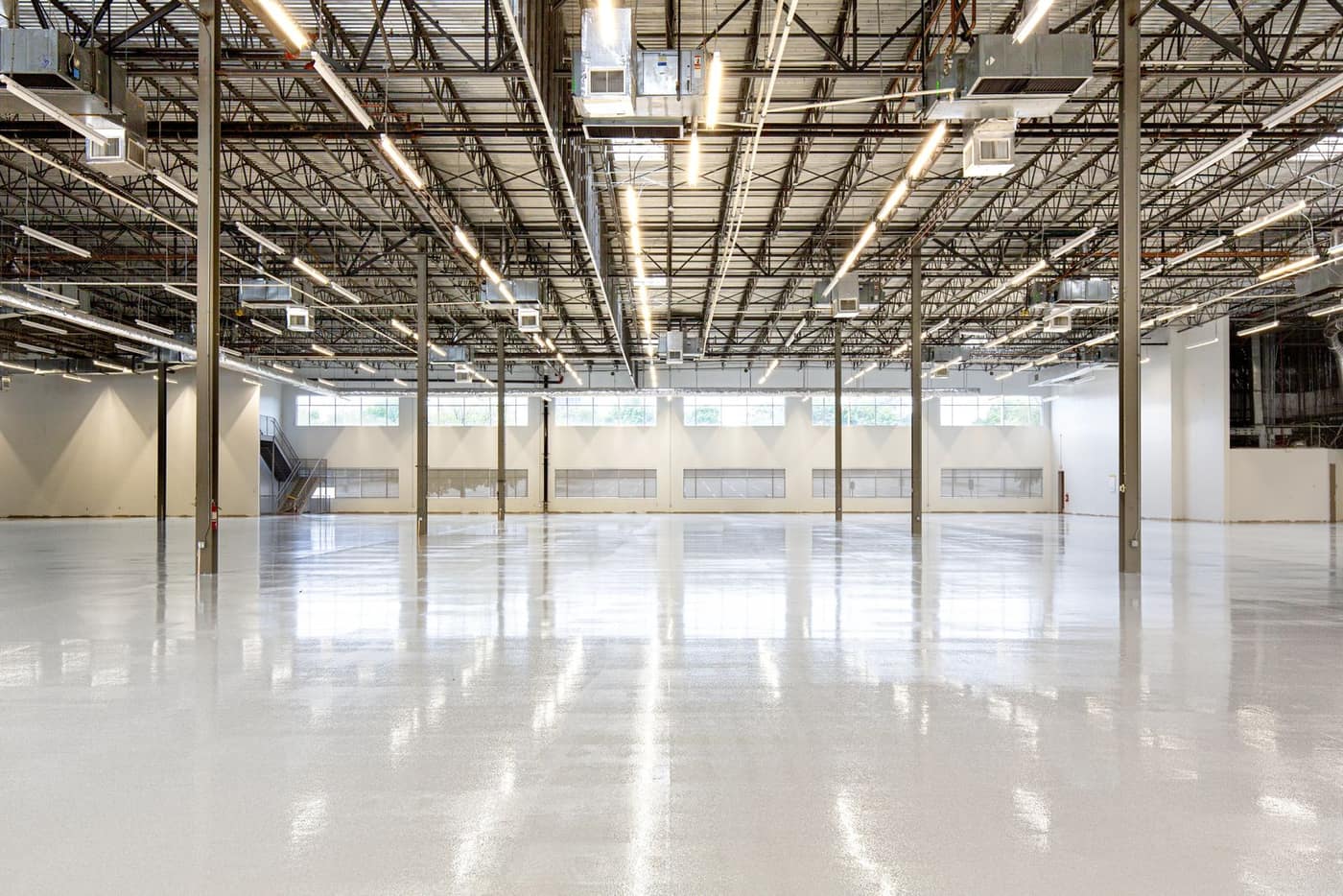
Epoxy Flooring
A hard, cleanable, high-build base, and the platform for static-dissipative builds in hazardous-drug suites that need ESD control.
Explore system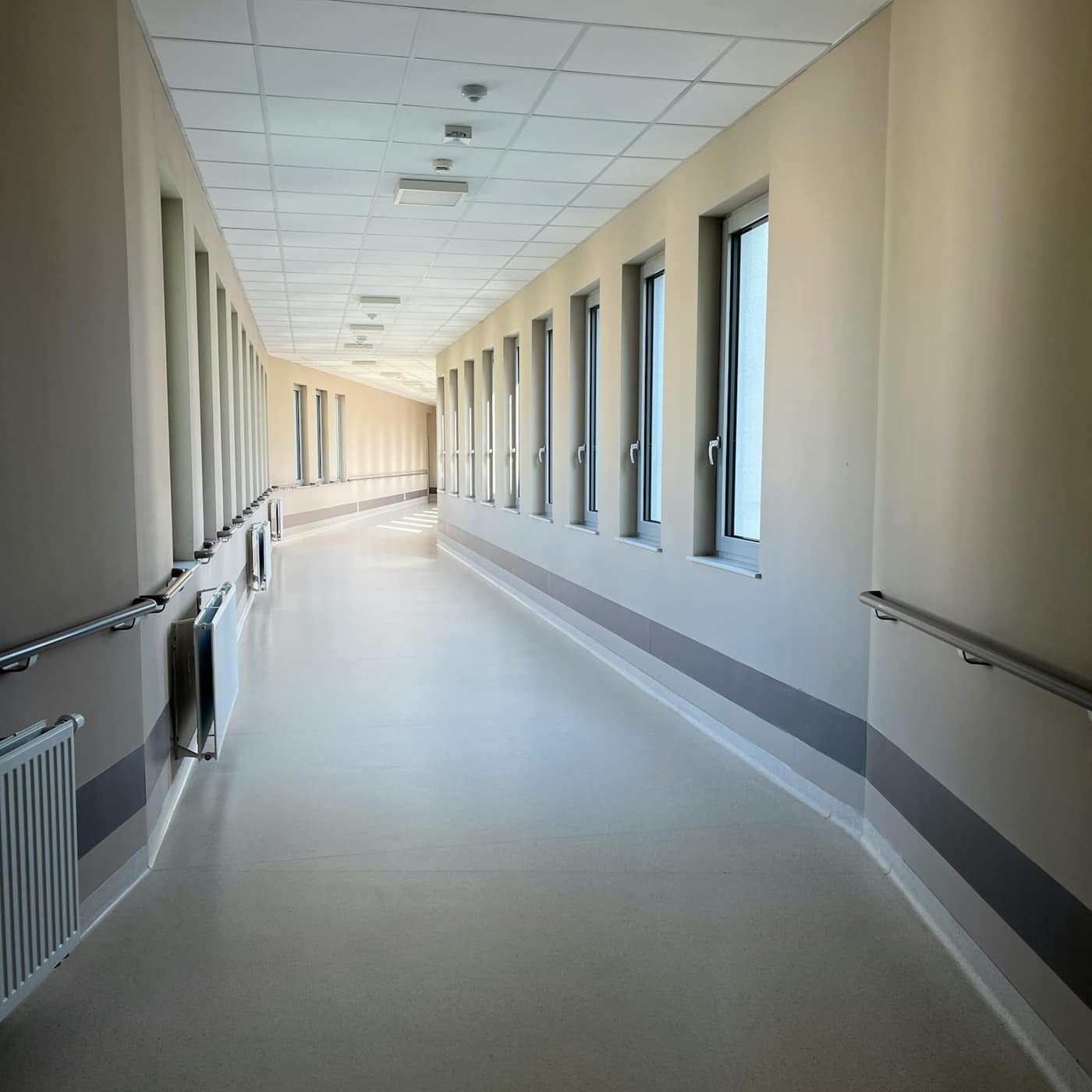
Flake Epoxy
Decorative, durable, and slip-tunable: a clean retail and dispensing finish that hides wear and stands up to traffic.
Explore systemProudly Serving New Jersey & Eastern PA
Our crews are on the road daily. Select your region to see our coverage.
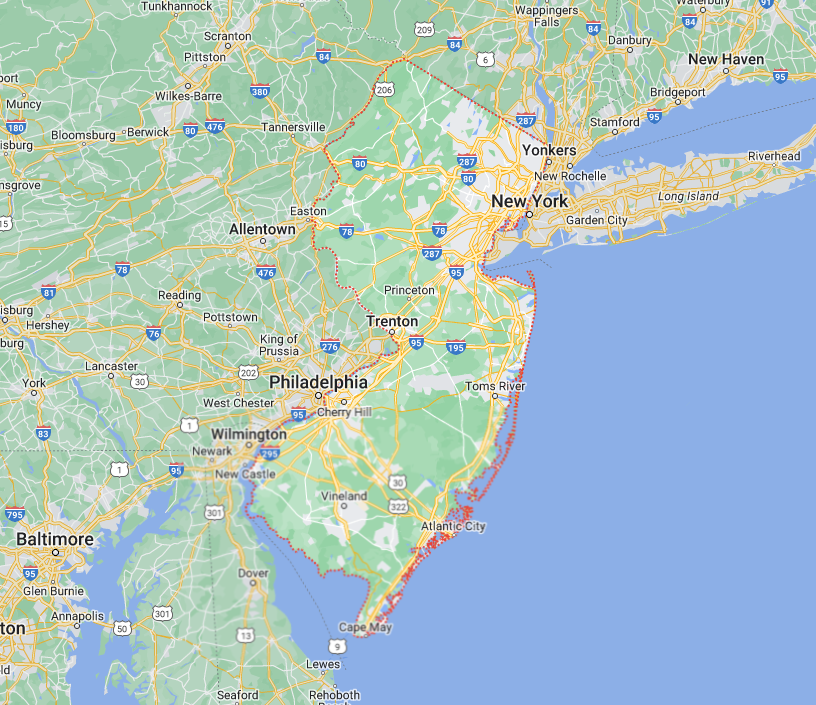
New Jersey
Statewide Coverage- Monmouth & Ocean County
- Bergen & Essex County
- Middlesex & Mercer County
- Atlantic & Cape May County
- Morris & Somerset County
FAQ
Pharmacy flooring questions, answered straight
Can the floor meet USP 797 and 800 requirements?
We install seamless, non-shedding, coved systems that can be specified to meet the smooth, impervious, cleanable surface requirements that govern sterile (USP <797>) and hazardous-drug (USP <800>) compounding areas. Final cleanroom classification depends on the whole room design and airflow, so we recommend confirming the spec with your certifier and compliance team.
Why not just use tile or VCT in a compounding area?
Tile and VCT carry grout lines and seams that trap particulates and microbes, and they fail the non-shedding, easy-to-sanitize standard a controlled room is held to. A seamless resinous floor with integral coving removes those weak points and gives one continuous, cleanable surface from floor to wall.
Will it stand up to our disinfectants?
Yes, when specified for it. We select a chemistry compatible with the sporicidal, peroxide, and quaternary agents you wipe the room with, so the surface withstands the cleaning schedule without chalking, hazing, or breaking down.
Do you offer ESD or static-control flooring?
Yes. For hazardous-drug suites that handle flammable solvents or sensitive processes, we can specify static-dissipative systems targeting the recognized 10^6 to 10^9 ohm band per ANSI/ESD S20.20, with conductive systems for narrow exception cases.
Do you install coving?
Yes. Integral cove base is essential in a controlled pharmacy space. It carries the floor up the wall in a sealed curve so there is no right-angle corner at the base to trap residue, and the room cleans as one surface.
How do you limit downtime for a controlled space?
We phase the work and can use rapid-cure systems so a buffer room, anteroom, or dispensing area returns to use sooner, while still completing full slab prep, confirming the slab is dry and sound, and coving.
Get started
Let us spec a floor your compounding suite can recertify on
Free on-site assessment, honest per-zone recommendations, and a precise quote. Phased around your controlled space so dispensing keeps moving.
(877) 376-9965 · talk to an installerRated 5 stars by New Jersey homeowners & businesses
Powered by Google
 No Obligation