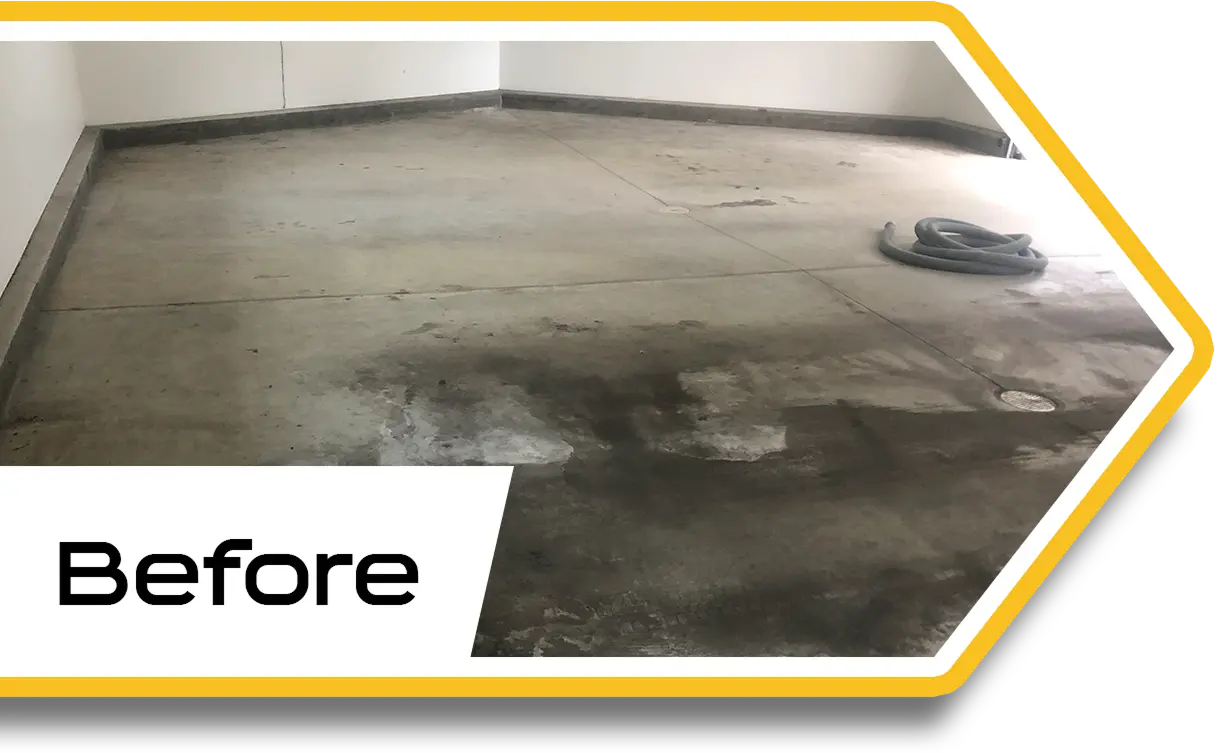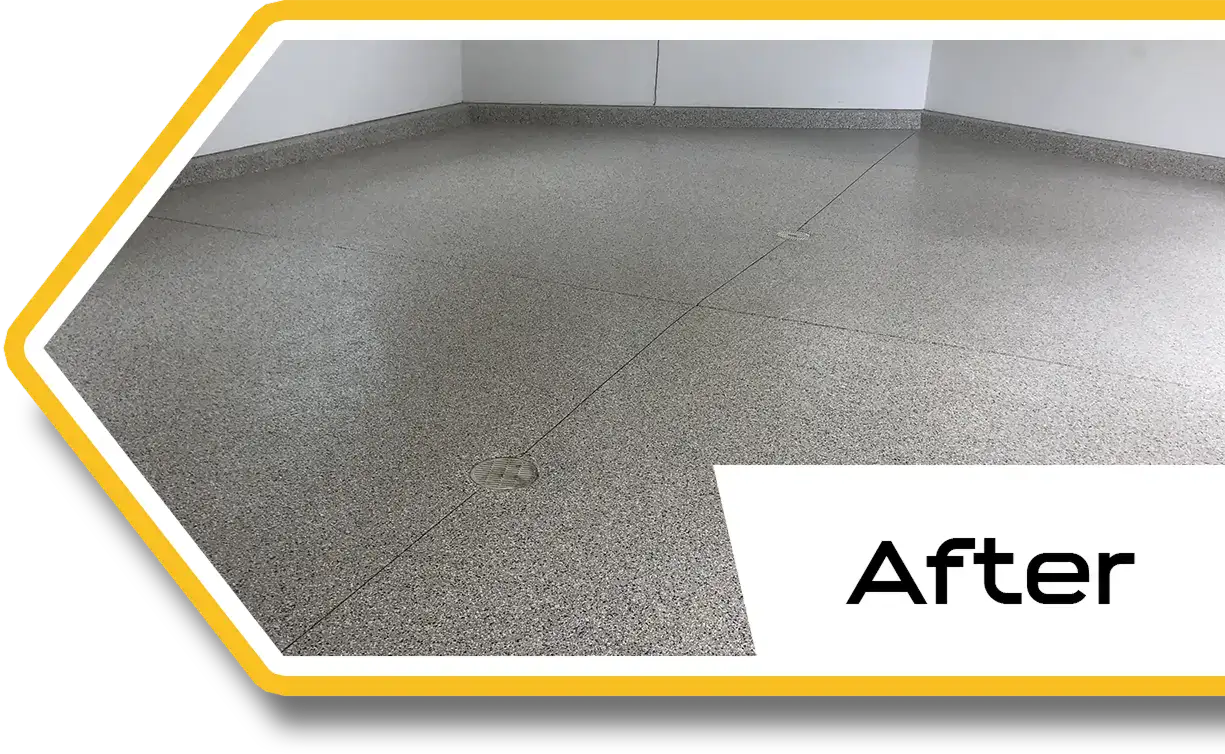



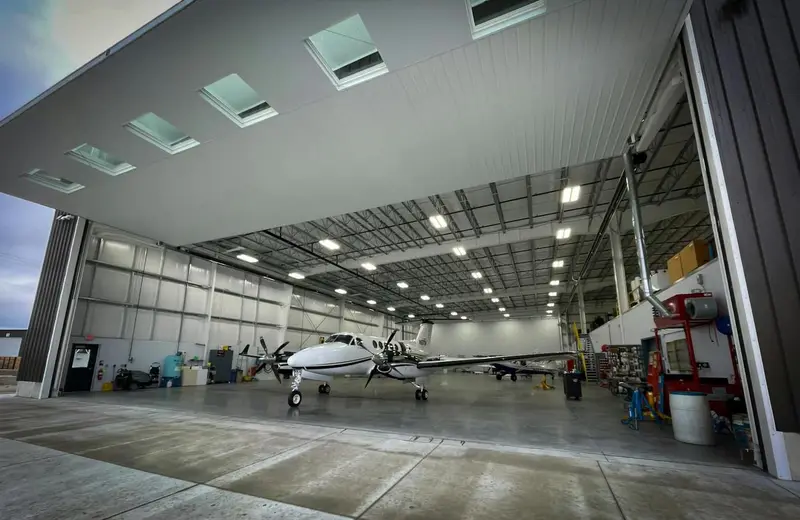

Aircraft Hangar & Aviation Floor Coatings
Seamless, Skydrol- and fuel-resistant floor systems for aircraft hangars, MRO bays, and avionics shops across New Jersey and eastern Pennsylvania. Engineered for aviation chemistry, heavy point loads, and a bright, FOD-free finish, and phased around aircraft movements.
- Skydrol- & fuel-resistant systems
- NJ + Eastern PA
- 20+ years installing
- Free on-site assessment
- Aviation-Fluid Rated
- Resists Skydrol, jet fuel, oils & solvents
- FOD-Free & Reflective
- Seamless, high-gloss, sheds no debris
- 20+ Years Experience
- High-build resinous & epoxy installs
- Phased Around Flight Ops
- We work your bays and aircraft moves
The hangar floor problem
Aviation chemistry attacks coatings nothing else on a job site can match
A hangar floor lives under spilled Skydrol, jet fuel, engine oil, de-icing fluid, and shop solvents, plus jack and tug point loads, dropped tooling, and the constant demand for a flawless surface that sheds no debris. Skydrol is the part that catches most coatings out.
Skydrol is a phosphate-ester hydraulic fluid run at high pressure in aircraft, and it is aggressive enough to soften, stain, blister, and dissolve ordinary epoxy and most consumer floor paints. A coating that has not been formulated for phosphate-ester attack lifts at the spill, then traffic spreads the failure and the slab starts shedding the very debris a hangar cannot allow.
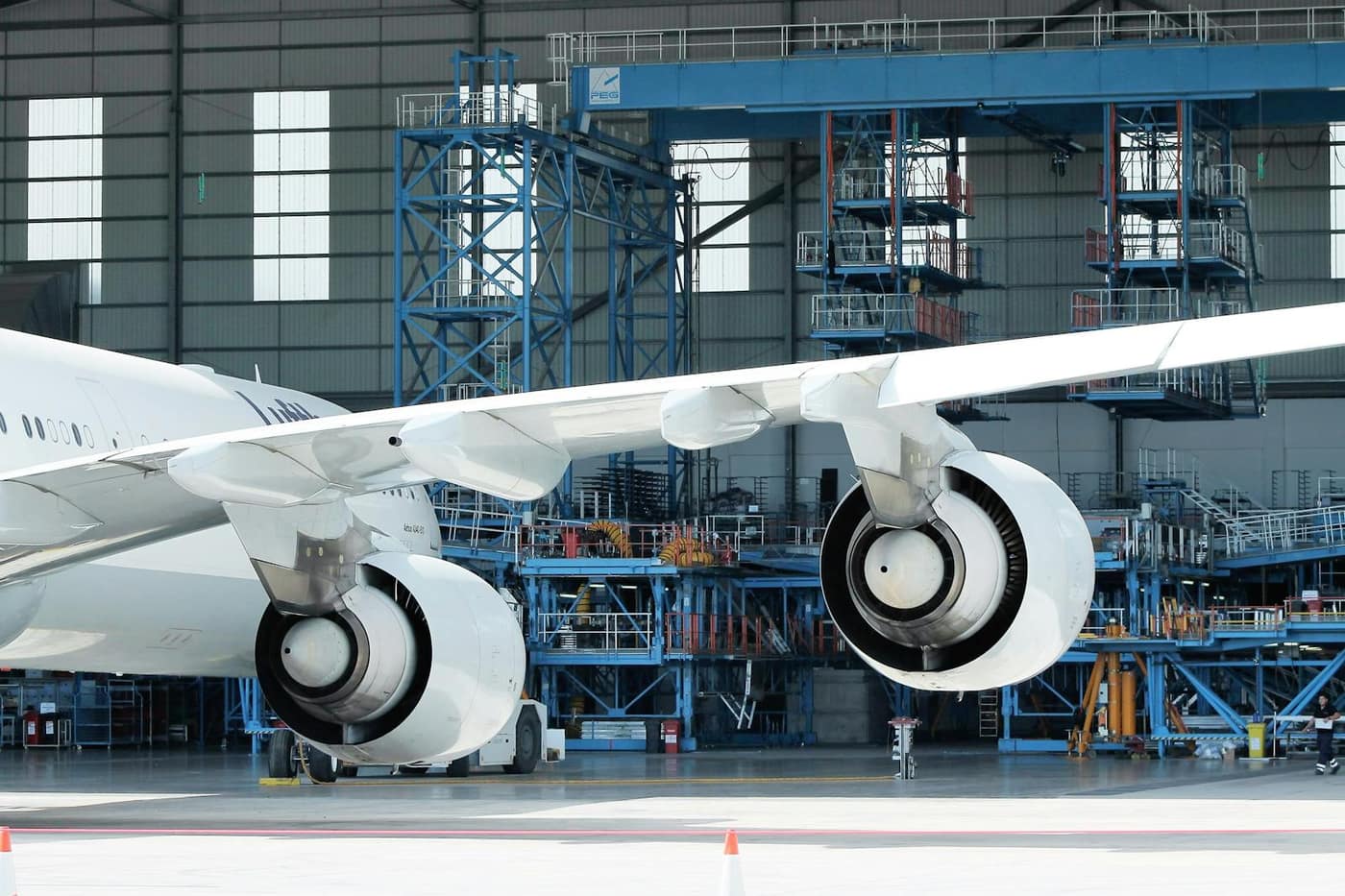
Zone-by-zone
We spec each area of the building for the job it actually does
No single coating is right everywhere. Here is how we read a hangar deck and match the chemistry to the punishment.
Material choice
Why ordinary epoxy fails on a hangar deck
Most hangar floor failures trace back to the prep or to a coating that was never built for phosphate-ester chemistry, more than to traffic alone. We profile the slab first and need it dry and sound before we coat, then specify each area for the fluids and loads it actually takes. A moisture test is worth doing where the water table runs high.
For aircraft parking and maintenance bays, a high-build, densely crosslinked epoxy is the workhorse: the tight polymer network resists Skydrol, jet fuel, oils, and solvents without softening or discoloring, while the high film build absorbs dropped tools and jack point loads. Where avionics and electronics are handled, an ESD-control system gives static a controlled path to ground, and a high-gloss topcoat bounces light to brighten the bay.
- Skydrol & fuel resistance. High-build epoxy is formulated to resist phosphate-ester hydraulic fluid, jet fuel, oils, and solvents without blistering or staining. [Sherwin-Williams · Flowcrete Flowcoat SK]
- Impact & point-load resistance for dropped tooling, jack stands, and tug traffic across the deck. [Sikafloor · Sherwin-Williams]
- Slab dry and sound before any coating goes down; we recommend a moisture test to recognized ASTM methods where the water table runs high. [ASTM F2170 · F1869]
- Static-control options can be specified for avionics and electronics areas where dissipation matters. [ANSI/ESD S20.20]
How it works
From your first call to the final coat
We map the whole job before we touch the floor, then phase the work around your production.
- Free Quote(877) 376-9965No-cost on-site assessmentGet my quote
Call or Contact Us
Tell us about your facility and timeline.
- Walk-through
- Hangar deck
- MRO bays
- Avionics shop
Consultation
A free walk-through and a per-zone floor spec.
- Slab PrepProfiledDry & sound
Preparation
Slab profiled and confirmed dry and sound before coating.
- Sealed
Installation
Seamless system installed, phased around flight ops.
Standards & specifications
Built to the standards a working hangar is held to
We don’t claim certifications we don’t hold. We install systems that can be specified to meet the requirements that matter to an aviation facility, and we name the standards behind them.
Skydrol & fuel resistance
High-build epoxy systems formulated to resist Skydrol phosphate-ester hydraulic fluid, jet fuel, engine oils, and solvents without softening, staining, or blistering, matched to the fluids your operation actually handles. [Flowcrete Flowcoat SK · Sherwin-Williams]
Slab moisture
The slab has to be dry and sound before coating, so the bond does not fail from below. Where the water table runs high or the bay sits low or below grade, we recommend a moisture test to the recognized ASTM methods (F2170 in-situ relative humidity, F1869 calcium-chloride MVER). [ASTM F2170 / F1869]
Static control (avionics)
For avionics, electronics, and battery areas we can specify ESD-control systems qualified against ANSI/ESD S20.20, scoped to the zone and its grounding so static has a controlled path away from sensitive components. [ANSI/ESD S20.20]
Slip resistance (wet)
Aggregate broadcast into wet and wash zones, targeting the ANSI A326.3 wet DCOF benchmark of 0.42. We tune traction to each area and stay honest that no wet floor is ever fully slip-proof. [ANSI A326.3]
FOD-free surface
A seamless, fully bonded coating with no open joints or grout lines has nothing loose to shed, so the floor itself does not generate foreign object debris and sweeps clean as one continuous surface. [FOD prevention practice]
We install products built to resist aviation fluids and specify systems that can meet ESD, slip-resistance, and FOD-prevention requirements. We don’t market Jersey Epoxy as certified, because those credentials are issued to products and facilities.
Benefits
A properly specified hangar floor survives aviation fluids and stays flawless
Skydrol & Fuel Resistance
High-build epoxy systems resist Skydrol, jet fuel, oils, and solvents without discoloring, blistering, or losing cohesion, where ordinary coatings break down at the spill.
High Light Reflectivity
A high-gloss, light-reflective deck bounces fixture light around the hangar and can reduce how hard the lighting works, improving visibility for close maintenance.
Seamless & FOD-Free
A fully bonded surface with no joints or grout lines sheds no loose material, so the floor never becomes a source of foreign object debris.
Impact & Point-Load Resistance
High-build systems take dropped tools, jack stands, and tug and tow loads without cracking or gouging.
Static-Control Options
For avionics and electronics areas we can specify ESD-control systems that give static a controlled, dissipative path to ground.
Fast Return to Service
Rapid-cure options bring the bays that cannot wait back into service quickly, so a floor job does not ground your hangar.
Recommended systems
The systems we reach for in a hangar
Curated for aviation facilities. Explore the chemistry behind each.

Epoxy Flooring
A high-build, densely crosslinked, chemical-resistant base: the backbone deck for aircraft parking and general hangar floors.
Explore system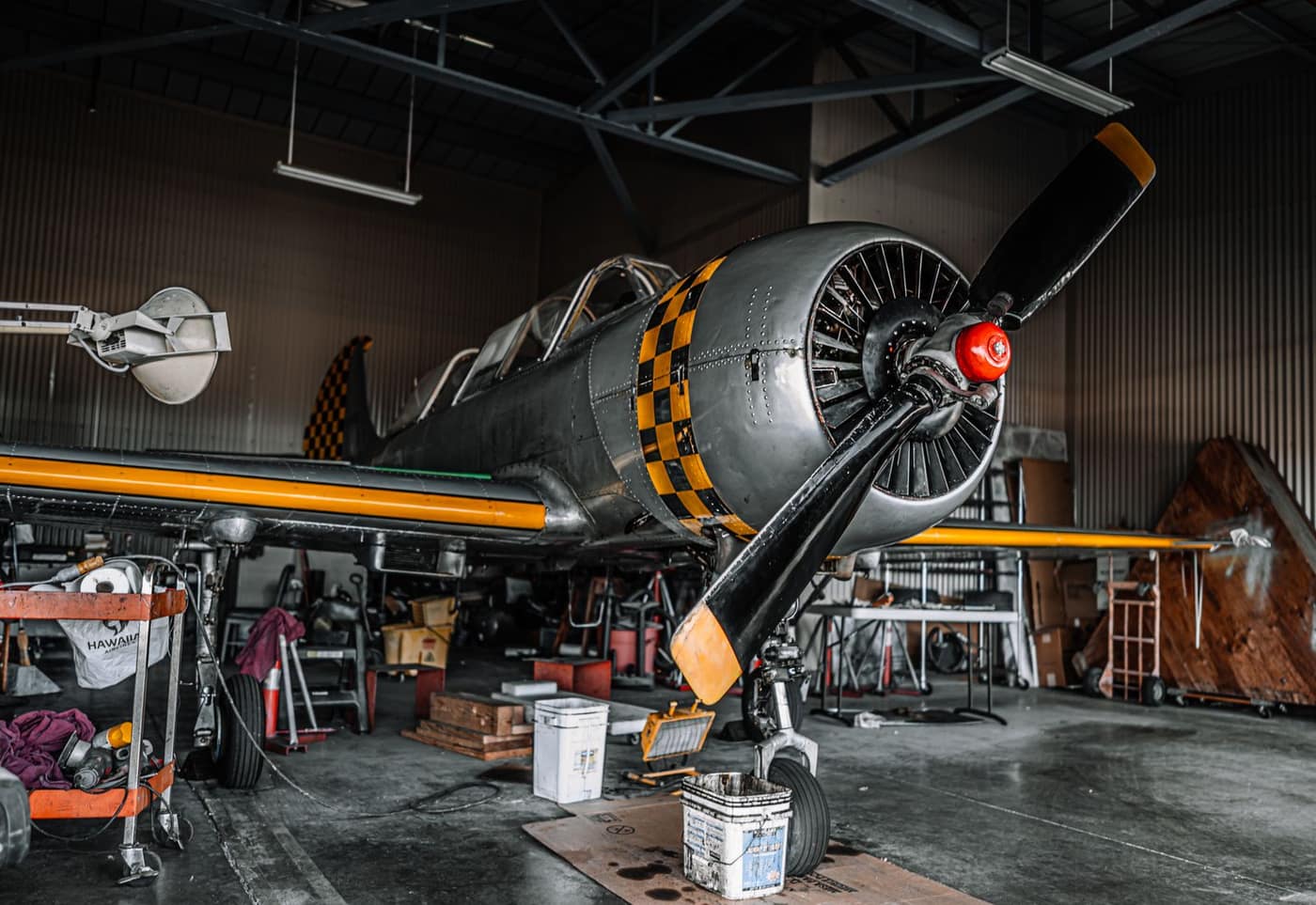
Resinous Flooring
Seamless, fluid-resistant, and FOD-free: built for MRO and maintenance bays that take heavy chemical and load punishment.
Explore system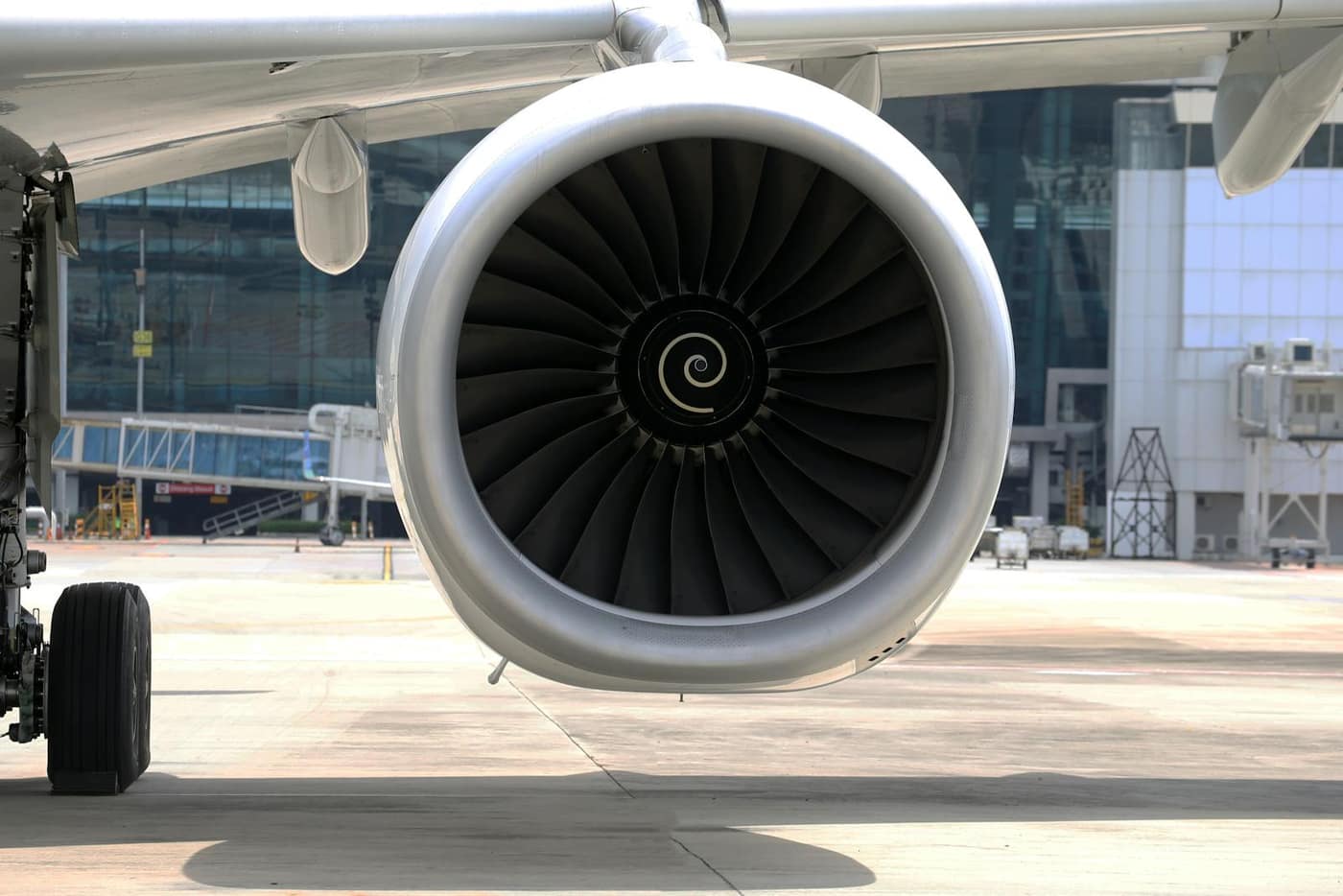
Flake Epoxy
Decorative, durable, and slip-tunable: an FBO and office-ready finish that still handles traffic and the occasional spill.
Explore systemProudly Serving New Jersey & Eastern PA
Our crews are on the road daily. Select your region to see our coverage.
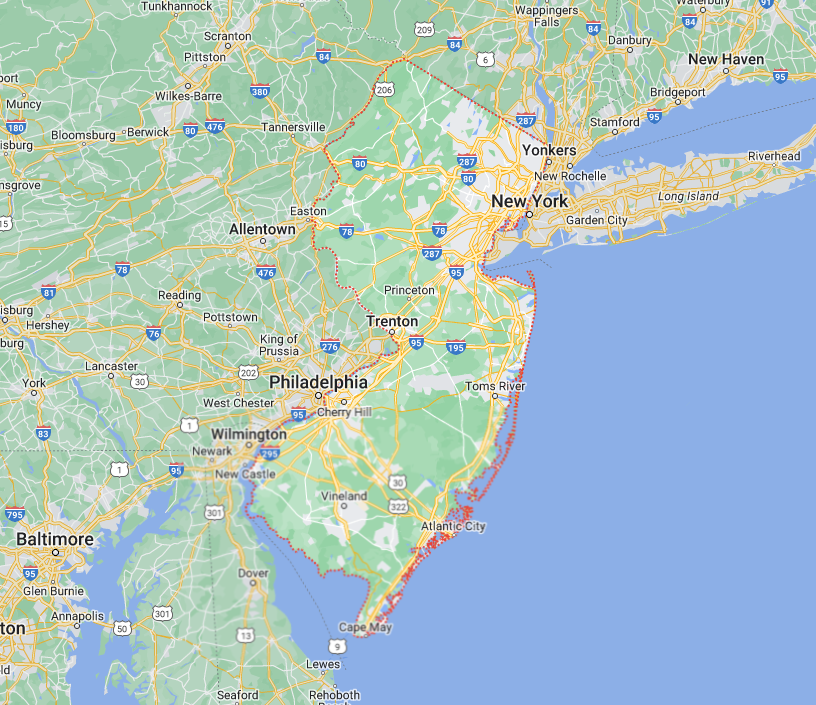
New Jersey
Statewide Coverage- Monmouth & Ocean County
- Bergen & Essex County
- Middlesex & Mercer County
- Atlantic & Cape May County
- Morris & Somerset County
FAQ
Hangar flooring questions, answered straight
Will the floor resist Skydrol and jet fuel?
Yes. Skydrol is a phosphate-ester hydraulic fluid that is aggressive enough to break down most coatings. We specify high-build epoxy systems formulated to resist Skydrol, jet fuel, oils, and solvents without discoloring, blistering, or losing cohesion, matched to the fluids your operation handles.
Can you make the hangar brighter?
Yes. A high-gloss, light-reflective deck bounces fixture light around the bay and can reduce how hard your lighting has to work, which improves visibility for close-up maintenance and inspection.
What about foreign object debris (FOD)?
A seamless, fully bonded coating has no joints or grout lines and sheds no loose material, so the floor itself does not become a source of FOD, and the smooth surface sweeps clean as one continuous deck.
Will it hold up to jacks, tugs, and dropped tools?
Yes. High-build systems are formulated for impact and point-load resistance, so jack stands, tug and tow traffic, and dropped tooling do not crack or gouge the deck.
Do you offer static-control flooring for avionics areas?
Yes. For avionics, electronics, and battery areas we can specify ESD-control systems qualified against ANSI/ESD S20.20, scoped to the zone and its grounding. We specify products that carry the credentials your area needs rather than claiming one we do not hold.
How do you work around aircraft and flight operations?
We phase the work bay by bay around aircraft movements and your schedule, including off-hours, and use rapid-cure options where a bay has to return to service quickly so the hangar stays operational.
Get started
Let’s spec a floor that survives your hangar
Free on-site assessment, honest per-zone recommendations, and a precise quote. Phased around your aircraft movements so you stay operational.
(877) 376-9965 · talk to an installerRated 5 stars by New Jersey homeowners & businesses
Powered by Google
 No Obligation