
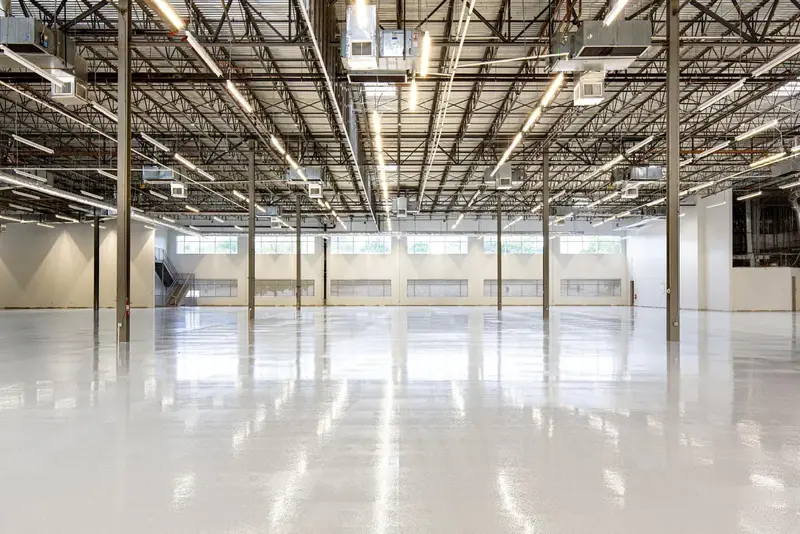
Warehouse & Distribution Floor Coatings
Forklift-rated epoxy and resinous floor systems for warehouses, distribution centers, and storage facilities across New Jersey and eastern Pennsylvania. Sized to your traffic and slab so high-traffic lanes wear slowly, and phased zone by zone so the building keeps shipping.
- Forklift-rated epoxy & resinous systems
- NJ + Eastern PA
- 20+ years installing
- Free on-site assessment
- Sized to Your Traffic
- Thickness matched to forklift point loads
- Dust-Free & Sweepable
- Sealed slab stops concrete dusting
- 20+ Years Experience
- Resinous & high-build epoxy installs
- Phased Around Shipping
- We coat one zone while the rest runs
The warehouse floor problem
A warehouse floor is punished by concentrated load, not flat wear
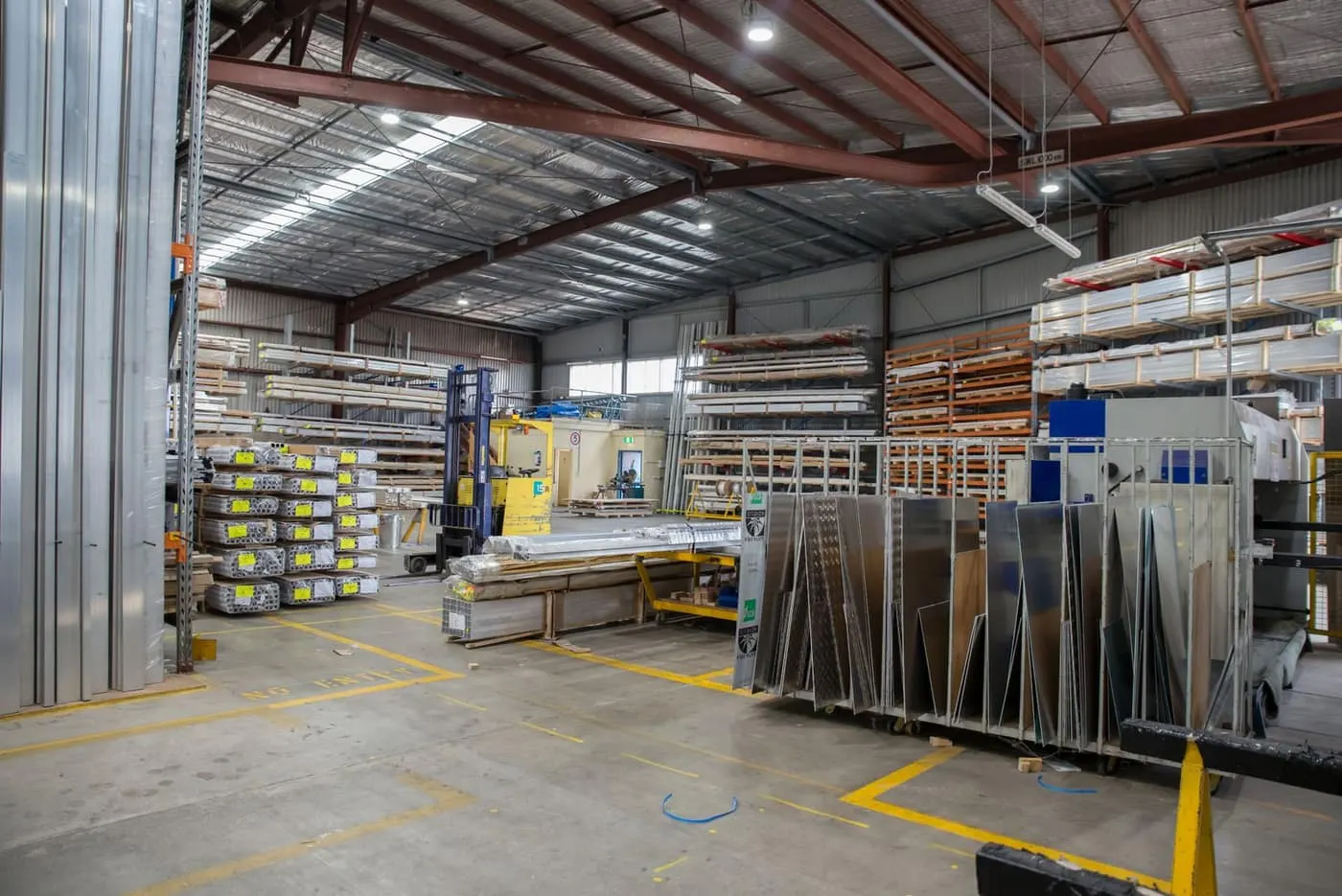
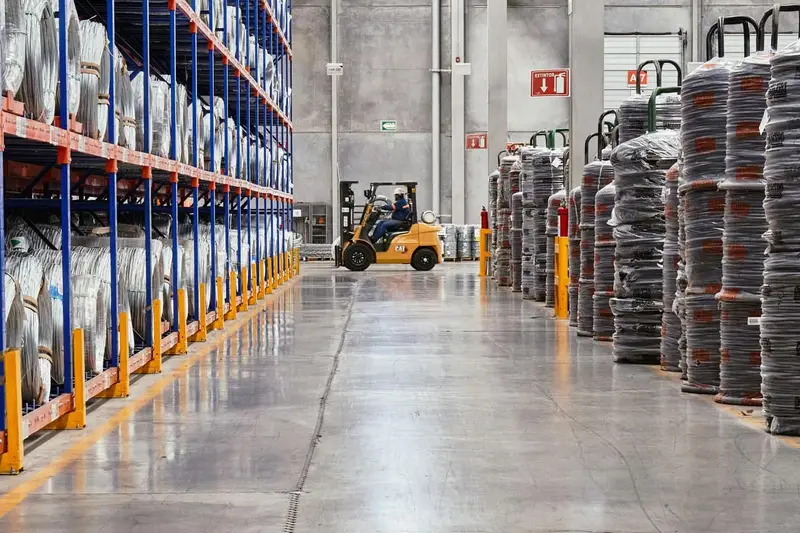
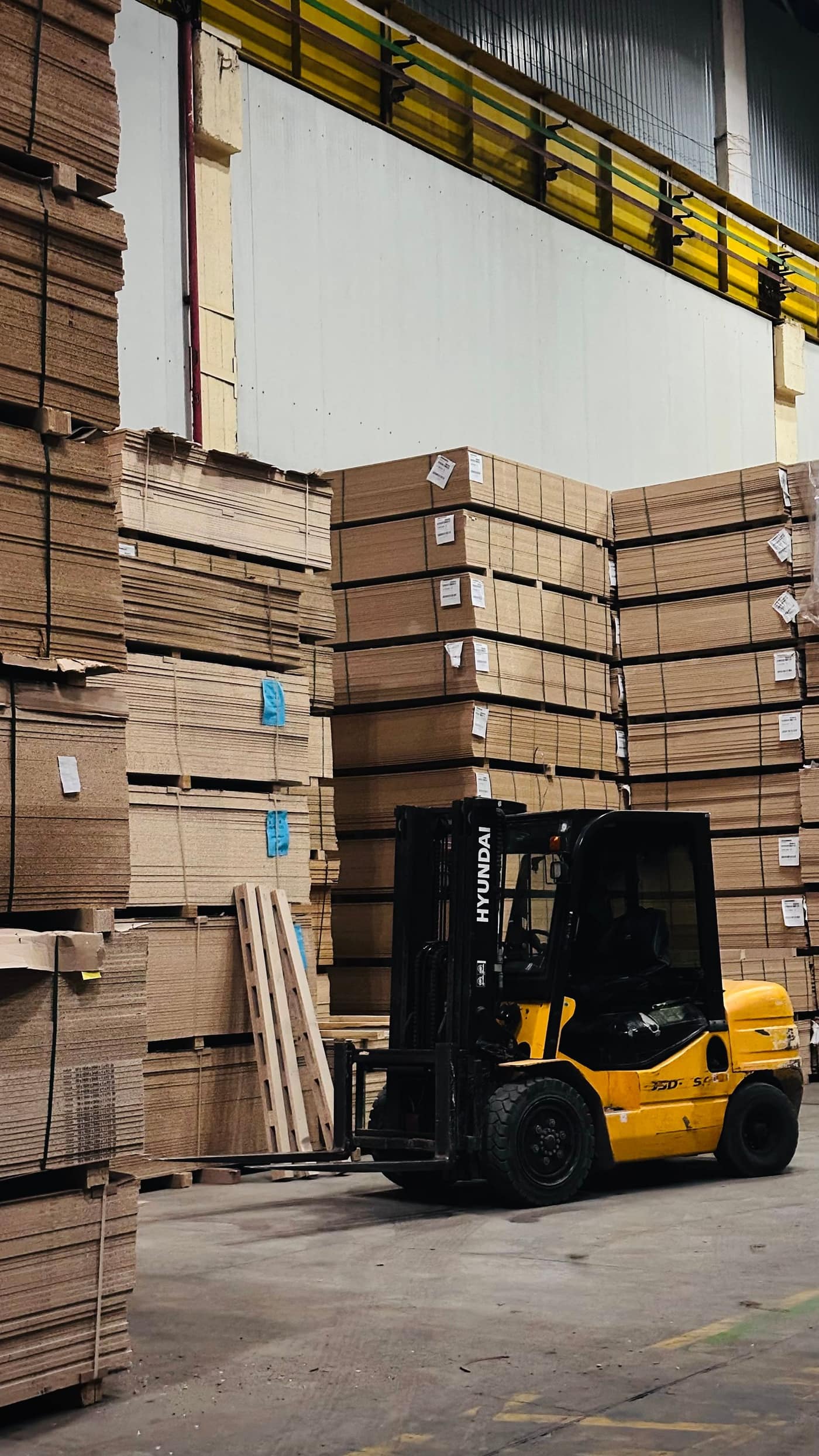
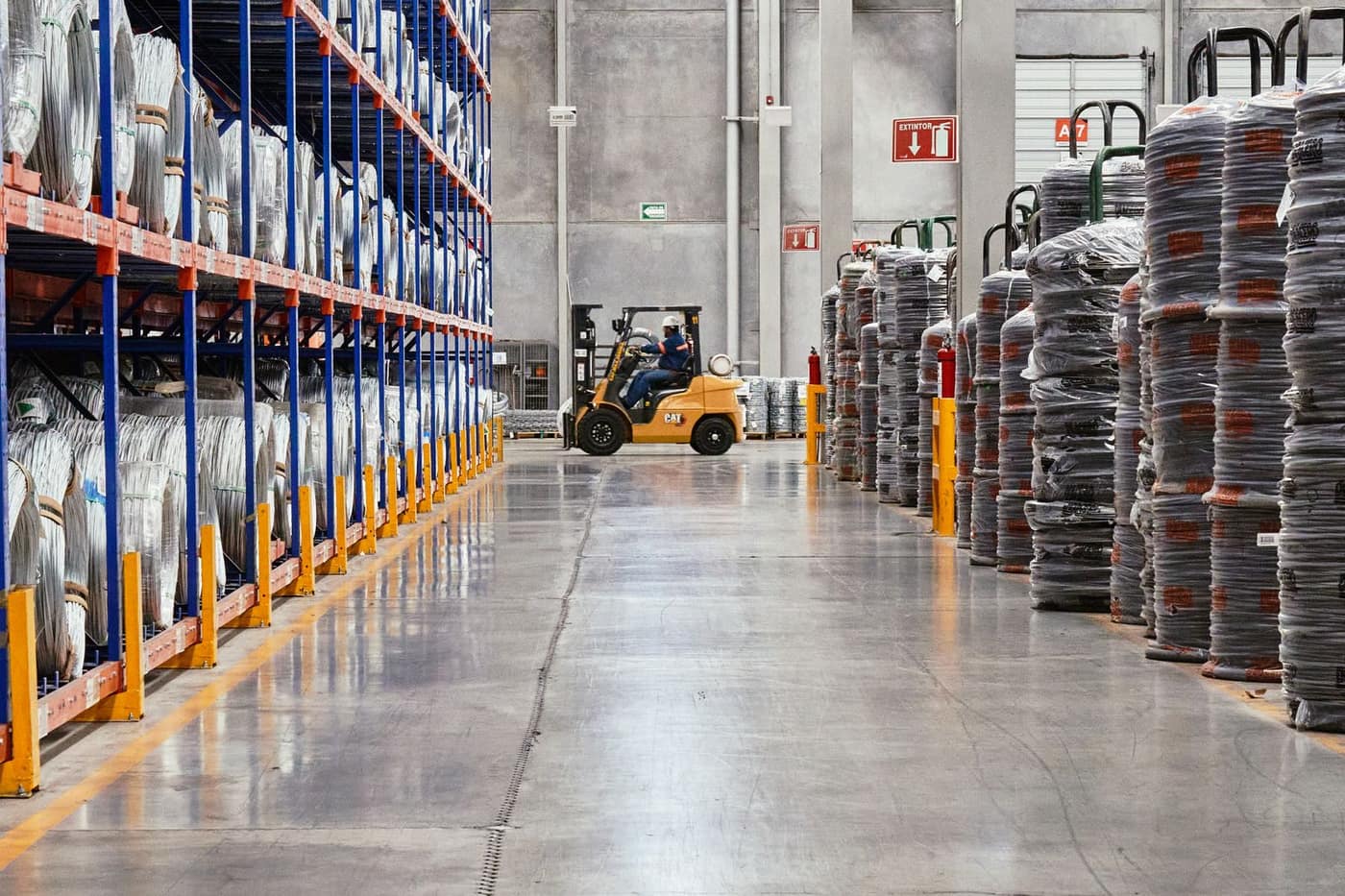
A loaded forklift or a reach truck puts thousands of pounds through a handful of small wheel contact patches, and a fully loaded racking post drives the same kind of concentrated force into a few square inches of slab. That point loading, repeated thousands of times a day down the same drive aisles, is what grinds, chips, and spiders a coating long before the rest of the floor shows any wear.
The other slow killer is the slab itself. Bare warehouse concrete sheds a fine grit that settles onto inventory and works into lift and conveyor mechanisms, and any slab that was never moisture-tested can push vapor up through a new coating and pop it loose from below. Most warehouse floor failures trace back to a system that was specified too thin for the traffic or laid over a slab nobody verified first.
Zone-by-zone
We spec each area of the building for the job it actually does
No single coating is right everywhere. Here is how we read a warehouse floor and match the chemistry to the punishment.
Material choice
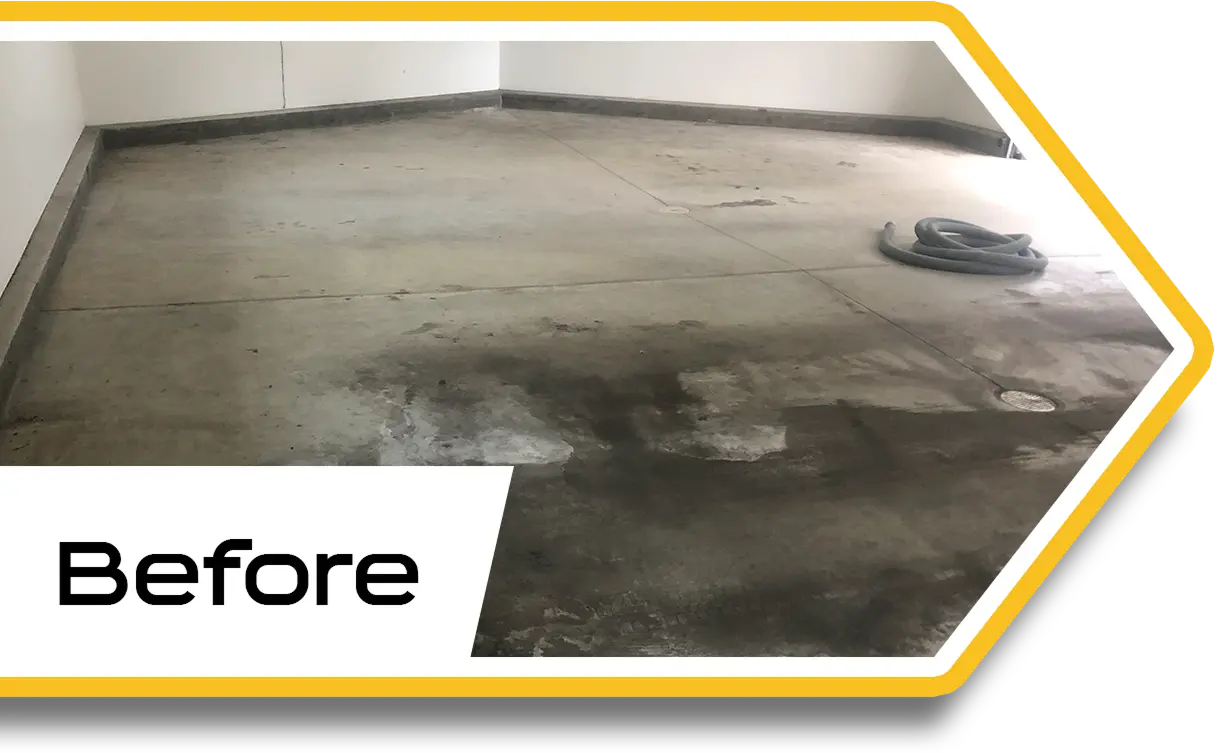
Why a thin coating chips out in the forklift lanes
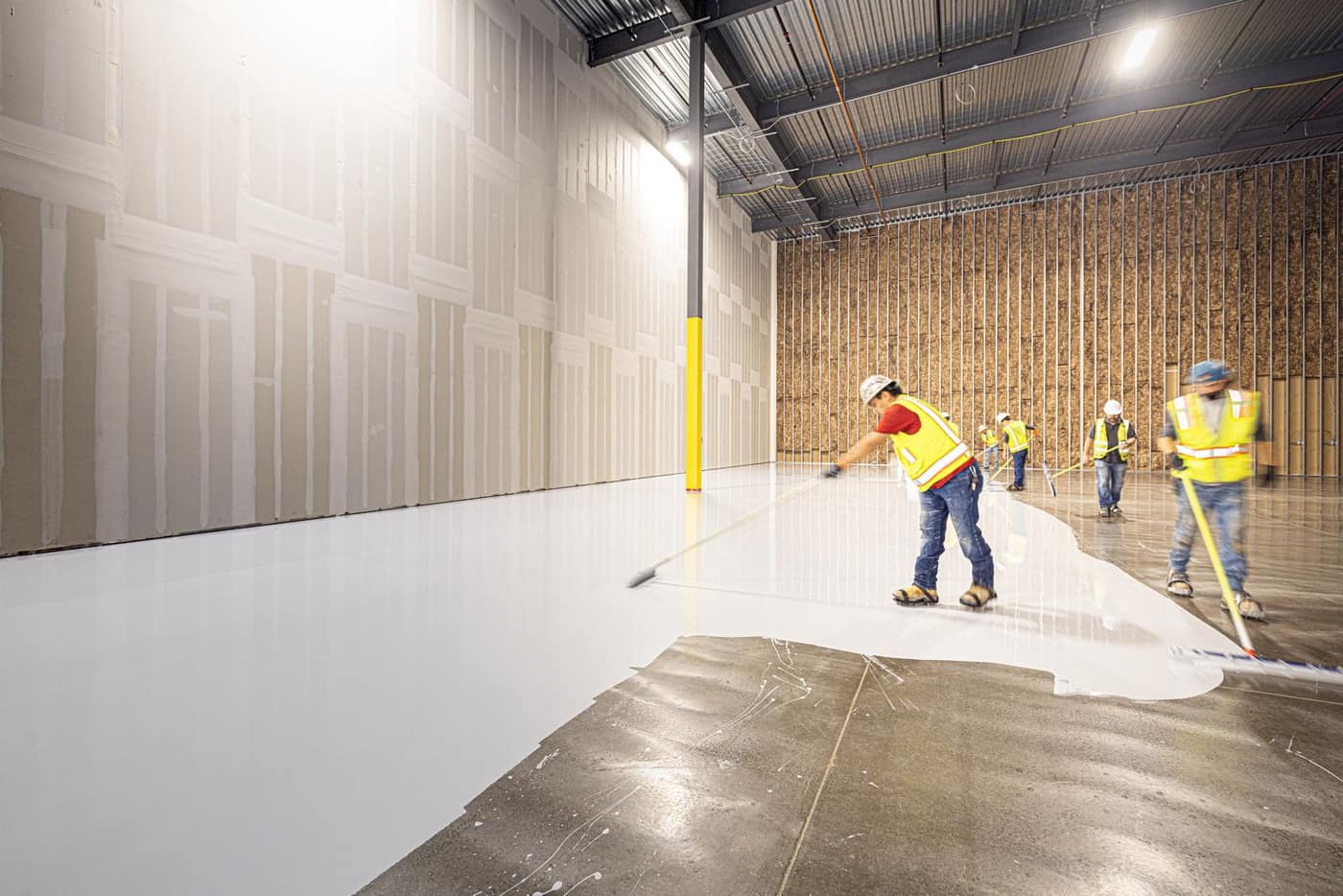
A warehouse floor lives or dies on two things: how thick the wear layer is relative to the load it carries, and how well the slab underneath was read before the first coat went down. A film-build coating that looks fine in a showroom will chip and telegraph cracks where loaded wheels turn and brake all day. We profile the slab and make sure it is dry and sound, then size the system to the equipment that actually runs on it.
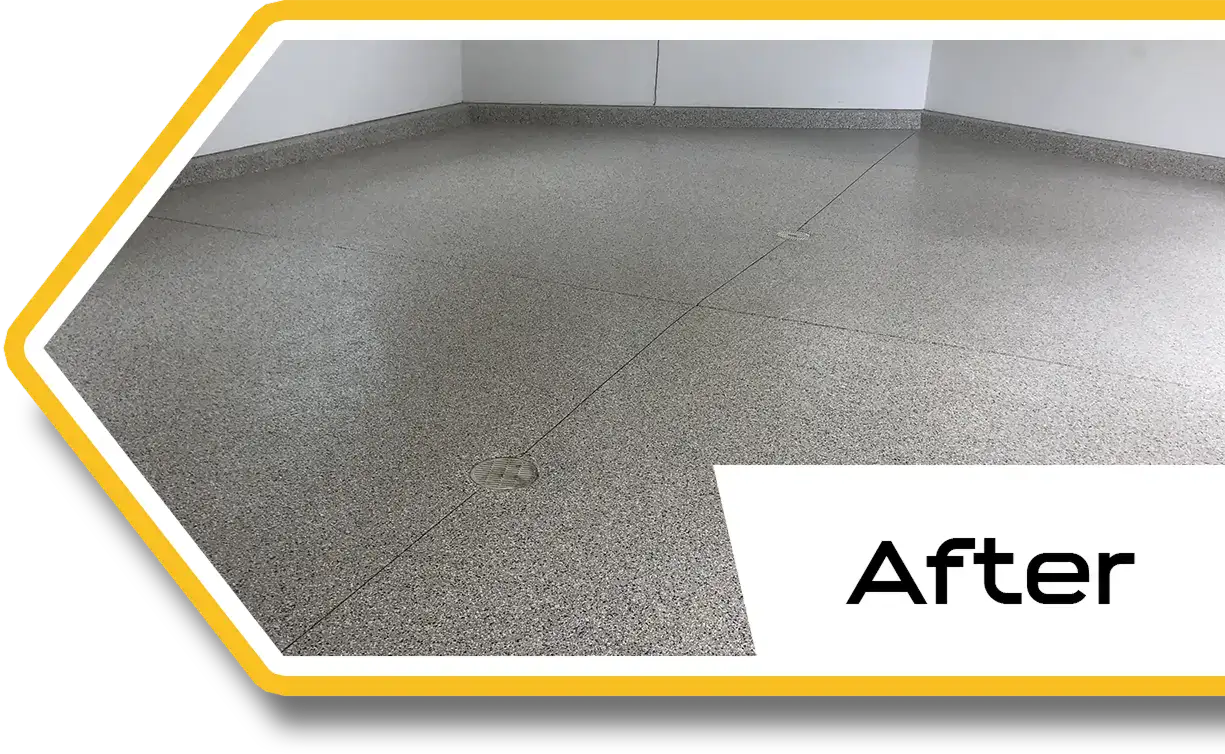
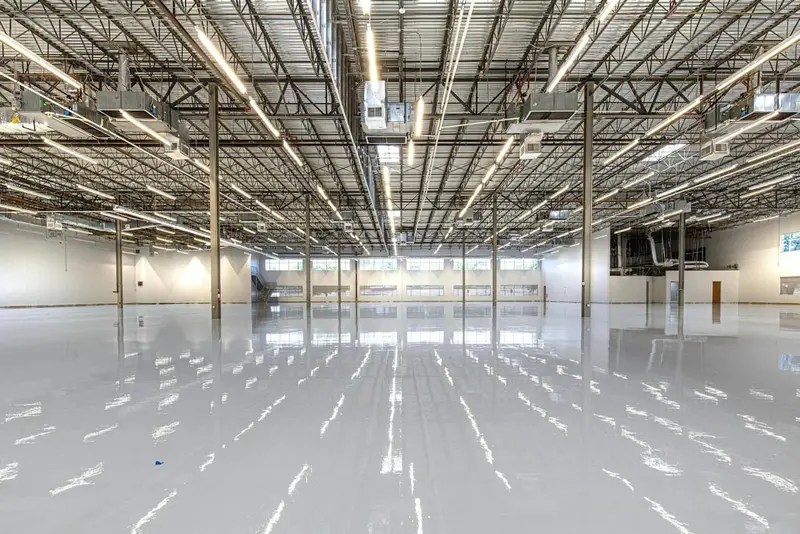
For drive aisles and dock approaches we reach for high-build epoxy, often with a polyaspartic or urethane topcoat where hot-tire pickup near the doors is a concern, because that wear layer is hard enough that warm tires cannot grab and lift it. Across racking and bulk storage we install seamless resinous systems that take the static post loads and resist the oils, battery acid, and spills that come with the work, while sealing off the dusting that bare concrete never stops.
- Sized for point loads. Industrial resinous mortars and high-build epoxies carry compressive strengths well above plain concrete, matched to your forklift and racking loads. [ASTM C579]
- Hot-tire-pickup resistance from hard polyaspartic and urethane topcoats where warm forklift and truck tires would lift a softer film. [Manufacturer TDS]
- Slab dry and sound before the first coat, with a recognized ASTM moisture test worth doing where the water table runs high, since an unbarriered warehouse slab driving vapor upward is the single most common cause of early delamination. [ASTM F2170 · F1869]
- Static control where it is needed, with systems that can be specified to the ESD floor limits for electronics handling. [ANSI/ESD S20.20]
How it works
From your first call to the final coat
We map the whole job before we touch the floor, then phase the work around your production.
- Free Quote(877) 376-9965No-cost on-site assessmentGet my quote
Call or Contact Us
Tell us about your facility and timeline.
- Walk-through
- Drive aisles
- Racking & storage
- Shipping docks
Consultation
A free walk-through and a per-zone floor spec.
- Slab PrepProfiledDry & sound
Preparation
Slab profiled and confirmed dry and sound before coating.
- Sealed
Installation
Seamless system installed, phased around shipping.
Standards & specifications
Built to the standards a distribution floor is held to
A distribution floor answers to load ratings, housekeeping audits, and sometimes ESD control rather than a single code. Here is each requirement that actually lands on a warehouse slab and the published standard we hold the spec to.
Load & compressive strength
We size the system to your forklift, reach-truck, and racking loads. Industrial resinous mortars and high-build epoxies carry compressive strengths well above plain concrete, with the test method defined by ASTM C579. [ASTM C579]
Slab moisture testing
Old warehouse slabs often have no vapor barrier under them, so the slab has to be dry and sound before we coat, and a moisture test is worth doing where the water table runs high or a lot of the floor sits low or below grade: in-situ relative-humidity probes (ASTM F2170) and, where useful, anhydrous calcium-chloride MVER (ASTM F1869). Vapor pushing up from an unbarriered slab is the leading reason a warehouse coating lets go from underneath. [ASTM F2170 / F1869]
Slip resistance (wet)
Anti-slip aggregate broadcast into ramps, dock approaches, and any wash bay where water tracks in off the lot, dialed toward the ANSI A326.3 wet DCOF benchmark of 0.42. Texture is set zone by zone so a swept-floor lane is not as aggressive as a dock ramp, and no wet floor is ever fully slip-proof. [ANSI A326.3]
Striping-ready surface
A hard, sealed topcoat that is ready to take OSHA safety-color aisle and hazard striping and hold it without lifting, so the lines a facility lays down last instead of wearing off bare concrete. [OSHA 29 CFR 1910.144]
Static-control (ESD) options
Where electronics are handled, we can specify static-control floors qualified as a system against ANSI/ESD S20.20, which holds flooring below 1.0 x 10^9 ohms to ground, scoped to the zone and its grounding. [ANSI/ESD S20.20]
Dust & housekeeping control
A sealed resinous surface stops the fine grit that bare concrete sheds onto product and into equipment, so the floor sweeps and auto-scrubs clean instead of regenerating dust every shift. [Sealed, non-porous surface]
ESD and slip-resistance targets are met by the systems we install and the products we specify into them. Jersey Epoxy is the installer, not a certifying body, so we point to the credential on the product or the standard on the spec rather than calling ourselves certified.
Benefits
A properly specified warehouse floor takes the load and stays put
Forklift & Point-Load Durability
We match the wear layer to your forklift, reach-truck, and racking loads so the drive aisles hold up instead of chipping and cracking where the wheels turn.
Hot-Tire-Pickup Resistance
Hard polyaspartic and urethane topcoats near the dock doors stop warm forklift and truck tires from grabbing and lifting the coating.
Dust-Free, Sweepable Surface
Sealing the slab eliminates the concrete grit that settles on inventory and works into lift and conveyor mechanisms, keeping housekeeping and air-quality audits in check.
Chemical & Oil Resistance
Battery acid in the charging bay, hydraulic oil, and the odd spill wipe off a non-porous resinous surface instead of soaking in and staining the slab.
Phased Around Operations
We section the building and coat one zone while the rest keeps shipping, working nights and weekends and using fast-cure topcoats so lanes come back into service sooner.
Striping-Ready Topcoat
A hard, sealed surface that takes OSHA safety-color aisle and hazard striping and holds it, so the lines a facility lays down do not wear off the way they do on bare concrete.
Recommended systems
The systems we reach for in a warehouse
The three systems that carry most warehouse jobs, with the chemistry behind each.
Epoxy Flooring
A hard, high-build base sized to forklift and racking loads: the workhorse for drive aisles, dock approaches, and bulk storage.
Explore system
Resinous Flooring
Seamless, chemical-resistant, and non-porous: it shrugs off oils and battery acid and seals away the dusting bare concrete never stops.
Explore system
Polished Concrete
A hard, low-maintenance, light-reflective finish for big storage footprints where you want to densify and seal the existing slab.
Explore systemProudly Serving New Jersey & Eastern PA
Our crews are on the road daily. Select your region to see our coverage.

New Jersey
Statewide Coverage- Monmouth & Ocean County
- Bergen & Essex County
- Middlesex & Mercer County
- Atlantic & Cape May County
- Morris & Somerset County
FAQ
Warehouse flooring questions, answered straight
Will the floor hold up to our forklifts and loaded racking?
Yes, when it is sized correctly. We match the coating thickness and wear layer to your forklift and reach-truck point loads and your racking post loads, using industrial systems with compressive strengths well above plain concrete (test method ASTM C579). A floor fails in the drive aisles when it was specified too thin for the traffic, so we read the equipment first.
Why does our coating keep peeling near the dock doors?
That is usually hot-tire pickup: warm forklift and truck tires coming in off the lot grab a softer film as they cool and lift it on the way out. We specify hard polyaspartic or urethane topcoats in those approach zones because they are difficult for a hot tire to grab and pull up.
Will it stop the concrete dust we keep sweeping up?
Yes. Bare concrete continuously sheds a fine grit that lands on inventory and works into lift and conveyor mechanisms. A sealed resinous surface stops the dusting at the source, so the floor sweeps or auto-scrubs clean instead of making new dust every shift.
Can you do static-dissipative (ESD) flooring for our electronics area?
We can specify static-control systems for the zones that handle sensitive electronics. ESD flooring is qualified as a system against ANSI/ESD S20.20, which holds the floor below 1.0 x 10^9 ohms to ground, so we scope it to that area and its grounding rather than coating the whole building to that spec.
How do you avoid shutting our operation down?
We phase the work, sectioning the building so we coat one zone while the rest keeps shipping, including nights and weekends, and we use fast-cure topcoats where a lane has to return to service quickly.
Get started
Let us spec a floor that survives your forklift traffic
We walk the building at no cost, read the equipment and the slab, and come back with a per-zone spec and an exact number. The work is sectioned around your dock schedule so trucks keep loading while one lane cures.
(877) 376-9965 · talk to an installerRated 5 stars by New Jersey homeowners & businesses
Powered by Google
 No Obligation