

Defining Epoxy vs Polyurea vs Polyaspartic Flooring
To start, we'll define epoxy, polyurea, and polyaspartic flooring materials, which differ in chemical composition and how that makes a difference in the quality of the flooring. We want coatings that are lasting and UV resistant.
Epoxy Floor Coatings: This type of flooring material is comprised of a resin and hardener that, when combined, chemically react and cure to form a rigid, 'plastic-like' surface that bonds to a concrete floor.
Polyurea Floor Coatings:Polyurea flooring is an extremely effective polymer with elastic properties similar to rubber. When Polyurea floor coatings were first developed they were used for industrial floor coatings and then later military applications.
It is created using an isocyanate, a chemical compound consisting of nitrogen, carbon, and oxygen, when it comes together it forms a polyurethane material as flexible foam, a liquid coating, or a solid rubber with a synthetic resin blend. Polyurea is an extremely fast-curing, flexible floor coating.
Polyaspartic Floor Coatings: Polyaspartic flooring is a specialized subtype of polyurea, modified to slow the curing process and provide UV-resistant floor coatings, making it more practical for residential applications.
What Is The Cost Of An Epoxy Floor Installation?
Whether a homeowner or a professional businessperson, cost is a big consideration for any home improvement project. Affordability is one reason epoxy floor coatings are popular for updating rooms like basements and garages. Household budgets matter for many homeowners seeking a strong return on investment while balancing the mortgage, property taxes, and basic living expenses. We will first concentrate on the practicality of choosing a cost-effective flooring upgrade known as epoxy for home or business:
- The size of the space for an epoxy floor: Naturally, the size of the floor is a factor in determining the full cost of a professional epoxy floor installation. Larger rooms will take more time and material for the professional flooring contractor. Labor charges for an epoxy floor installation include surface preparation costs such as grinding, patching, and power-washing the concrete floor, the number of epoxy coats needed, and whether special add-ins, such as metallic or flake finishes, are included.
- The type of epoxy floor material one chooses: The type of epoxy floor material one chooses: Water-based epoxy material is the most cost-effective option, costing on average $1.15 to $2.25 per square foot, and is good for floors not getting heavy traffic. While budget-friendly, the thin nature of such material may require reapplication every 1 to 3 years. 100% solid-color high-grade professional epoxy usually costs $4 to $9 per square foot, with most homeowners paying about $7.50 per square foot. High-grade 100% solid-color epoxy floor is thicker, more durable, and the best choice for heavy foot or vehicle traffic, such as residential garage floors and some commercial flooring solutions.
- The type of finish of the epoxy floor: If wanting an epoxy floor with style, adding a special finish such as a metallic 3D finish mimicking waves or clouds will bring the cost of an epoxy floor to $8 to $10 per square foot, or a flake decorative floor finish for texture, color, and slip resistance will cost $5 to $10 per square foot.
- The DIY epoxy kit: DIY epoxy kits can range in cost from $50 to $600, and while DIY will save the labor costs, the result may not be worth the sweat or savings! Pay the cost for professional epoxy installation and avoid the six most common epoxy mistakes.
Defining The Cost Differences Of Epoxy, Polyurea, and Polyaspartic Flooring?
Epoxy, polyurea, polyaspartic flooring — OH MY! In terms of cost — yes, polyurea and polyaspartic flooring will cost more to install than an epoxy floor installation. The initial cost for polyurea and polyaspartic flooring ranges from $7 to $12 per square foot, vs. high-grade epoxy flooring cost of $4 to $9 per square foot. To get a clearer idea of what a few extra dollars of polyurea and polyaspartic flooring coatings would mean per floor space, we provide the following examples:
2-Car Garage: For an average 400- to 500-square-foot 2-car garage would cost $1,200 to $3,500 vs. $2,400 to $6,000 with polyurea or polyaspartic flooring so big savings in this choice.
Basement: A 600 - to 800-square-foot basement with epoxy would cost $1,800 to $5,600 vs. $3,600 to $9,000 for polyurea or polyaspartic floor coating.
Sunroom/Patio: A 200- to 300-square-foot sunroom or patio with an epoxy floor coating would cost between $600 and $2,100, compared with $1,000 to $3,600 for a polyurea or polyaspartic floor coating.
Utility/Laundry Room: An epoxy floor in a 100-square-foot utility/laundry room would cost between $300 and $700, while a polyurea or polyaspartic floor would cost between $500 and $1,200, another big price difference if you are on a tight budget.
Home Workshop/Gym: An epoxy floor in a 300 to 400 square foot home workshop or home gym would cost $900 to $2,800, vs. $1,500 to $4,800 for a polyurea or polyaspartic floor.
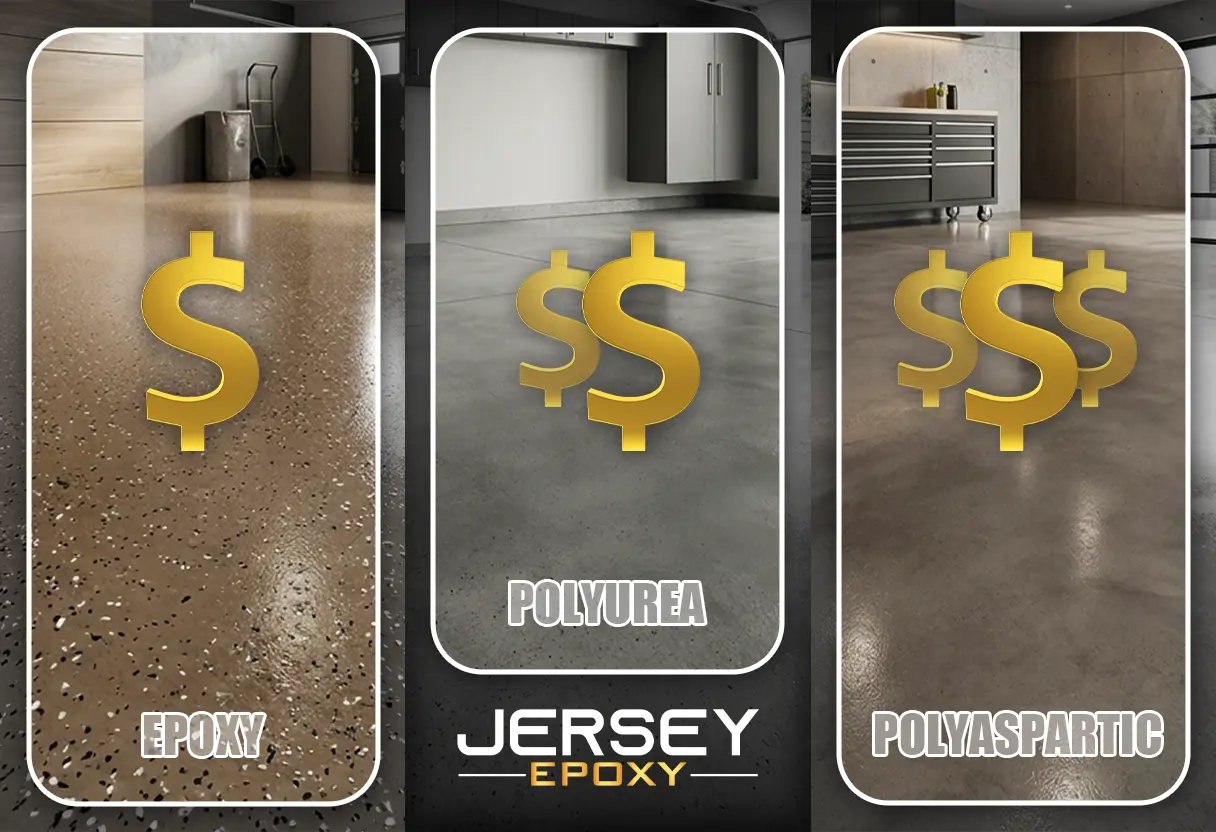
No doubt about it, in terms of initial price cost — polyurea or polyaspartic flooring is more expensive! Ahhh, but quality flooring is not based on price alone! Other factors matter when choosing between epoxy, polyurea, or polyaspartic flooring. Jersey Epoxy contractors stand firm in knowledge and understanding of all three flooring solutions and will always provide the best flooring solution for the most cost-effective home or business floor upgrade based on the personal needs and budget of each individual customer! Floor coating durability and value also go into the mix for ensuring the best floor solution for certain home or business spaces.
Best Durability And Value Of Epoxy vs Polyurea vs Polyaspartic Floors
Epoxy resin and hardener floor coatings are certainly durable. Still, with the latest market innovations in polyurea and polyaspartic floor solutions, it is important to weigh price against long-term durability and value — based on the room one has in mind for flooring upgrade. Let us again examine the five room examples with long-term durability and value in mind:
- 2-Car Garage: The best material match for a 2-car garage for durability is a polyurea/polyaspartic floor. Polyurea flooring is UV-resistant and won't yellow from sun exposure. It cures fast, resists hot-tire pickup, and is chemical-resistant to winter salts clinging to tires or automotive fluid leaks like gas, oil, and transmission fluid. A polyaspartic topcoat over a polyurea or epoxy base coating would be the best choice for durability and value.
- Basement: For durability, the most cost-effective option would be a high-solid epoxy floor for its moisture-vapor barrier protection. Basement floors are unlikely to be exposed to UV sun, so the UV resistance of polyurea/polyaspartic flooring isn't necessary. For a hybrid approach, a professional contractor may recommend an epoxy base layer with a moisture-vapor barrier, combined with a polyaspartic topcoat.
- Sunroom/Patio: With direct exposure to ultraviolet sunlight and temperature fluctuations, the best material for a sunroom or patio is polyaspartic flooring, which resists UV light and retains a high-gloss color. The flexibility of polyaspartic/polyurea flooring handles the freezing-thawing shifts of winter and spring weather.
- Utility/Laundry Room: When an indoor utility/laundry room is shielded from UV light, a more budget-friendly epoxy-resin flooring with varied design and color options is a good choice because it's chemical- and moisture-resistant. If the home budget can handle a polyaspartic flooring solution, its flexibility will better withstand the minor vibrations of heavy machines like the washer/dryer, and it's also chemical- and moisture-resistant, abrasion- and scratch-resistant, and better able to handle temperature shifts from the heat of the washer/dryer.
- Home Workshop/Gym: For long-term durability, in a home workshop where tools are dropped, experience chemical spills from solvents, oils, and paints, rolling toolboxes or heavy machines, the better material choice would be the flexibility of a polyurea floor, with its chemical and scratch-resistant nature. Some contractors may recommend polyurea flooring with a polyaspartic topcoat.
Contact
Contact Jersey Epoxy, the licensed and professional floor solution experts serving New Jersey and Pennsylvania residents for 20+ years! Epoxy, polyurea, or polyaspartic flooring — OH MY! So many options can boggle the mind when it comes to the best floor choice for cost, durability, and value! Don’t fret and don’t ‘sweat’ by attempting a DIY floor upgrade. Call the professionals at Jersey Epoxy at 877-376-9965, send an email, or use our web contact form to get a free evaluation of the floor upgrade project you have in mind. We will provide a free quote for the best flooring solution — for your home or your business!