

So you’ve done all the hard work and upgraded your outdoor space with a new epoxy floor coating. Congratulations! You have done the right thing because epoxy floor coatings are extremely durable and will last for years. And they are a growing trend for all sorts of flooring.
Epoxy floor coatings are durable and come in the most beautiful colors and shades. This is why you want to make sure that it truly is an investment that lasts so you must take care of it! This is especially true if your new floor is outside and is exposed to the elements every day!
Let’s break down more about how to protect your outdoor epoxy floor.
The Benefits of Installing Epoxy Outdoors
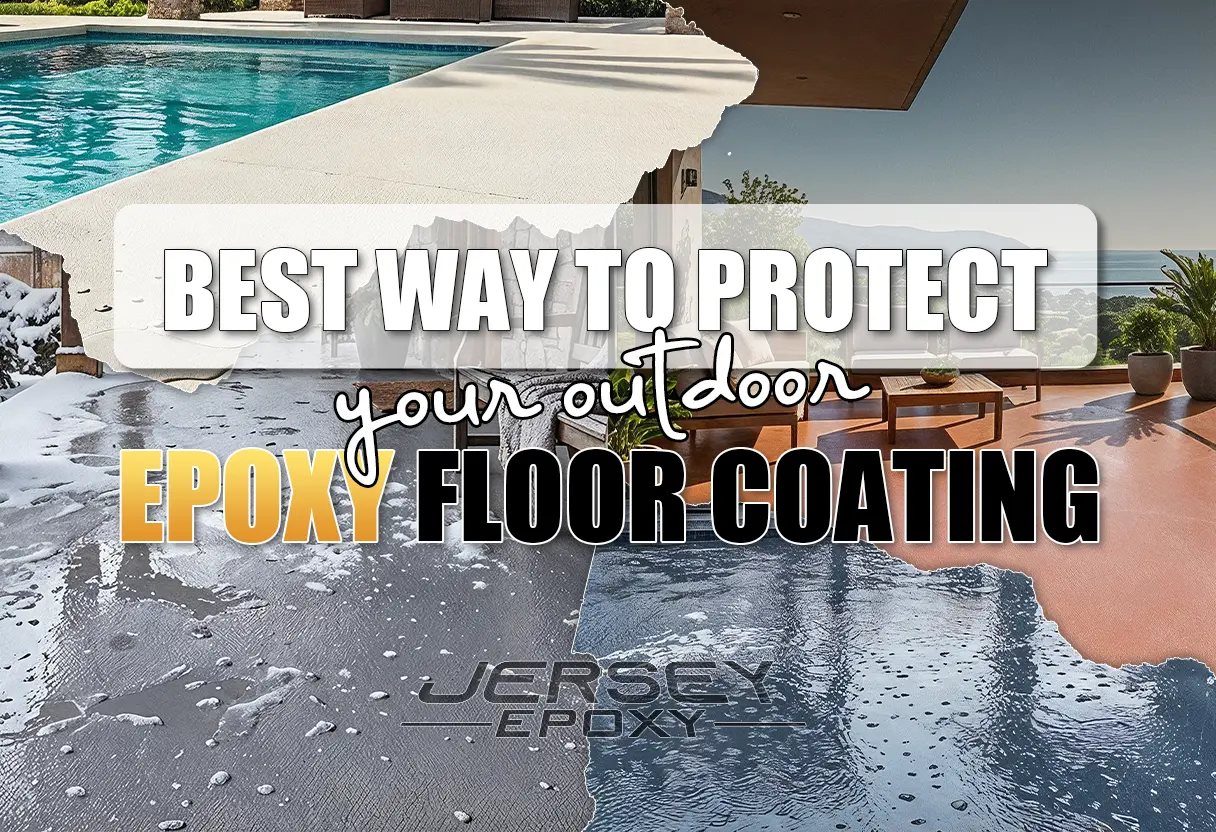
To start, installing epoxy outdoors is a great choice for many reasons. It offers exceptional durability compared to other outdoor flooring materials. It won’t break down when exposed to heat and cold. The way epoxy resin is formulated, it is done to withstand extreme temperatures, such as heavy rain or snow storms.
The other thing about epoxy is that it is water-resistant! The way you apply epoxy is you layer a thick liquid on top of your outdoor concrete pad, and it dries to a uniform finish once it is fully cured. When it settles, you end up with a rock-hard, nonporous surface that doesn’t absorb water. Any rain or liquid that falls on the surface will simply bead up and run off the floor.
Epoxy floor coatings are also considered chemical and stain resistant! This is why epoxy is such an attractive choice for garages and workshop areas. It won’t absorb stains from oil spills or grease, and can simply be cleaned with a rag and routine sweeping.
Some of the most common places to install epoxy outdoors include:
- Patios and porches
- Pool decks
- Sidewalks and walkways
- Driveways and garages
While epoxy floor coatings are such a solid choice for outdoor spaces, they do come with some vulnerabilities that should be addressed during your installation and routine maintenance.
Is Epoxy Heat Resistant?
While epoxy is one of the most durable flooring solutions on the market, it does have a few vulnerabilities particularly from heat. Lets talk through some of these potential issues.
Ultraviolet Rays Exposure
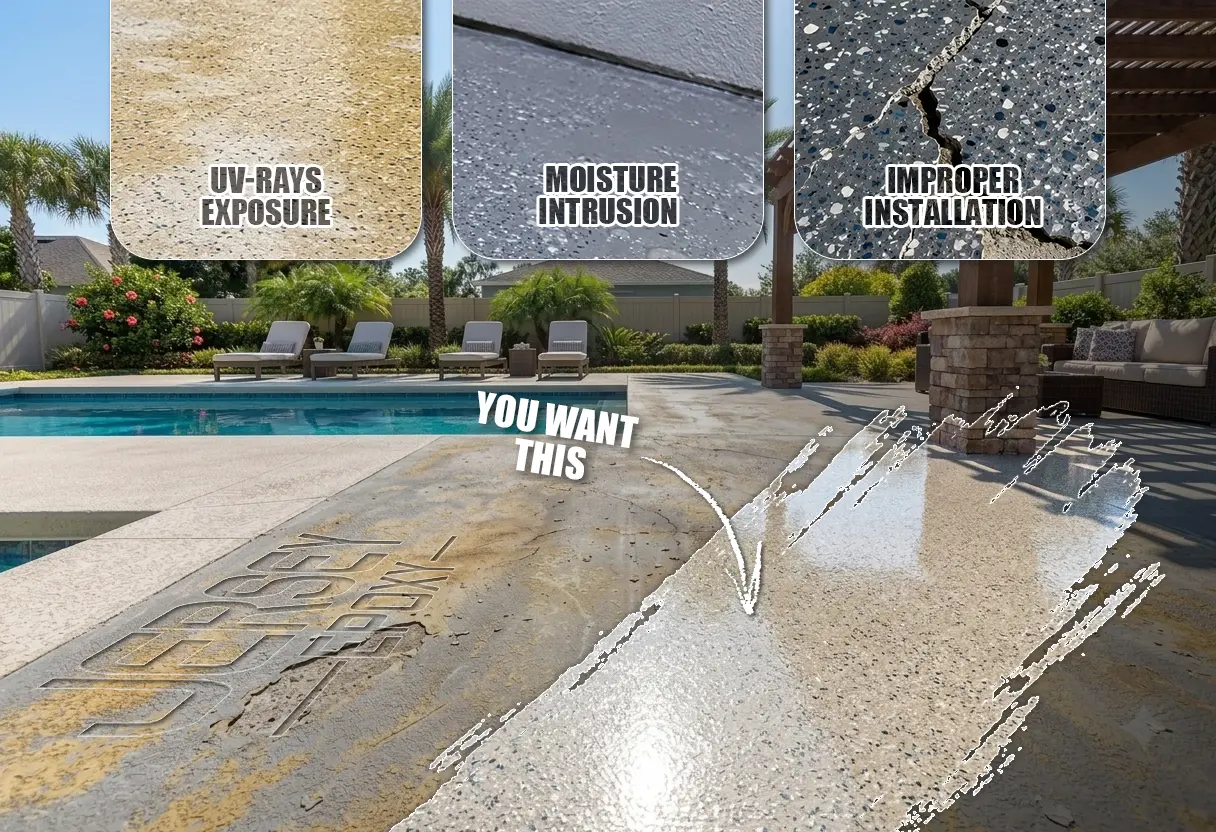
One of the biggest risks for epoxy is its vulnerability to UV exposure. Ultraviolet rays, which come from the sun, penetrate the epoxy resin, causing it to fade over time. The chemicals that make up the resin and hardening agent may become unstable from the sun’s rays. This chemical bond will weaken over time, and it can lead to premature aging of your floor. The good news is that UV-blocking agents can be added to help slow this process and to protect your floor!
Moisture Intrusion
We did mention earlier that epoxy floor coatings are moisture resistant. Even so, moisture that is present during the initial application still causes problems. Sometimes it is hard to ensure that the outside spaces are completely dry before applying the epoxy liquid. You need to ensure that the flooring is dry before you apply epoxy on top of it.
What happens is that lingering moisture becomes trapped in the resin, making it harder for it to cure properly. This results in chronic soft spots, and even premature wear and tear.
Improper Installation
Finally, an improper or uneducated installation can result in vulnerabilities for your epoxy floor. Epoxy floor coatings are sensitive to extreme temperature swings during installation. Failing to install your epoxy during the right time of the year can lead to a floor that is more vulnerable to breaking down or wearing away faster.
Tips To Protect Your Outdoor Epoxy Floor
Thankfully, these problems can easily be solved with a little preparation! The first and most important thing is to ensure that your floor coating is installed the right way the first time. Make sure to employ a professional epoxy floor installer for the best outcome. A professional will choose the right dates for installation, and prep your subfloor properly before placing the epoxy layer.
Once your floor is installed, wait for it to fully cure before using it. It may be cured enough to walk on within a day or two, but most epoxy projects won’t cure completely for a couple of days or even a full week. Patiently waiting those extra few days will allow the resin to harden the way it needs to without intrusion.
Once your floor is installed, take care of it! Routinely sweep it to remove debris, and you should clean up spills immediately. Use a mild soap and some water when you mop the floor. Don't use a pressure washer directly on the floor.
If your floor is exposed to direct sunlight, it is recommended to add a UV-resistant top coat and to reseal your floor every few years to protect your investment.
What To Do About a Damaged Epoxy Floor
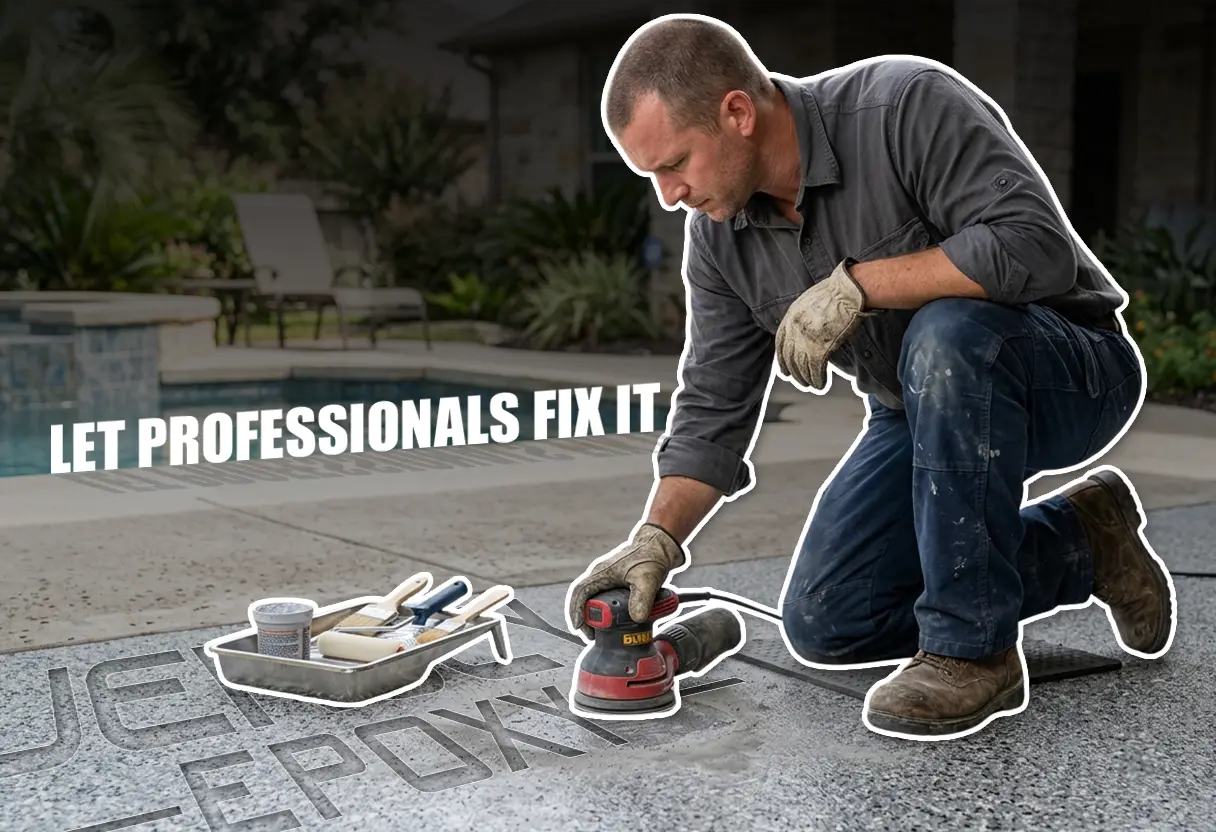
If you do discover that your outdoor epoxy floor has experienced damage in some capacity, it is possible to fix most damage without having to resurface the entire floor. A professional flooring team can evaluate the damage to determine the appropriate repair.
If your flooring gets small scratches, they can usually be fixed by lightly sanding the area and applying a thin topcoat. Small chips or dents can be solved with a crack filler that is formulated to fit seamlessly with your flooring design. If your floor experiences discoloration due to UV exposure, a new top coat helps return its sheen.
In rare circumstances, your entire floor may need a replacement. This most often occurs when a widespread failure or foundation issues are affecting the entire floor. In these cases, the floor is then ground down and recoated carefully after the underlying problem is resolved.
The best practice is always to rely on a professional flooring team to handle your installation and repairs. Keep your floor in good hands.
Epoxy floor coatings can shine in outdoor spaces! Contact Jersey Epoxy today at (877) 376-9965 to learn how our epoxy floor solutions are perfect for your property.