

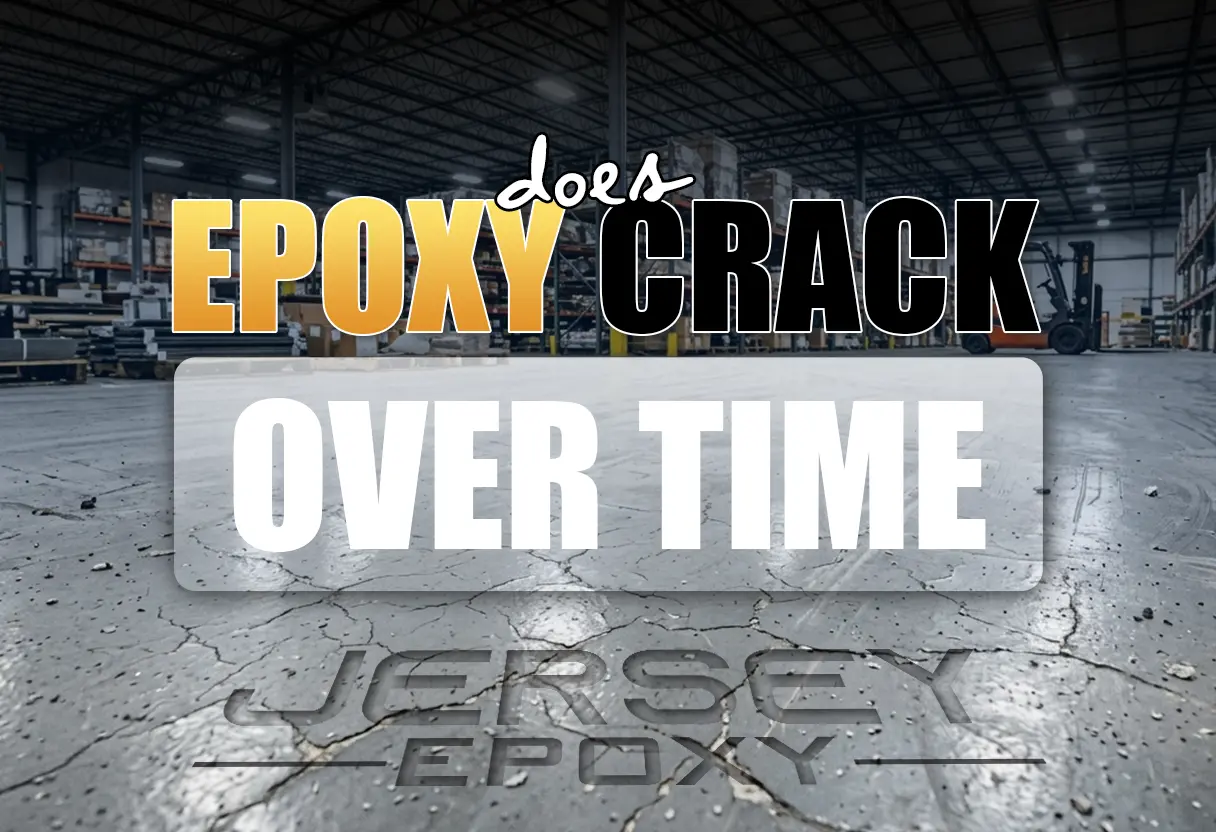
In today’s article, we address the question on the minds of many considering epoxy resin flooring for business or home: does epoxy crack over time? The answer is yes, if the concrete substrate beneath the epoxy floor remains 'as is' with all its ‘perfectly porous’ concrete characteristics:
Compromised Structural Strength: Too much water or moisture can chemically compromise concrete's structural integrity. Freeze-and-thaw cycles create external pressure that causes cracks through expansion and contraction.
Debris Trapping: Concrete is porous, a result of the water used in the mixing process. While in the mixing process, the water reacts with the cement and other aggregates used to create and harden the concrete. The excess water leaves behind microscopic interconnected voids or ‘holes’ and minuscule ‘channels.’ When dirt and debris get ‘trapped’ in the porous concrete, it hinders proper drainage, leading to the eventual cracking of the concrete.
Lower Load-Bearing Strength: This characteristic is why concrete is not used for streets and highways and is limited to driveways, walkways, and perhaps a small parking lot. Chemical contamination can break down the cement 'paste' and aggregate part of concrete, leading to structural deterioration, concrete slab movement, and hairline cracks. Water within the concrete eventually flows into the ground, causing foundation settling.
Why Epoxy Floors Crack
The why of epoxy floor cracks will be better understood with an understanding of the why of concrete substrate cracks:
Concrete Slab Movement: Due to ‘shrinking’ of the composition of the concrete, a mixture of cement, which is the binding grey powder, water to activate the cement to make a chemical-binding paste, sand to act as an aggregate to lock cement and water together, and gravel or crushed stone that makes up the durability of concrete. As the concrete dries, water evaporates, causing concrete to shrink. Shrinking concrete pulls apart, causing hairline cracks in the floor.
- Foundation Settling: Dirt beneath the concrete shifts, sinks, or can wash away. When concrete loses its support, the concrete substrate cracks.
- Extreme Temperatures: With higher temperatures, the concrete expands and cracks. In cold temperatures, water trapped in concrete freezes and contracts. This expansion and contraction of concrete is the reason for hairline floor cracks.
- Heavy Weight: As solid as a concrete floor is, it is not invincible to weight. If an extremely heavy truck rolls over a concrete floor, the concrete will crack from the stress.
If proper surface preparation is not done on the concrete spalling (pitting, flaking, and chipping) before epoxy floor installing, the epoxy flooring will also crack and peel, as the concrete substrate cracks transfer directly through the epoxy resin flooring!
The Concrete Under Your Epoxy Matters
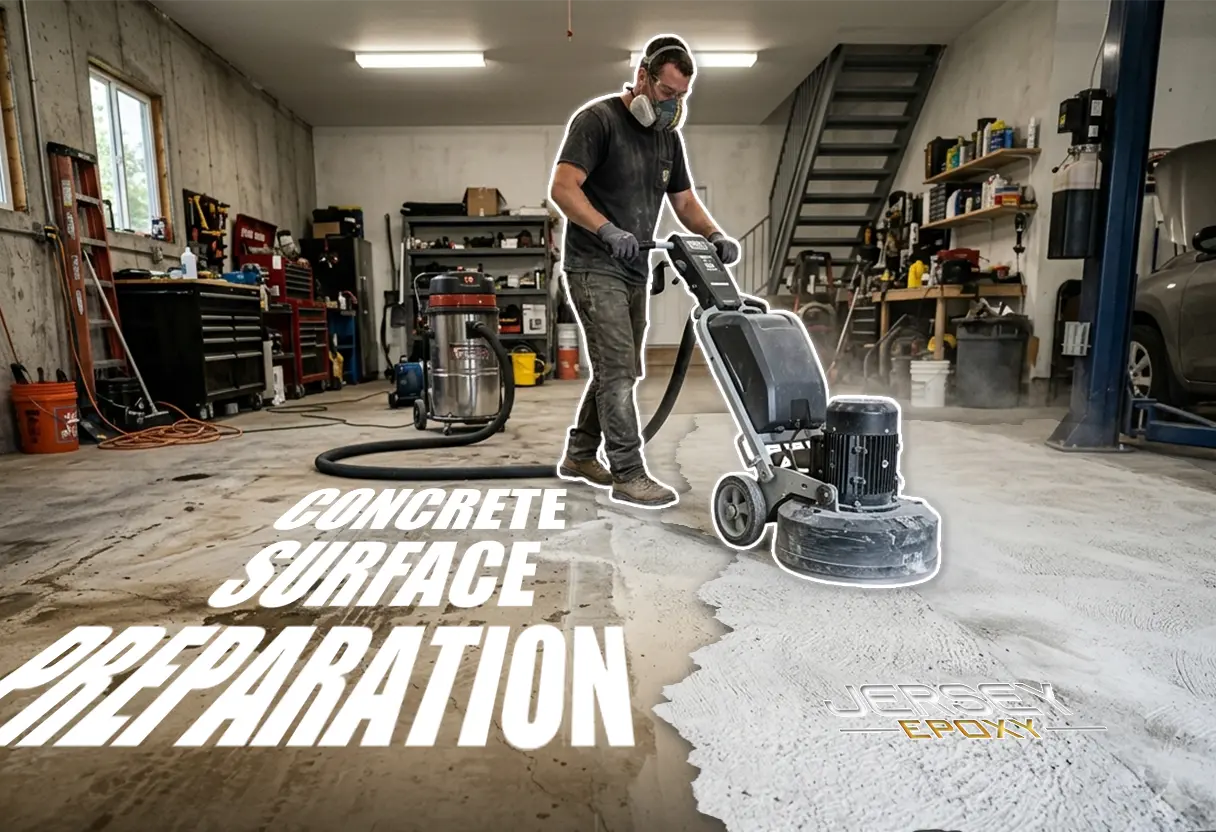
Epoxy flooring's durability and aesthetics, as well as its low maintenance are the reasons homeowners and businesses choose it. However, the use of epoxy will not, in itself, prevent concrete from further cracking! The epoxy floor will crack when installed over concrete substrate cracks. Substrate cracks will 'directly show through' the epoxy resin, unless the process of proper surface preparation is done to the concrete substrate via:
- Moisture Testing: Moisture is the enemy of epoxy flooring, causing epoxy to blister and bring floor coating failure. As a trained epoxy flooring contractor understands, a moisture meter test is the most accurate way to assess the level of moisture within the concrete.
- Repair Chips, Cracks and Levelness: A ‘no-brainer’ to the trained, certified, epoxy flooring contractor. The procedure begins by cleaning the substrate of dirt, debris, and oil, using a degreaser for hard stains. The next step is to fill all cracks, including hairline cracks, with patching compound, then sand once the compound has cured (hardened).
- Roughing Up Concrete: Epoxy will not adhere well to smooth, sealed, polished concrete. The surface preparation entails roughing up the concrete floor prior to the epoxy resin flooring being applied by a trained and licensed Epoxy floor installer. Roughing the concrete involves shot blasting and grinding. Shot blasting removes all concrete contaminants. Grinding with diamond or abrasive pads is a means to level the concrete that is uneven due to chipping.
Installing the Epoxy floor is a step-by-step process, as detailed in What’s The Difference Between Polished Concrete And Epoxy?
More Signs For An Epoxy Floor Will Crack
Bubble, Bubble Toil and Trouble: Bubble, bubble, toil and TROUBLE; might be heard chanted not by a witch over her cauldron, but by the professional epoxy floor installer — in a circumstance known as outgassing. This outgassing results from the trapped air and moisture in the concrete's pores, exerting moisture vapor pressure. The moisture turns into vapor that expands as temperatures rise. This expansion creates an upward force as the vapor tries to equalize with drier air above. The 'trap' effect occurs when the concrete is sealed with a coating, such as epoxy, before the epoxy dries. So, concisely, vapor pressure builds up and causes blistering, bubbling, or floor-coating failure!
Simply put, outgassing is the result of underlying conditions in the concrete that need to be addressed by the professional epoxy floor installer; otherwise, the epoxy will not have secure adhesion, making the epoxy layer brittle and vulnerable to cracks in the epoxy floor upon impact.
- Improper Mixing Ratios: The durability of the epoxy resin mixture relies on a precise chemical ratio between the resin and hardener. If the mixed ratio is not exact, the epoxy resin will not cure (harden) properly, resulting in a tacky surface or a brittle material prone to cracking under stress!
- Improper Curing Time: If the epoxy cure time is too fast, because the resin mixture cured in excessively warm environments, or if curing time stalls because the environment is too cold, the epoxy resin mixture will cure weak and brittle and be prone to splitting.
How Proper Epoxy Installation Helps Prevent Cracks
Be assured, Jersey Epoxy’s experience and skills ensure a flawless epoxy floor, enhancing epoxy floor durability, preventing epoxy cracks, and strengthening concrete durability. Key to the success is the very crucial surface preparation process, which will then allow the epoxy resin floor coating to:
- Protect concrete from its natural expansion and contraction due to temperature changes.
- Provide a thick waterproof barrier to the concrete floor, keeping moisture from the concrete that caused the dirt beneath the concrete to shift and sink, bringing hairline cracks, and foundation settling.
- The durability of an epoxy resin floor will absorb impact and shield the concrete from the risk of stress fractures from heavy-weighted vehicles and machinery.
What To Do If Epoxy Floor Cracks?
As we stated at the beginning, epoxy flooring has been used for many years in business settings; it has become a growing trend among homeowners attracted to its many color and design options, including metallic and decorative flakes. Such epoxy flooring can provide a touch of elegance with a marble-like appearance to bathrooms, foyers, outside steps, walkways, or patios, or a stylish and decorative terrazzo floor, utilizing a combination of marble chips, granite, quartz, and glass flecks, polished smooth. The final epoxy floor design will be unique to YOU — the business owner or homeowner — adding value to your business or home!
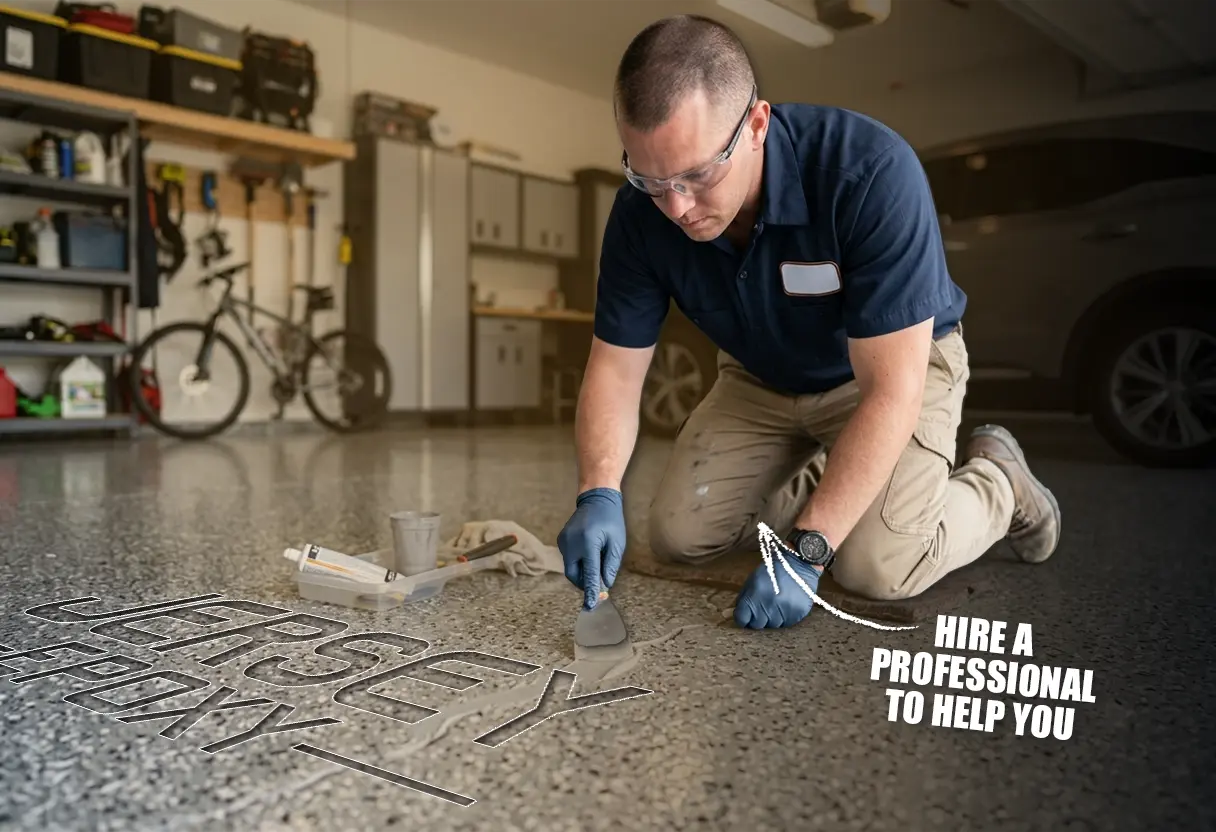
Of course, 'stuff happens' in an imperfect world. If cracks or chips should appear in your perfect epoxy flooring after installation, Jersey Epoxy will assess the reason and type of repair required:
- Small Surface Scratches: can be buffed out or refinished with a topcoat.
- Hairline Cracks: filled by epoxy crack filler.
- Deep Cracks and Chips: sometimes, due to dropping tools or machinery on the flooring, cracks or chips will need an epoxy patch or resurfacing done.
- Bubbling or Peeling: will require grinding and sanding down the affected area; until smooth, thoroughly clean the exposed surface, and reapply, with even distribution, a fresh layer of the epoxy floor coating.
Contact Jersey Epoxy, the professional epoxy floor installers serving residents and businesses of New Jersey and Pennsylvania for 20+ years! The experience and skills of Jersey Epoxy ensure a flawless epoxy floor from the concrete grinding to the precise application of the epoxy resin mix! Call us at 877-376-9965, email us, or use our web contact form to receive free evaluation of your floor and a free quote for epoxy floor installation.