
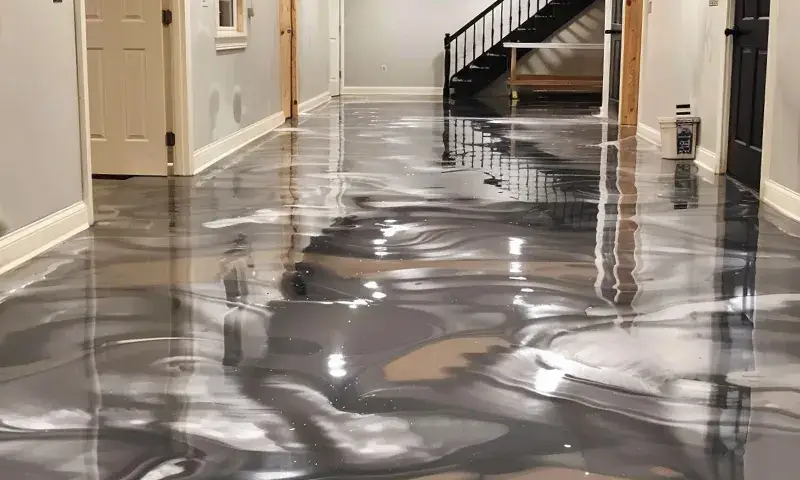
Basement Floor Epoxy in Brick Township, NJ
Jersey Epoxy installs flake and metallic basement floor epoxy across Brick Township. It is a seamless, easy-to-clean finish that brightens a below-grade room and stands up to humidity. For a Brick basement we profile the slab with a diamond grinder, fill the cracks, and confirm the concrete is dry and sound before any coating touches it. Free on-site quotes.
- Diamond-ground prep
- Serving Ocean County
- 20+ years installing
- Free on-site quotes
- Diamond-Ground Prep
- Profiled, dry, and sound first
- Homes & Businesses
- Residential and commercial systems
- 20+ Years Experience
- Floor coatings across NJ & eastern PA
- Free On-Site Survey
- A written spec and a firm number
Brick Township up close
What a Brick Township basement floor is up against
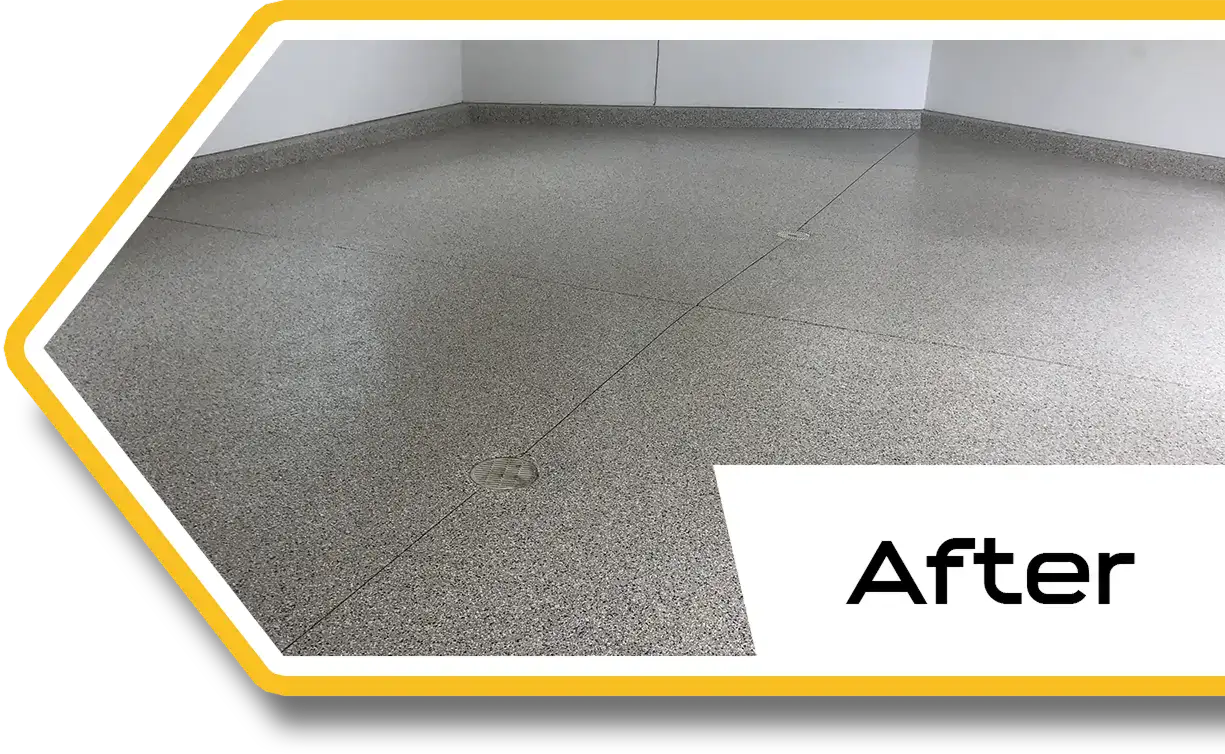
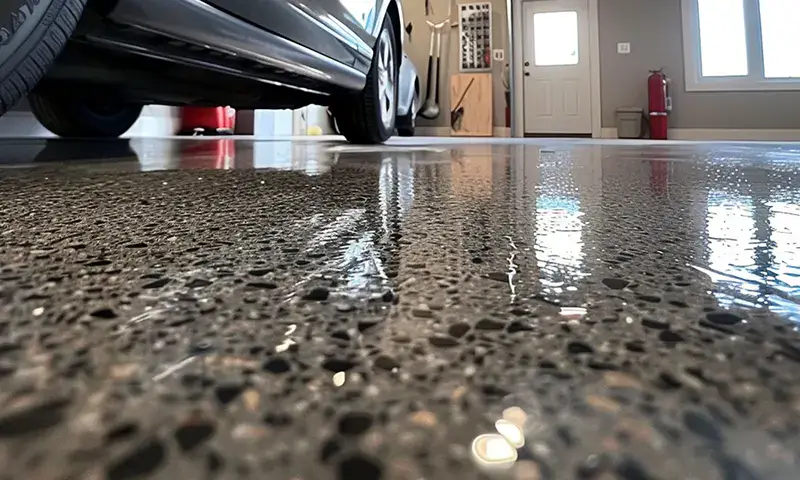
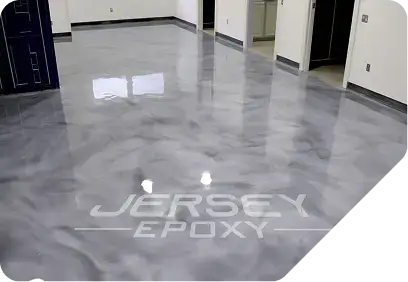
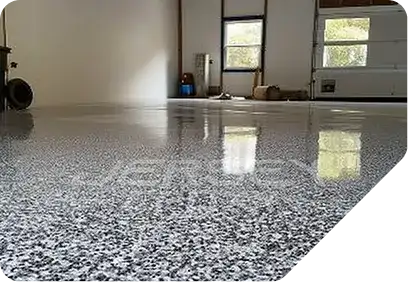
Flake epoxy gives a basement floor a hard, washable surface with a decorative chip finish, while metallic epoxy turns the slab into a marbled feature floor for a finished room. Either one seals off bare, dusting concrete that otherwise sits below grade through humid Jersey Shore summers and a winter of road salt tracked down off Route 70 and Route 88. We grind to a clean profile and repair every crack before the first coat goes down.
On the lagoon and waterfront streets in Shore Acres, Baywood, and Cherry Quay along the Metedeconk River and Barnegat Bay, the same coating has to fight moisture pushing up through the slab, because those lots sit low and many flooded during Sandy. The slab has to be dry before it takes a finish, so on those low-lying, high-water-table streets a moisture test is worth doing first. Inland and in Greenbriar the slabs often read drier, but the same prep still applies.
Our approach
How we build basement floor epoxy in Brick Township
No single approach fits every basement floor. Here is what goes into a basement floor epoxy that lasts in Brick Township.
Why prep wins
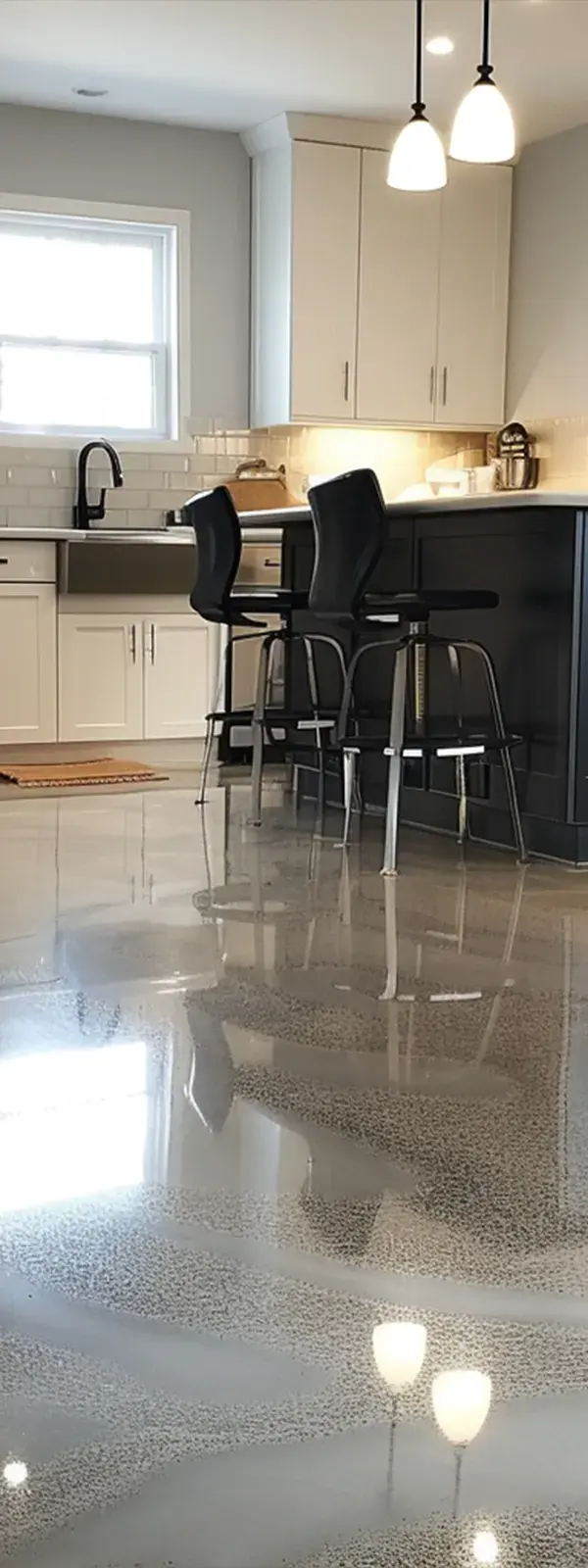
A Brick Township basement floor lasts or fails before the first coat
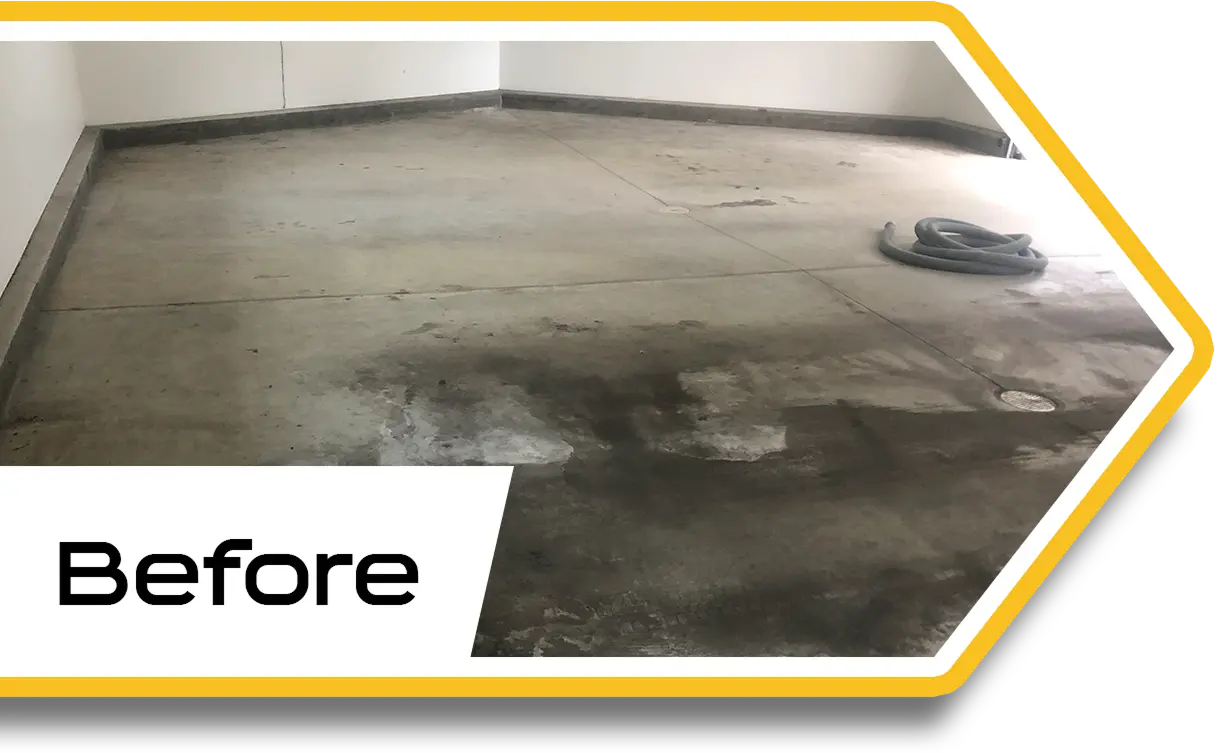
Most basement floor coatings that fail were not beaten by the wrong product. They were rolled over a dusty or damp slab the coating could never bond to. For a basement floor in Brick Township, we diamond-grind to a clean profile, repair the cracks and pitting, and make sure the slab is dry and sound before anything goes down.
From there we match the system to the basement floor: Metallic Epoxy or Flake Epoxy, specified for what this floor actually has to take. The prep is the same rigor every time; the system follows the job.
- Diamond-ground to a clean profile so the coating keys into sound concrete, not a dusty top layer. [ICRI CSP]
- Cracks and pitting repaired and joints honored, so the finish does not telegraph the slab beneath it.
- Dry, sound slab first, the top cause of coating failure, so a moisture test is worth doing where the water table runs high.
- System matched to the basement floor, not one coating used everywhere.
How it works
From your first call to the final coat
We map the whole job before we touch the floor, then phase the work around your production.
- Free Quote(877) 376-9965No-cost on-site assessmentGet my quote
Call or Contact Us
Tell us about the space and your timeline.
- Walk-through
- Grind & repair
- Dry, sound slab
- Metallic Epoxy
On-Site Survey
A free walk-through and a written floor spec.
- Slab PrepProfiledDry & sound
Preparation
Slab diamond-ground and prepped to dry, sound concrete before coating.
- Sealed
Installation
Seamless system installed and sealed.
Standards & specifications
Held to the standards a coating is actually tested against
Every floor answers to load, slip, adhesion, and moisture before it answers to looks. Here is each requirement and the published standard we hold the spec to.
Slab moisture
Older NJ and PA slabs often have no vapor barrier, and vapor pushing up from an unbarriered slab is the leading reason a coating lets go from underneath. The slab has to be dry and sound before we coat, and on a high-water-table or below-grade slab a moisture test (ASTM F2170 or F1869) is worth doing first. [ASTM F2170 / F1869]
Surface profile & adhesion
We diamond-grind the slab to a concrete surface profile that the primer can key into, so the coating bonds to sound concrete rather than to a dusty top layer. Pull-off adhesion is measured to ASTM D7234. [ICRI CSP / ASTM D7234]
Slip resistance (wet)
Anti-slip aggregate broadcast into entries, ramps, and any area that gets wet, dialed toward the ANSI A326.3 wet DCOF benchmark of 0.42. Texture is set area by area, and no wet floor is ever fully slip-proof. [ANSI A326.3]
Compressive & abrasion strength
Industrial epoxies and resinous mortars carry compressive strengths well above plain concrete (ASTM C579) and resist abrasion under Taber testing (ASTM D4060), matched to the traffic the floor actually takes. [ASTM C579 / D4060]
These targets are met by the systems we install and the products we specify into them. Jersey Epoxy is the installer, not a certifying body, so we point to the standard on the spec rather than calling ourselves certified.
What you get
Why Brick Township chooses our basement floor epoxy
Built for a Below-Grade Slab
A vapor-tolerant build for the moisture an unsealed basement slab pushes up from below.
Finished, Decorative Option
Metallic and solid-color epoxy turn a basement into usable, good-looking living space.
Tough & Easy to Clean
A seamless flake floor for laundry, storage, and utility areas that wipes clean.
Crack & Joint Repair First
We repair cracks and honor joints so the finish does not telegraph the old slab beneath it.
Dry, Sound Slab First
Moisture is the top cause of basement-floor failure, so we make sure the slab is ready before we coat.
Recommended system
The systems we use for basement floors
The chemistry we reach for on a Brick Township basement floor, and why.
Proudly Serving New Jersey & Eastern PA
Our crews are on the road daily. Select your region to see our coverage.
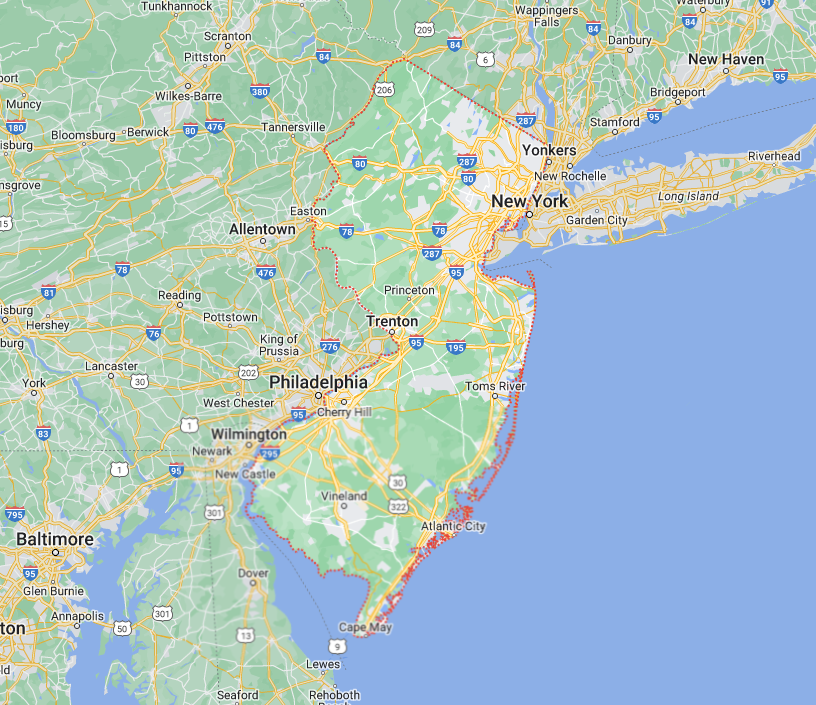
New Jersey
Statewide Coverage- Bergen & Essex County
- Monmouth & Ocean County
- Middlesex & Somerset County
- Camden & Burlington County
- Hudson & Morris County
FAQ
Basement Floor Epoxy in Brick Township, answered
My basement is in Shore Acres near the water. Can you still coat the floor?
Often yes. Those low lagoon streets sit on a high water table and many flooded during Sandy, so vapor can push up through the slab and lift a coating that was not bonded to dry concrete. The slab has to be dry and sound first, and on those streets a moisture test is worth doing before we coat. We diamond-grind to profile and repair cracks either way.
Flake or metallic epoxy for a finished basement in Brick?
Flake gives a hard, washable, chip-finished floor that hides dust and handles a humid below-grade room, which suits most basements. Metallic epoxy creates a seamless marbled feature floor where you want the basement to look finished. We walk the space and recommend the right system at the free on-site quote.
Does a Brick Township basement slab really need to be dry before the epoxy goes down?
Moisture pushing up through a slab is the top cause of coating failure, and below-grade basement floors in Brick are exactly where that shows up. We make sure the slab is dry and sound, grind it to a clean profile, and repair cracks first, so the epoxy bonds and stays down instead of peeling months later.
Get started
Get a free quote on your Brick Township basement floor
We walk the basement floor at no cost, read the slab, and come back with a written spec and a firm number for your Brick Township basement floor epoxy.
(877) 376-9965 · talk to an installerRated 5 stars by New Jersey homeowners & businesses
Powered by Google
 No Obligation