

So you have decided to take your floors to the next level and upgrade them to epoxy! You have made a great choice that will benefit your home or commercial property for years to come.
However, it is important to install your new flooring at just the right time to get the most out of it and to ensure it lasts as long as possible. While it is true that you can install epoxy any time throughout the year based on your budget and your project needs, there are certain considerations to understand before choosing the right time and place.
Let’s explore more about epoxy flooring and the right time of year to install it for the best outcome.

Why Temperature Matters
We experience really hot summers and brutally cold winters on the East Coast, and we all understand that certain times of the year are the best for tackling house projects. The same holds true for epoxy flooring installation! Epoxy is a resin-based compound, which means it is a liquid when it is poured into place, and then it dries to a solid, uniform finish when it has reached the proper curing time.
In order for the curing process to happen the way it needs to, the surrounding air and the concrete below needs to be at least 55 degrees Fahrenheit. This temperature provides the ideal environment for the resin to harden completely in a controlled manner.
Summer Vs Winter
When it is too cold, the chemical reactions that need to happen are slowed down considerably. This slowed process can result in a flaking or brittle coating that will wear down faster than a floor installed during an ideal temperature day.
The opposite is true when it comes to the summer months. Excessive heat can make the drying process happen too rapidly, which prevents a proper bond from happening. It can even make the coating more susceptible to premature aging and staining.
Epoxy flooring installation can happen when the concrete is between 55 and 90 degrees Fahrenheit without much cause for concern, but most contractors will aim for that 55 degree benchmark. This is why the spring and fall seasons are popular when it comes to epoxy flooring installation.
In addition to the temperature, there are also a few other considerations when it comes to choosing the right time to install your epoxy flooring.
The Weather
We all know that if you hate the weather here, just wait five minutes! Unpredictable weather can make it a bit tricky when it comes to choosing the right time to install epoxy flooring. In order for your epoxy to dry and cure the right way, the concrete surface underneath it must be completely dry.
If rain is in the forecast or a shower pops up unexpectedly, it might derail your project until the sun comes back out and everything dries up again.
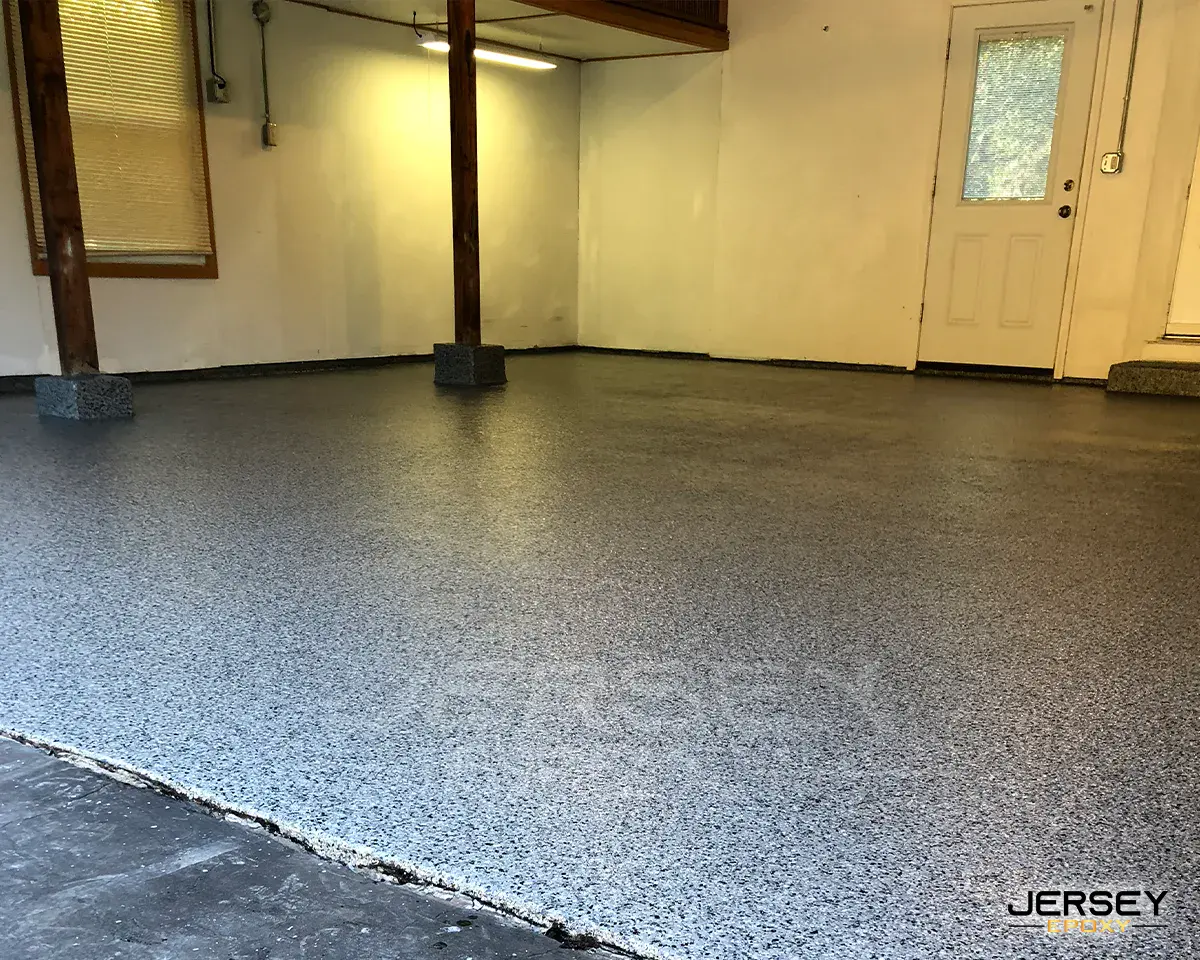
The same is true for humidity, which is why the summer season can be unpredictable as well when it comes to epoxy floor applications. Humid air has a high moisture content, which causes concrete floors to condense and “sweat”. Once there is moisture present on the floor, it must dry out before the installation can go further.
Watching the forecast is essential if you are determined to install your floor during the summer months or during a particularly rainy season. Epoxy is known to take between 24 to 72 hours to fully cure, and sometimes even longer if the elements are not ideal.
Installation Time Requirements
Are you on a time crunch when it comes to installing your epoxy floor? If that’s the case, the winter and summer seasons are probably not your best bet for installing your new flooring. Due to epoxy’s extended curing time, you could be dealing with an unusable space right when you need it most.
For example, if you are installing epoxy on your garage floors, you won’t have access to your garage for a few days. Your car will be parked in the snow, your snow blower might not be accessible or severe weather could damage your car when it is exposed to the elements during this time period.
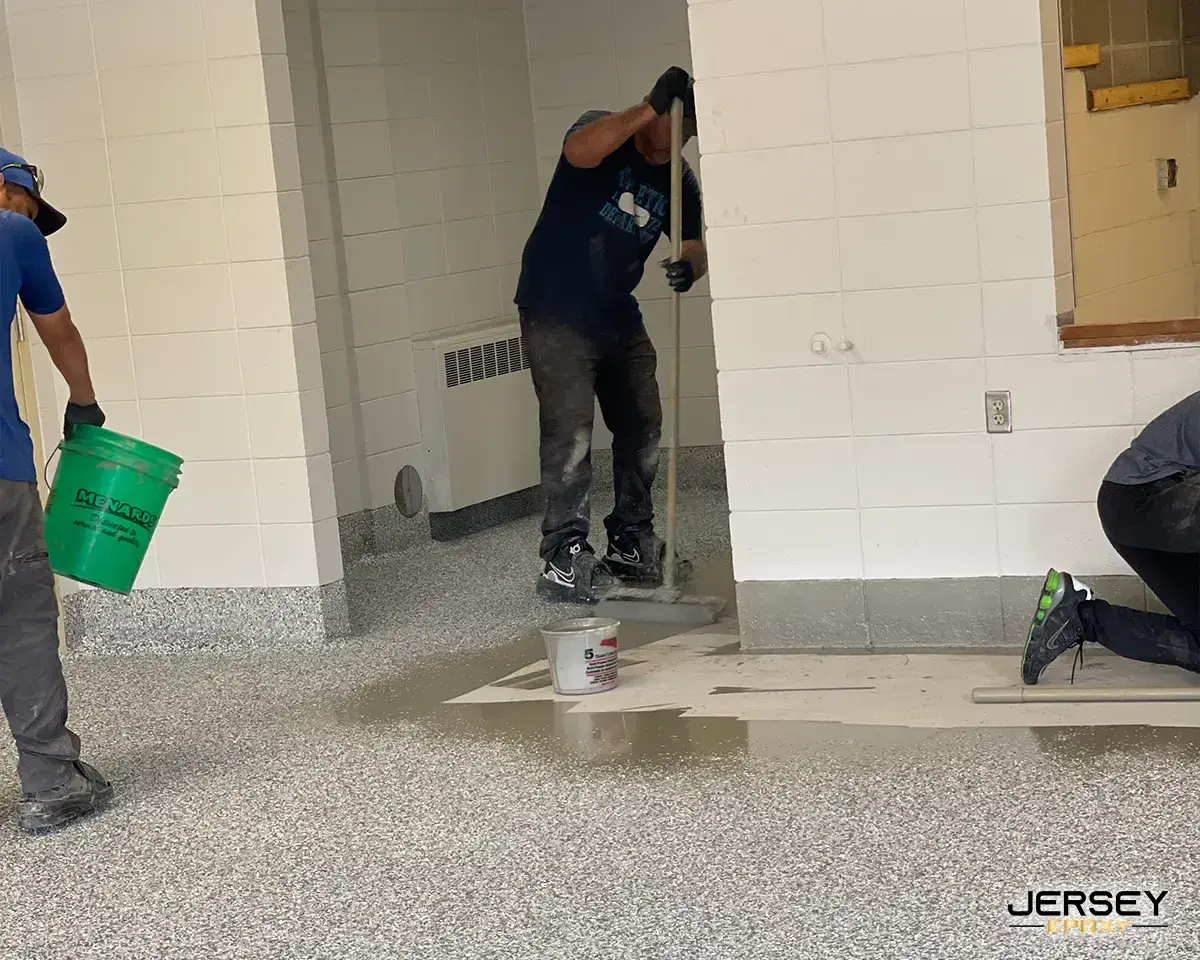
The same holds true for the summer season. The intense sun will shine down on your leather seats or a tree could fall during a strong storm and could damage your possessions that were displaced during the installation.
For this reason, it is important to wait until the spring or fall for the quickest curing time and to reduce the risk of damage to your property.
Additional Tips To Ensure a Strong Epoxy Bond
It is ultimately your choice when it comes to deciding when to install your epoxy floors, but the ideal conditions of a mild, slightly warm and sunny day will help your flooring cure properly while also encouraging a strong bond with the concrete underneath it.
No matter what time of year you choose to install your flooring, there are steps you can take to help make your epoxy flooring installation as successful as possible.
Proper Cleaning
Giving your base flooring a deep clean before the installation is essential to the adhering process. Remove dirt, grease and any other grime buildup so the resin can bond with your concrete floor more completely.
Regular Maintenance
After the installation, be sure to take good care of your new flooring. While epoxy is known to be low maintenance, there are always things you can do to support a longer lifespan for your new floors.
Sweep them regularly, give them a good mopping every week and don’t ignore spills. The longer a substance lingers on your floor, the higher the chance that it will eventually stain or will cause damage during the removal process.
When you are cleaning, avoid using harsh chemicals or abrasive scrubbers to help protect your floors as much as possible.
Ready for your epoxy floor installation? The team at Jersey Epoxy will walk you through the process and will help you find the perfect time to install your beautiful and durable new floor.
Call Jersey Epoxy today at (877) 376-9965 to choose the right epoxy floor to fit your needs. We are ready to help bring your property to the next level.

Can You Install Epoxy in a Condo Garage Floor in Winter?
When you manage a condo complex or a multi-unit property in New Jersey, maintaining shared
Read More »
Common Interior Concrete Floor Finishes
When it comes to upgrading your home’s floors, concrete isn’t just for basements and garages
Read More »
Do Polyaspartic Floor Coatings Cure Faster in Cold Weather?
When winter rolls into New Jersey, many homeowners and property managers assume that floor coating

Do Polyaspartic Floor Coatings Scratch Easily?
Do Polyaspartic Floors Scratch Easily? | Jersey Epoxy Do Polyaspartic Floor Coatings Scratch Easily? In

Benefits of Adding a Pool Deck Texture
Benefits of Textured Pool Deck Coatings | Jersey Epoxy Benefits of Adding a Pool Deck

Cool Deck Ideas for Pool Areas
Cool Deck Ideas for Pool Areas | Jersey Epoxy Cool Deck Ideas for Pool Areas