

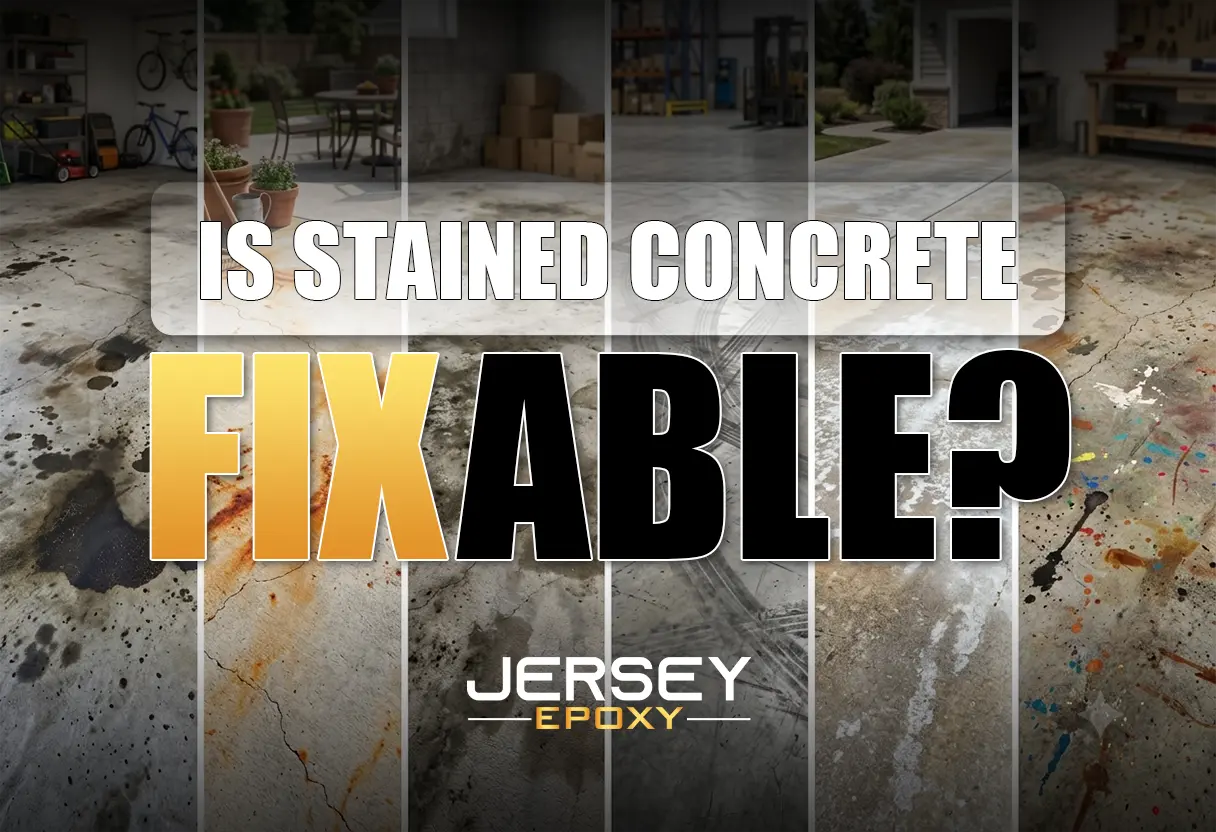
One fine morning you are walking through your garage, trying to navigate around your bicycle without stepping on your lawn equipment, and you slide straight into an unexpected oil stain. This dark and slippery substance is now all over your shoes and more annoyingly all over your garage floor.
Your first reaction is frustration, but subconsciously you are also worried that this spill will stain your concrete forever. Concrete is porous, which in plain English means that it naturally absorbs spills and moisture over time.
Besides the stains on your concrete being unpleasant to the eye, it can also weaken your concrete surface. Cleaning, and protecting your concrete with professional finishes like polished concrete or epoxy floor coatings will make sure those stains are a thing of the past and also protect your floors from eroding your floors.
Read on to learn what to do about stained concrete so you can take care of any stains promptly.
The Common Causes of Concrete Stains
The first thing we need to analyze is how stains get into concrete in the first place. Have you ever noticed in concrete that its surface is full of tiny pores; these little holes soak up anything that spills on to it. Oil, ketchup, even water!! When liquid gets inside those pores, it leaves behind a mark which is so tough to remove.
Some of the most common culprits behind concrete stains include:
- Oil and grease: Often found in garages.
- Rust: Caused by metal furniture, tools that were left outside when the moisture interacts with iron content.
- Mold and mildew: Mold is very often found in damp basements and shaded outdoor areas.
- Tire marks and chemical spills: Common in warehouses, also in commercial facilities.
- Water stains: Sometimes after a water spillage you can be left with a white powdery mark which is a build up from mineral deposits.
Unsealed concrete is susceptible because it does not have a protective coating. And therefore when a spill happens, the substance will set in quickly and spread deep below the surface.
How To Identify the Type of Stain
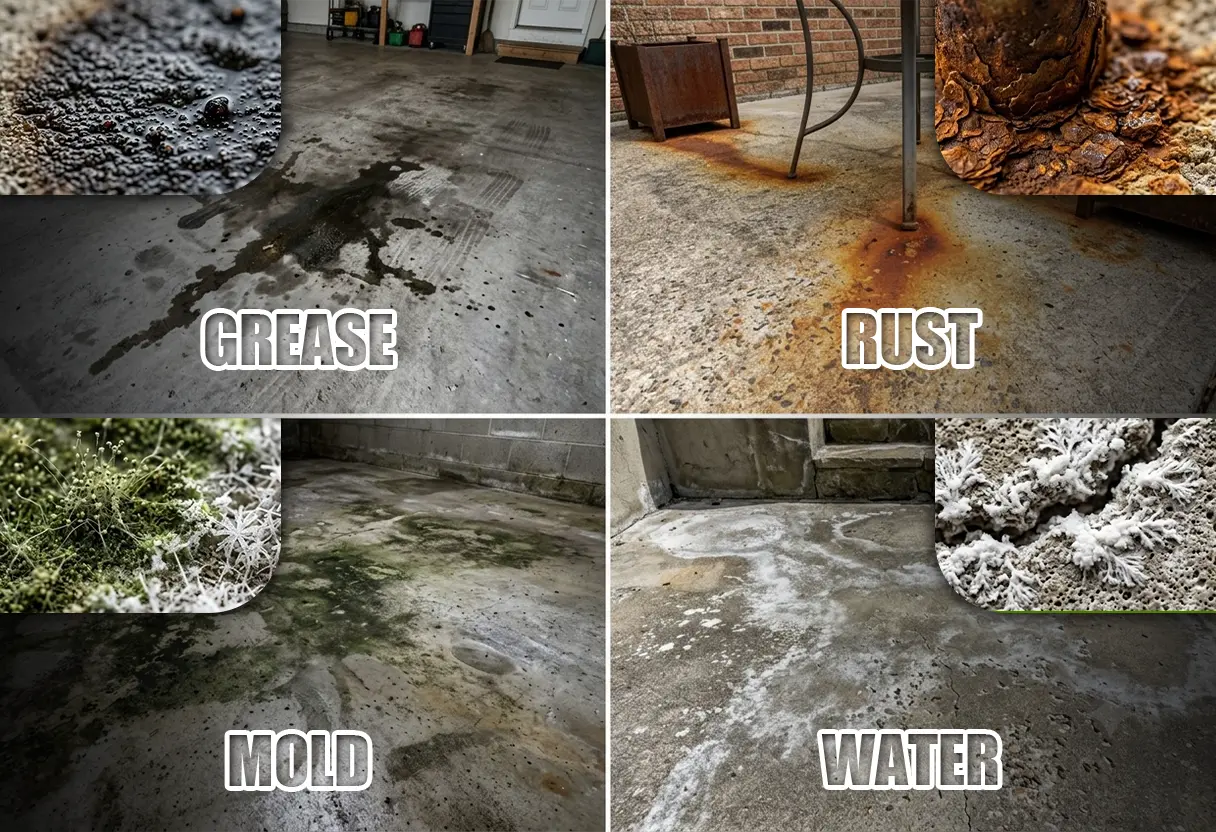
Not all concrete stains are created equal, and knowing what kind you’re dealing with helps determine the right fix. Oil and grease stains are typically dark and slick. And when you bend down to touch them it feels slightly sticky to touch. These types of stains are common in garages.
Rust stains have a reddish-orange tone and you start noticing them under metal objects.
The Marks unique to Mold are colored black or green and form patches that have a musty smell.
Water stains look white or chalky; you will notice concrete discoloration which requires repair and often point to moisture issues behind the surface.
Sometimes all it takes is a bit of scrubbing with cleaning products to shift the stain, but deep discoloration needs professional resurfacing. If the stains return after cleaning, this is because there is a moisture problem underneath the surface, and that needs expert assessment before refinishing.
The Solution For Stained Concrete
Ok so if the stains are minor and relatively new, with a little elbow grease you will be able to remove them and it should look spotless again. Here is how you would go about it:
Degrease
Use a commercial degreaser to break down oil or anything grimy. Do not use any harsh chemicals because that can damage the surface and you will be worse off than when you started.
Pressure Wash
For outdoor or garage floors, pressure washing will remove dirt buildup. It's worth a try.
Treat Rust Stains
Use a rust remover made for concrete, but test it first to prevent etching.
Scrub Mold
A mix of mild detergent and water can help, but mold very often returns, and the reason for that is because the moldy area needs sealing.
Now these treatments sometimes work but many, many times they DON'T . Because concrete absorbs stains so deeply, DIY fixes don’t have a great effect and leaves the floor looking patchy. And sometimes you can end up just making the stained patch larger and feel like your efforts are a waste of time.
That’s why many homeowners use surface refinishing solutions like polished concrete or epoxy coatings. These treatments will properly restore the floor's appearance to how it was before the spillage.
Solution 1: Polished Concrete
Polished concrete is one of the most low-maintenance ways to fix stained floors. What a professional will do is grind the surface of the concrete to remove the marks, and after that progressively finer polishing steps that create a smooth finish.
This technique will make your floor look brand-new, and it also seals the surface. This process makes your concrete stain-resistant, and more durable than standard concrete.
These are the benefits of polished concrete:
- A clean appearance that complements any space.
- Long-term resistance to moisture,and stains.
- The best bit: No maintenance beyond simple cleaning.
You should use Polished concrete for basements, offices etc, where you are on a tight budget and both looks and longevity matter.
Solution 2: Epoxy Floor Coatings
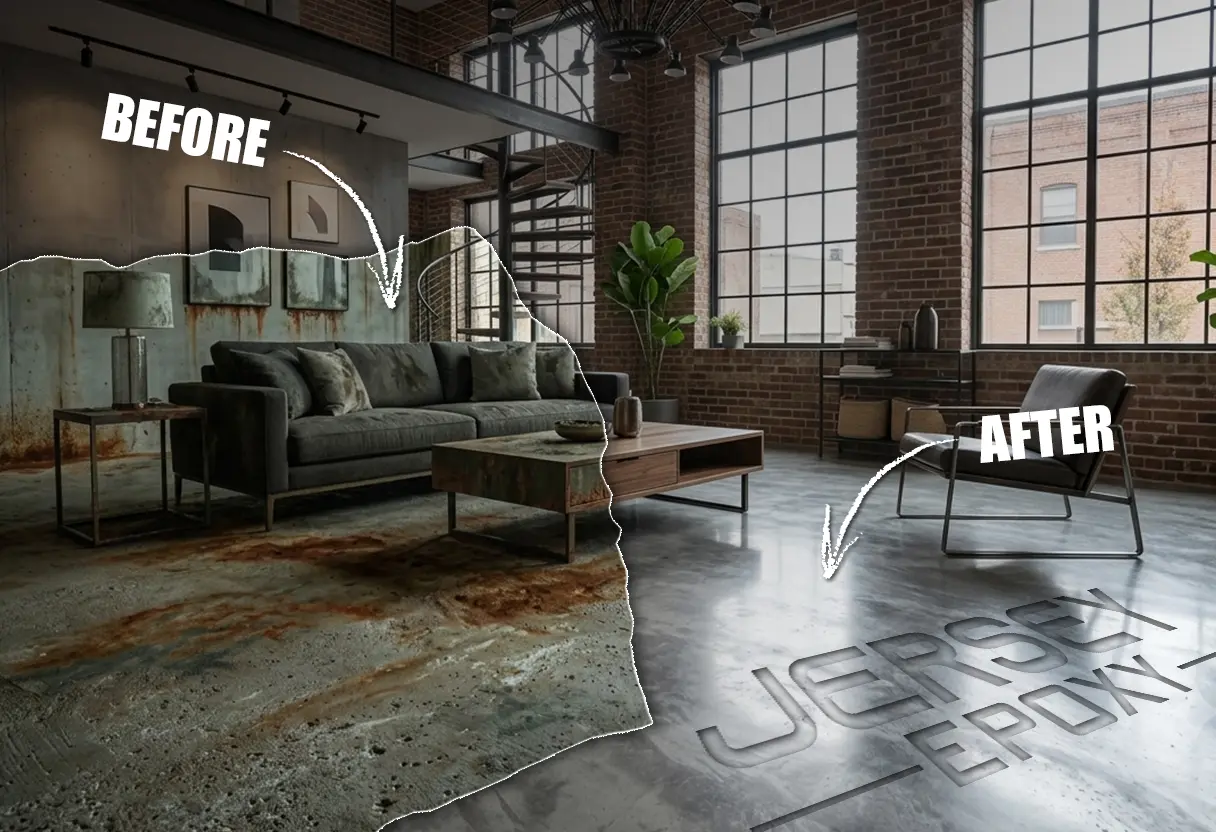
This is by far the best solution If your concrete stains are too deep to grind out, epoxy floor coatings offer a transformative solution. Epoxy is a durable resin system applied over your existing concrete; it is a non-porous surface that’s both beautiful and tough.
Epoxy coatings completely cover old stains and imperfections, and the best bit about epoxy is that it is totally resistant to chemicals, oil, and any other liquid for that matter . They’re especially popular in garages, basements, warehouses, and workshops because Epoxy has many customization options.
Key advantages of epoxy coatings include:
- Covers all types of stains permanently.
- It is resistant to chemicals, oils, etc.
- It is available in countless colors, and finishes.
- Really long-lasting protection will last for many years.
At Jersey Epoxy, we specialize in custom epoxy floor systems that elevate your space’s style. It's perfect for a glossy showroom finish or for a plain looking slip-resistant workshop floor, epoxy can adapt to your design and looks.
Choosing Between Polished Concrete and Epoxy Floor Coatings
Both polished concrete and epoxy floor coatings are excellent choices, so it all depends on your goals.
A good idea is to choose polished concrete if you love a sleek, minimalist look and want an option that’s easy to maintain without added coatings. It’s great for modern interior designs that need lasting shine.
If you want to completely cover old stains, and avoid all future stains then epoxy coatings is your go to option.
Epoxy is better than polished concrete when you need superior chemical resistance, and it has the benefit of seamless moisture protection.
Now that you know what to do about stained concrete, you can restore its appearance and protect it for the long haul with our protective solutions! Both solutions provide lasting protection against future stains and wear.
Contact Jersey Epoxy today at (877) 376-9965 for a free consultation and discover how our polished concrete and epoxy coating solutions can transform your stained floor into a surface you’ll be proud of.