

Polished concrete is quickly becoming one of the most popular choices for concrete flooring upgrades in both residential and commercial spaces. It is budget-friendly, highly durable and an attractive choice for just about any space.
However, before you jump into a new project or decide what kind of flooring you want in your home or business, you need to do your research. All flooring materials are created differently and offer different benefits and drawbacks.
For example, if you run a busy warehouse or a commercial kitchen, one of your priorities is ensuring the flooring you choose is easy to clean. If you are considering polished concrete for your space, you might wonder, “Does polished concrete stain, and is it easy to keep clean?”
Let’s dive into the details around polished concrete and how it can benefit your property for years to come.
Understanding Polished Concrete
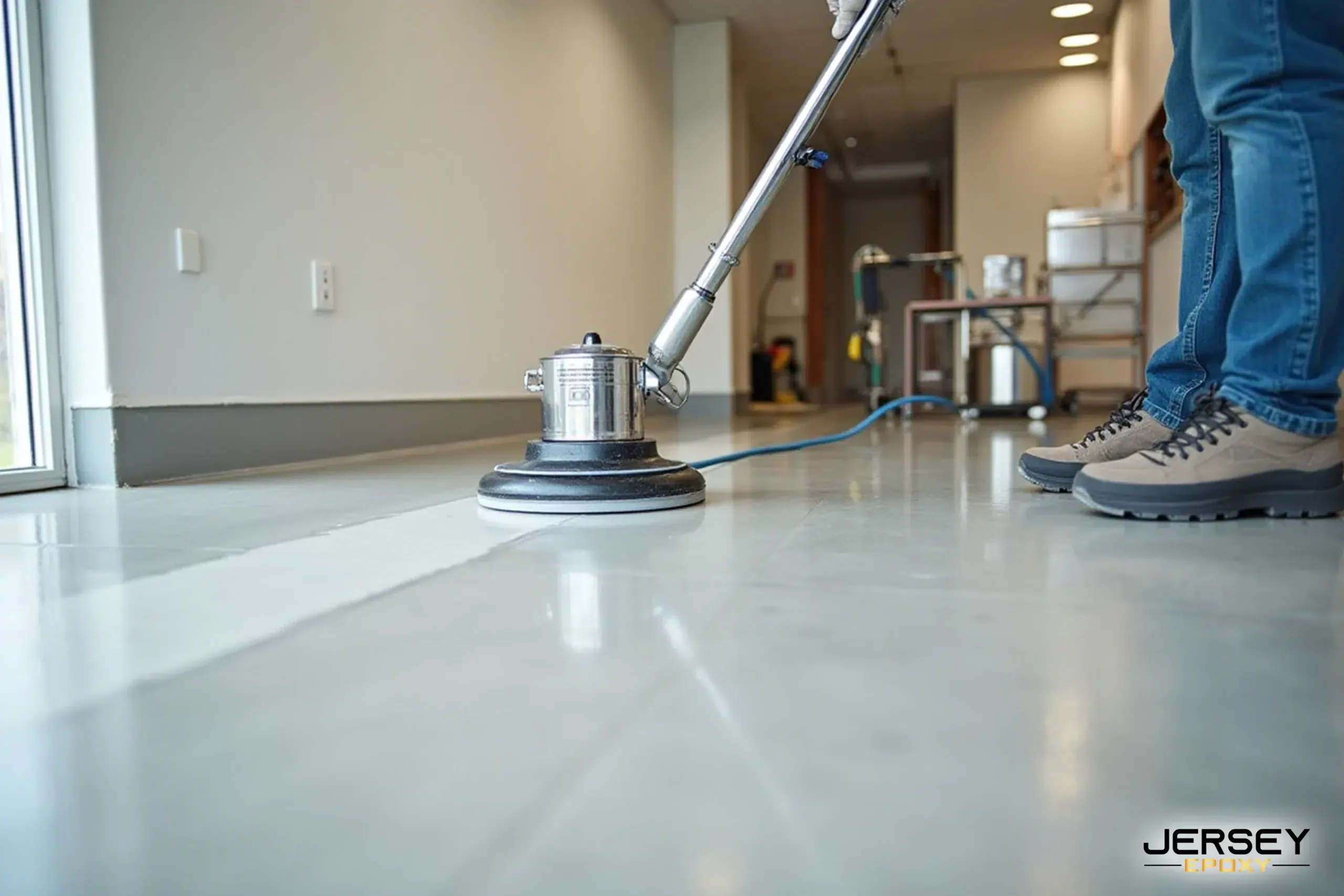
First of all, do you know what polished concrete is? Polished concrete is simply concrete that has been polished and honed until it is smooth and shiny. The surface of your bare concrete is ground down with diamond abrasives that get progressively smaller as they refine the surface until it shines. A penetrating sealant can also be applied at the end to increase the floor’s longevity.
This process is different from other concrete sealant or epoxy projects, as there is no topical coating like resin. Rather, the concrete is refined and reinforced, resulting in a protective and durable finish.
Polished concrete also offers countless benefits for your property, including:
- Low-maintenance needs
- Aesthetic appeal
- Durability
- Slip-resistance
- Budget-friendly
All of these benefits make polished concrete a great choice for businesses and homes alike. But, is it stain-resistant? Yes!

Polished Concrete and Stain-Resistance
It is important to note that there is a difference between stain-resistance and stain-proof. The vast majority of flooring materials are considered stain-resistant rather than stain-proof, as most flooring solutions have at least a minimal amount of porosity.
Any material that has the ability to soak up liquids like water or spills are considered porous, which can lead to staining if the spills aren’t cleaned up quickly. Thankfully, polished concrete is highly dense when the installation process is completed!
The grinding and honing process removes the top layers of porous material, and each thin layer that is ground away makes the concrete beneath stronger and less absorbent. If a final sealant is added to the top, that sealant makes the floor even more resistant to stains as it provides an additional layer of protection against potentially staining liquids.
Common Stain Sources on Polished Concrete
Protecting your polished concrete involves knowing what substances could potentially stain your concrete if you aren’t diligent about routine cleanings.
Some of the most common reasons for stains on polished concrete include:
- Food and beverage spills
- Chemicals like automotive fluids or cleaning agents
- Water damage or mineral deposits
- Rust or metal residue
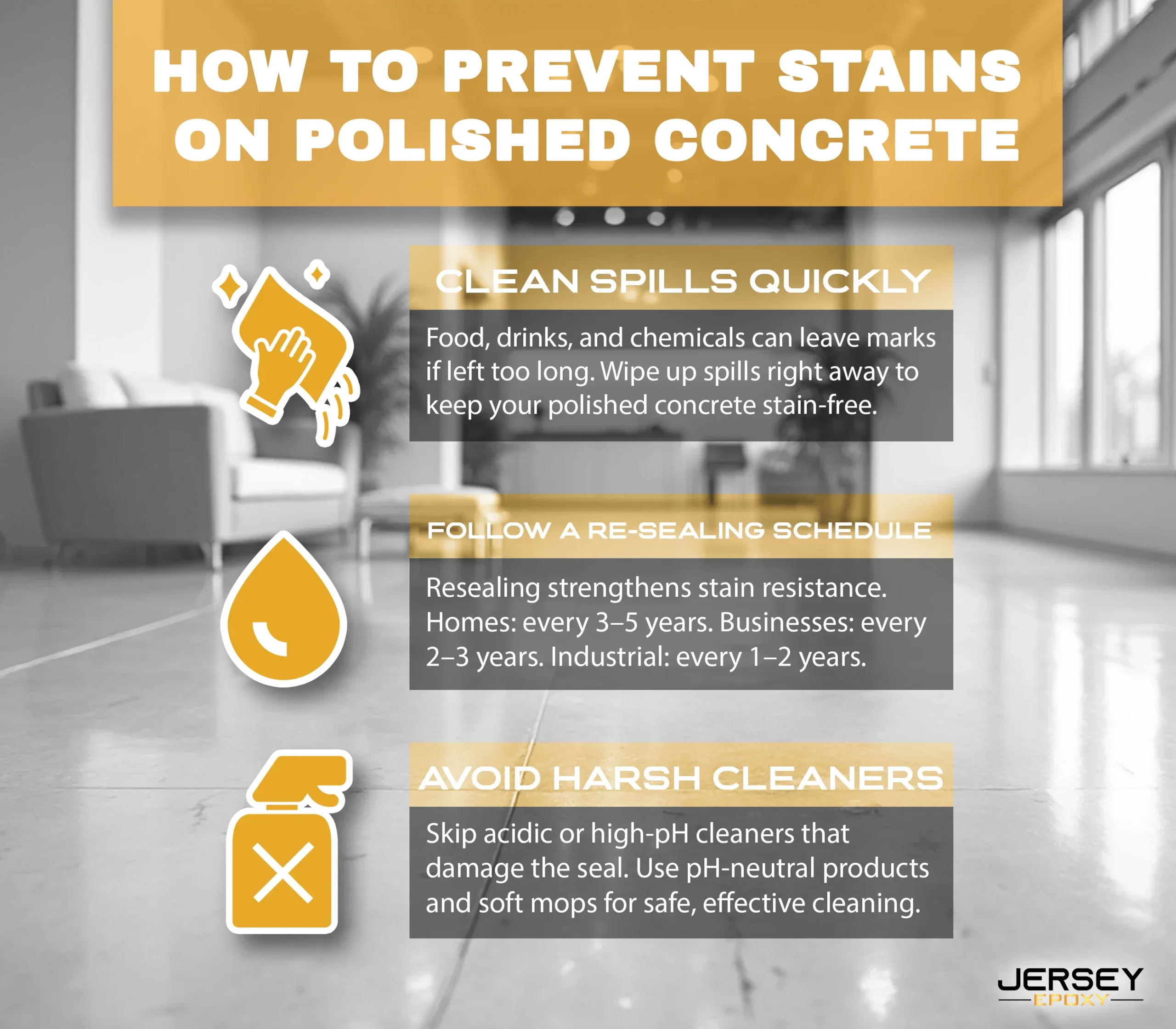
Thankfully, if you are diligent about cleaning your floors regularly and mopping up spills as soon as they happen, these substances won’t get the chance to permeate into your concrete. They can simply be wiped away without worry of stains!
Factors That Influence Stains on Polished Concrete
While polished concrete is stain-resistant, it doesn’t mean that stains will never happen. Your risk for staining depends on a few factors.
Quality of Polishing and Sealing
The quality of your final product matters! If your sealant wasn’t applied properly, it won’t be able to offer the protection your floor needs. Over time, liquids will infiltrate any inconsistencies and can lead to staining.
Consistency of Cleaning
If you don’t stay on top of routine cleaning and cleaning up spills, certain liquids and chemicals can be degrading over time. Discoloration can happen as well as etching of the floor if the chemical is powerful enough.
High Traffic Areas
High-use commercial areas can experience wear and tear differently than residential homes. This can lead to a higher risk of stains being left or ignored through the hustle and bustle of a typical day or week.
Preventing Stains on Your Polished Concrete
Of course, the best way to avoid stains on your polished concrete is to prevent them in the first place! Proper care and cleaning is the best way to safeguard the look and functionality of your floor.
That doesn’t mean, however, you should use highly abrasive or rough cleaning materials to scrub at your floor every day. Choose soft bristle brooms and gentle mops to clean the surface. Avoid acidic or high pH cleaners that could etch or damage the protective sealer.
You should also consider re-sealing your floors on a predictable schedule to keep them in top condition. Use this guide below to make a re-sealing plan:
Residential floors: Every 3–5 years. Homes usually have lower foot traffic, so the penetrating sealer lasts longer.
Commercial/retail spaces: Every 2–3 years. Heavy foot traffic, spills, and frequent cleaning wear down protection faster.
Industrial facilities: Sometimes every 1–2 years, depending on exposure to machinery, chemicals, or abrasives.
If you haven’t been following a re-sealing plan, watch for these signs that your polished concrete floor needs a little TLC:
- Water or spills no longer bead up on the surface.
- The floor looks dull or loses its glossy finish.
- Stains are harder to remove than before.
- You notice more dusting or fine powder on the surface.
How To Re-Seal a Polished Concrete Floor
If you are thinking that it’s time for your concrete floor to be resealed, invest in the help of a professional flooring team. Attempting to do it yourself can result in costly miscalculations and improper applications. Improper re-sealing can also increase your risk of premature break down of your concrete floor.
The best way to avoid all of these problems is to invest in a professional concrete polishing team to handle your project. They will arrive with the right tools, equipment and knowledge to handle every step of the process with precision.
Now that you know the answer to the question of, “Does polished concrete stain?” Rely on the team at Jersey Epoxy to handle your polished concrete project to protect your floor for years to come.
Polished concrete is the perfect choice in both residential and commercial properties. Call Jersey Epoxy today at 877-376-9965 for a free quote!

Can You Install Epoxy in a Condo Garage Floor in Winter?
When you manage a condo complex or a multi-unit property in New Jersey, maintaining shared
Read More »
Common Interior Concrete Floor Finishes
When it comes to upgrading your home’s floors, concrete isn’t just for basements and garages
Read More »
Do Polyaspartic Floor Coatings Cure Faster in Cold Weather?
When winter rolls into New Jersey, many homeowners and property managers assume that floor coating

Do Polyaspartic Floor Coatings Scratch Easily?
Do Polyaspartic Floors Scratch Easily? | Jersey Epoxy Do Polyaspartic Floor Coatings Scratch Easily? In

Benefits of Adding a Pool Deck Texture
Benefits of Textured Pool Deck Coatings | Jersey Epoxy Benefits of Adding a Pool Deck

Cool Deck Ideas for Pool Areas
Cool Deck Ideas for Pool Areas | Jersey Epoxy Cool Deck Ideas for Pool Areas