

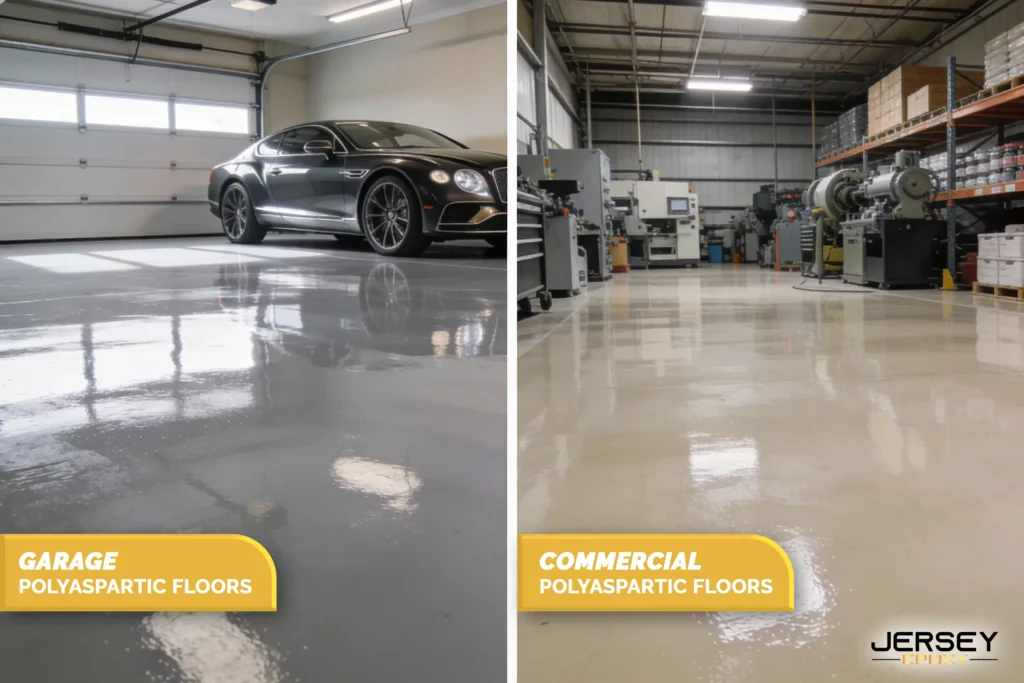
When winter rolls into New Jersey, many homeowners and property managers assume that floor coating projects have to wait until spring. Did you know that polyaspartic floor coatings break that old belief? They are known for their strength, clarity, and unmatched curing speed, making them the go-to option for garage floors, commercial spaces, and industrial settings all year.
So, do polyaspartic floor coatings cure faster in cold weather? They do, but only in the right conditions. Let’s break down cold-weather polyaspartic floor coating installations below so you can make the right choice for your property.
What Makes Polyaspartic Coatings So Unique?
Polyaspartic coatings are engineered and designed to cure quickly, even in low temperatures. This is one of the biggest differences between polyaspartic and traditional epoxy.
Key advantages of polyaspartic floor coatings include:
- Fast cure times
- UV stability
- High chemical and abrasion resistance
- Flexible installation windows
These qualities make polyaspartic floor coatings ideal for most New Jersey homeowners who want their garage floor done quickly without sacrificing durability.
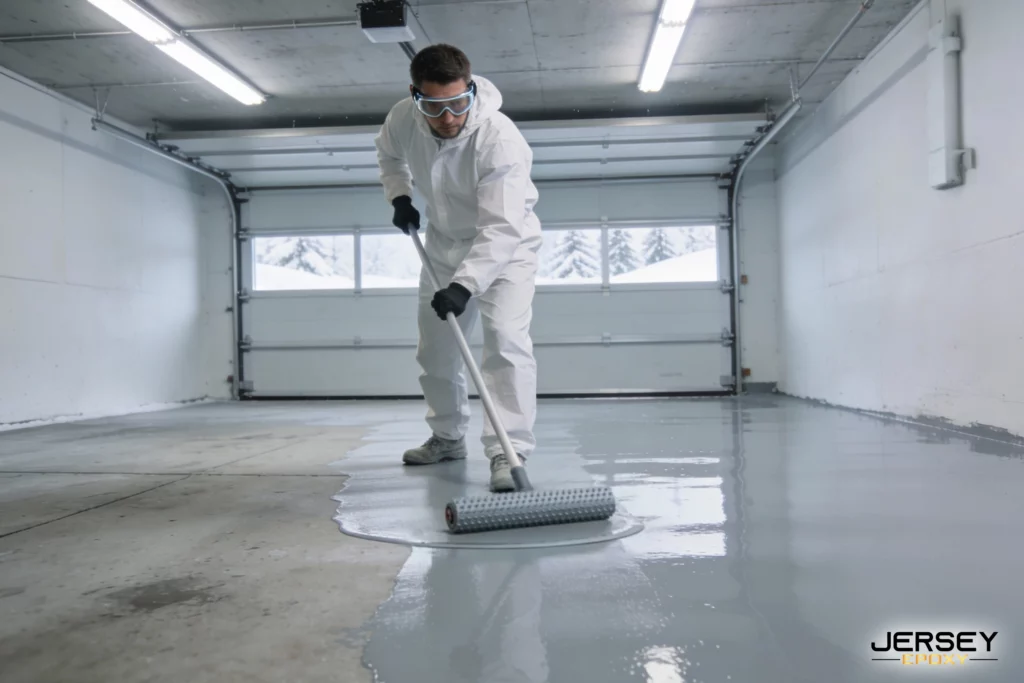
How Temperature Affects Polyaspartic Cure Times
Unlike epoxy, which can be significantly impacted by cold temperatures, polyaspartic coatings use an advanced chemical composition to allow a timely cure, even when the air and the surrounding concrete slab are cold.
Polyaspartic coatings use a catalyst that reacts differently at colder temperatures. Instead of slowing down, polyaspartic floor coatings can actually cure at the same speed or even faster when temperatures drop.
Most polyaspartic systems cure in:
- 1-2 hours to walk on
- 4-6 hours for light use
- 24 hours for vehicle traffic
However, cure speed also depends on:
- The specific product formulation
- Temperature of the air and concrete
- Humidity levels
- Thickness of the floor coating
Professionals adjust the coating’s formula ratio to ensure the curing time stays consistent even in cold conditions.
Why Cold Weather Can Improve Polyaspartic Installation Results
Beyond fast curing, winter offers several unexpected benefits for polyaspartic flooring installations. Many of the benefits below are ones that homeowners don’t even realize!
1. Better Moisture Conditions
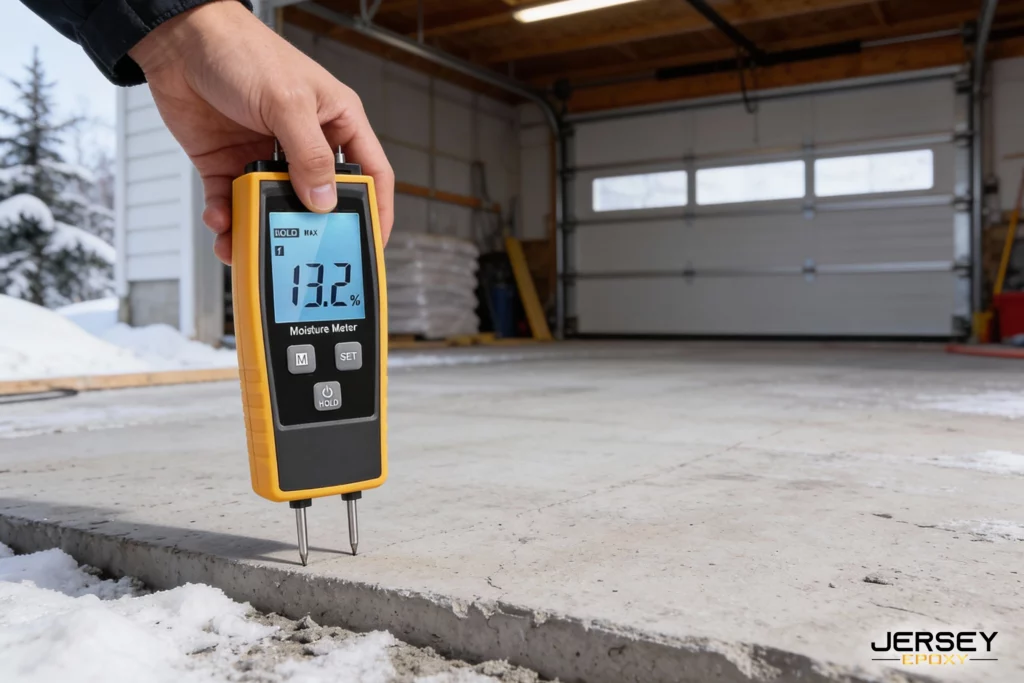
Concrete naturally absorbs and releases moisture. In summer, high humidity increases moisture transmission, which can lead to bubbles, adhesion issues and cloudy finishes.
Winter air is often much drier. That means fewer moisture-related problems and a cleaner bond between the coating and the concrete.
2. More Stable Slab Temperatures
While the air may fluctuate, concrete maintains a more consistent temperature in winter, especially in spaces like attached garages. Stable slab temperatures create ideal conditions for bonding and curing.
3. Faster Scheduling and Installation
Winter is typically a slower season for flooring contractors. That means you will have access to faster booking, more availability, and shorter project timelines. Need your flooring done faster and on your timeline? Winter is the perfect time for you.
4. Improved Chemical Interaction
Some polyaspartic formulas benefit from cooler temperatures because the resin and the hardener interact more efficiently. This can lead to better leveling, smoother finishes, and a stronger surface overall.
When Cold Weather Can Become a Problem
Polyaspartic floor coatings are cold-weather stars, but they do still have limits. Issues can occur when:
Temperatures Drop Below Product Rating
Most polyaspartic coating formulations are approved for installation down to as low as 0–20°F. Below that, the concrete may freeze, which would prevent adhesion.
The Concrete Slab is Frozen
If the temperature falls too low, the slab can frost over and that moisture can interfere with bonding.
Unexpected Humidity Spikes
Although winter air is dry, humidity issues can still occur in the winter! Storms, thaw cycles and humidity from appliance/HVAC systems can affect cure speed and bonding.
Unheated Spaces
If you are hoping to install polyaspartic in an area without any sort of heat, like in a detached garage or storage warehouse, the temperature in these spaces could swing rapidly. If this happens, curing reaction times may become inconsistent.
Do Polyaspartic Floor Coatings Cure Faster Than Epoxy?
Yes, polyaspartic floor coatings cure significantly faster than epoxy, especially in challenging environments like cold weather. While traditional epoxy requires 24-72 hours to cure and may take even longer when temperatures drop, polyaspartic coatings are engineered for speed.
Most systems are ready for light traffic in just a few hours, regardless of the season. This rapid curing is due to the unique chemistry of polyaspartic. Their formulation allows the resin and hardener to react efficiently even when the concrete slab and surrounding air are colder. Epoxy, on the other hand, slows down in cold conditions and sometimes shouldn’t be applied at all during extensive temperature swings.
For New Jersey homeowners, property managers, and businesses looking for minimal downtime, polyaspartic coatings are the choice for fast and reliable curing.
Why Hire a Professional for Cold-Weather Coating
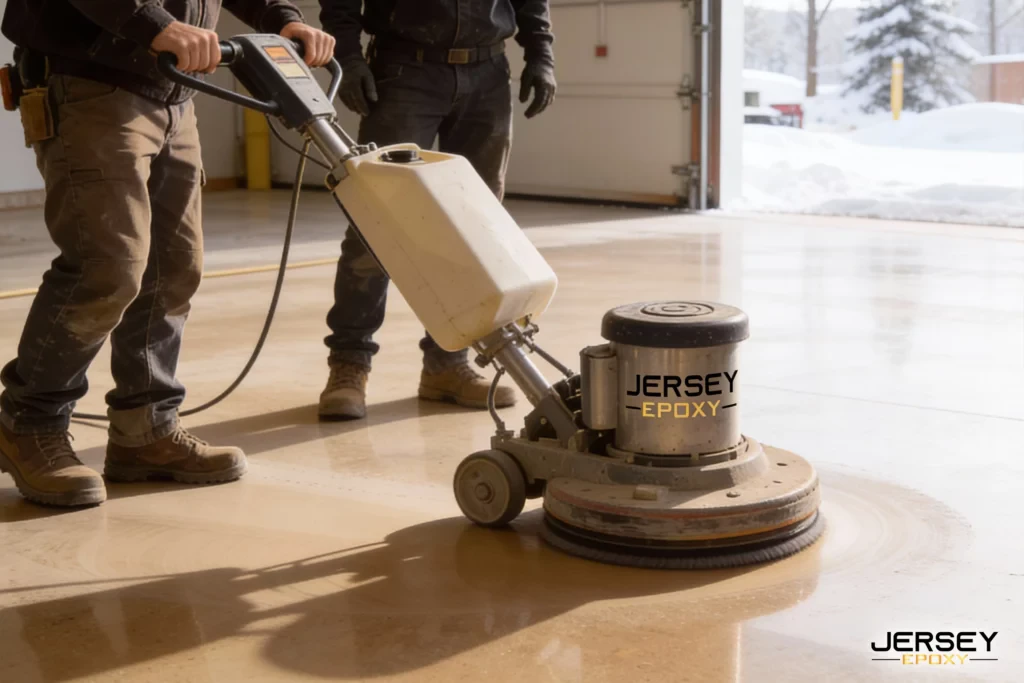
Cold-weather installation is an intricate process. Although it is possible and actually offers some benefits, getting it done the right way is crucial. This is why professional installation is always encouraged.
A qualified team like Jersey Epoxy ensures:
- Proper concrete grinding
- Accurate moisture testing
- Slab and air monitoring
- Seamless application
- A smooth, durable finish
DIY applications in winter often lead to peeling, cloudy finishes, uneven texture, trapped moisture and even premature failure. Professionals use commercial-grade products that outperform store-bought kits every time.
Is Winter the Best Time for Polyaspartic Flooring?
It absolutely can be! Polyaspartic floor coatings are uniquely engineered to cure fast and strong in cold weather. For New Jersey property owners, winter can be an ideal time to tackle projects of this scale and nature.
Now that you know the answer to the question, “Do polyaspartic floor coatings cure faster in cold weather?”, you know what to do!
When you install polyaspartic in the winter, you can expect fast curing time, excellent adhesion, flexible scheduling and less moisture interference. If you have been putting off your garage or commercial project until spring, don’t wait! The Jersey Epoxy team is here to take care of your entire installation.
Ready for a stronger, cleaner, stunning new floor? Contact Jersey Epoxy today to schedule your winter installation and enjoy a beautiful, long-lasting polyaspartic floor in as little as one day!