


Epoxy flooring has become one of the most popular choices for homeowners and business owners looking for a sleek, durable, and long-lasting surface. Whether in garages, basements, kitchens, or commercial spaces, epoxy provides a seamless look that is both functional and visually appealing.
But if you already have a tile floor, you may be wondering, “Can you put an epoxy floor over tile?”
The answer is yes, but it requires proper preparation and technique. Let’s dive into the details about epoxy floors and possible applications below.
Understanding Epoxy Flooring
Epoxy flooring is a type of coating made from resin and hardener that chemically bonds to form a strong, rock-hard material. Once cured, epoxy creates a seamless, high-performance surface resistant to stains, chemicals, and heavy wear.
It’s commonly used in garages, warehouses, and kitchens, but has grown in popularity for residential areas thanks to its glossy finish and customizable design options.
Some of the benefits of epoxy include:
- Durability: Withstands heavy foot traffic, vehicles, and equipment.
- Easy Maintenance: Simple to clean with soap and water.
- Aesthetic Appeal: Available in solid colors, metallic finishes, or with decorative flakes.
- Chemical Resistance: Resistant to oil, gasoline, and most cleaning solutions.
Can Epoxy Be Applied Over Tile?
So, epoxy is a great choice in a variety of situations, but can it be applied to pre-existing floors like tile? In short, yes, but with some exceptions. This decision allows you to save time and money by avoiding the mess and expense of tearing out the existing tile.
However, the success of the project depends on the condition of the tiles and how well the surface is prepared.
Epoxy works best when the tile is:
- Securely Attached: No loose or hollow-sounding tiles.
- Structurally Sound: Free from cracks or major damage.
- Moisture-Free: No water issues beneath the surface.
If your tile has significant damage, water problems, or instability, it’s best to address those issues right away before installing the epoxy. Failing to do so can lead to serious issues like mold infestations, unstable floors, and dangerous damage.
Preparing Tile for Epoxy Application
Preparation is the most critical step in applying epoxy over tile. Without proper prep work, the epoxy may not adhere correctly, leading to peeling, bubbling, or premature failure. Here’s a breakdown of what needs to happen:
- Inspection
Examine the tile for cracks, chips, or loose sections. Any damaged tiles should be repaired or replaced before beginning. - Cleaning
Remove all dirt, grease, and residues using a heavy-duty degreaser. Even small amounts of oil or soap can prevent epoxy from bonding properly. - Etching or Grinding the Surface
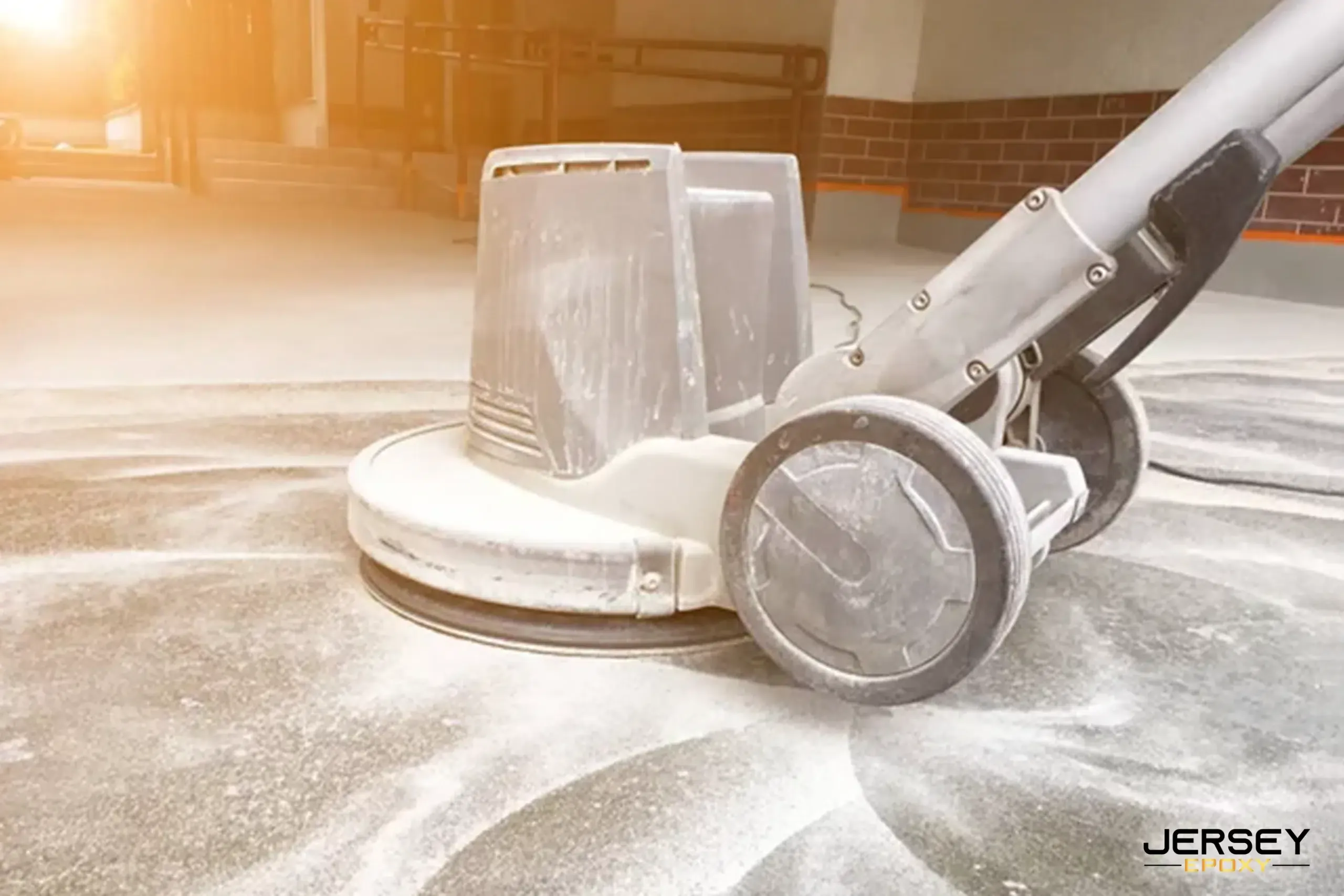
Epoxy adheres best to rough surfaces. Smooth tile needs to be mechanically abraded with a grinder or etched with a chemical solution to create texture. - Filling Grout Lines and Cracks
Tile grout lines can create uneven surfaces under epoxy. Installers typically use a leveling compound or filler to smooth out these lines before applying epoxy.
Once these steps are completed, the tile surface is ready for epoxy application.
The Epoxy Application Process Over Tile
Applying epoxy over tile involves several steps, each designed to ensure proper adhesion and a flawless finish:
- Primer Coat
A primer helps the epoxy bond securely to the tile surface. This layer penetrates the roughened surface and provides a strong base. - Base Layer of Epoxy
The first coat of epoxy resin is applied evenly across the floor. This forms the foundation of the new surface. - Decorative Options
If desired, decorative flakes or metallic pigments can be added to the epoxy for a custom look.
Topcoat Sealant
A clear topcoat is applied to seal the surface, add shine, and enhance durability. This layer also improves resistance to chemicals, scratches, and wear.
Pros and Cons of Epoxying Over Tile
Like any home improvement project, there are advantages and disadvantages to applying epoxy over tile.
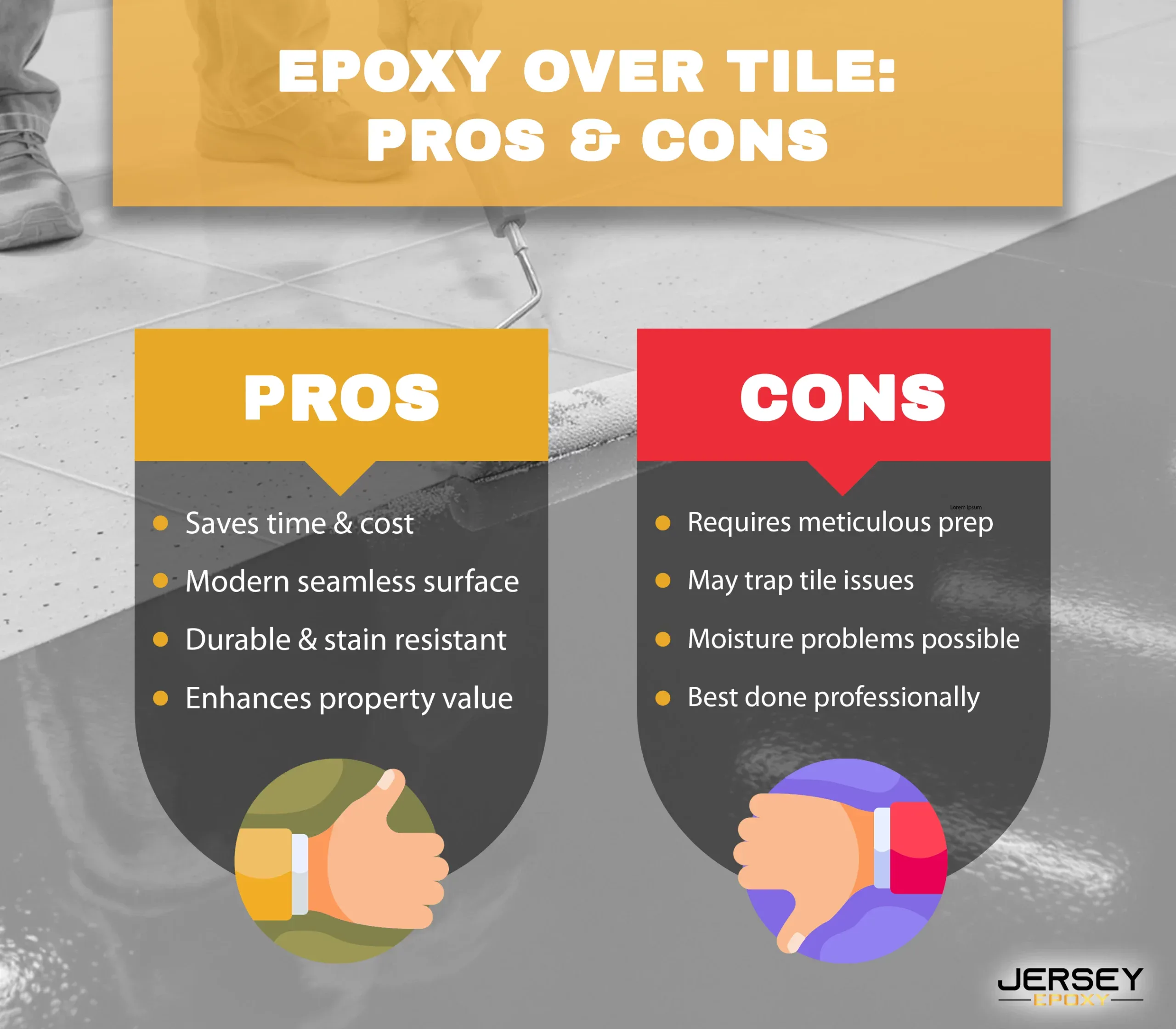
Pros:
- Saves time and cost compared to tearing out tile.
- Provides a modern, seamless surface.
- Adds durability and protection against stains and wear.
- Enhances property value with a polished look.
Cons:
- Requires meticulous surface preparation.
- May trap underlying tile problems like moisture or cracks.
- Professional installation is often necessary for the best results.
DIY vs. Professional Installation of Epoxy Floor Coatings
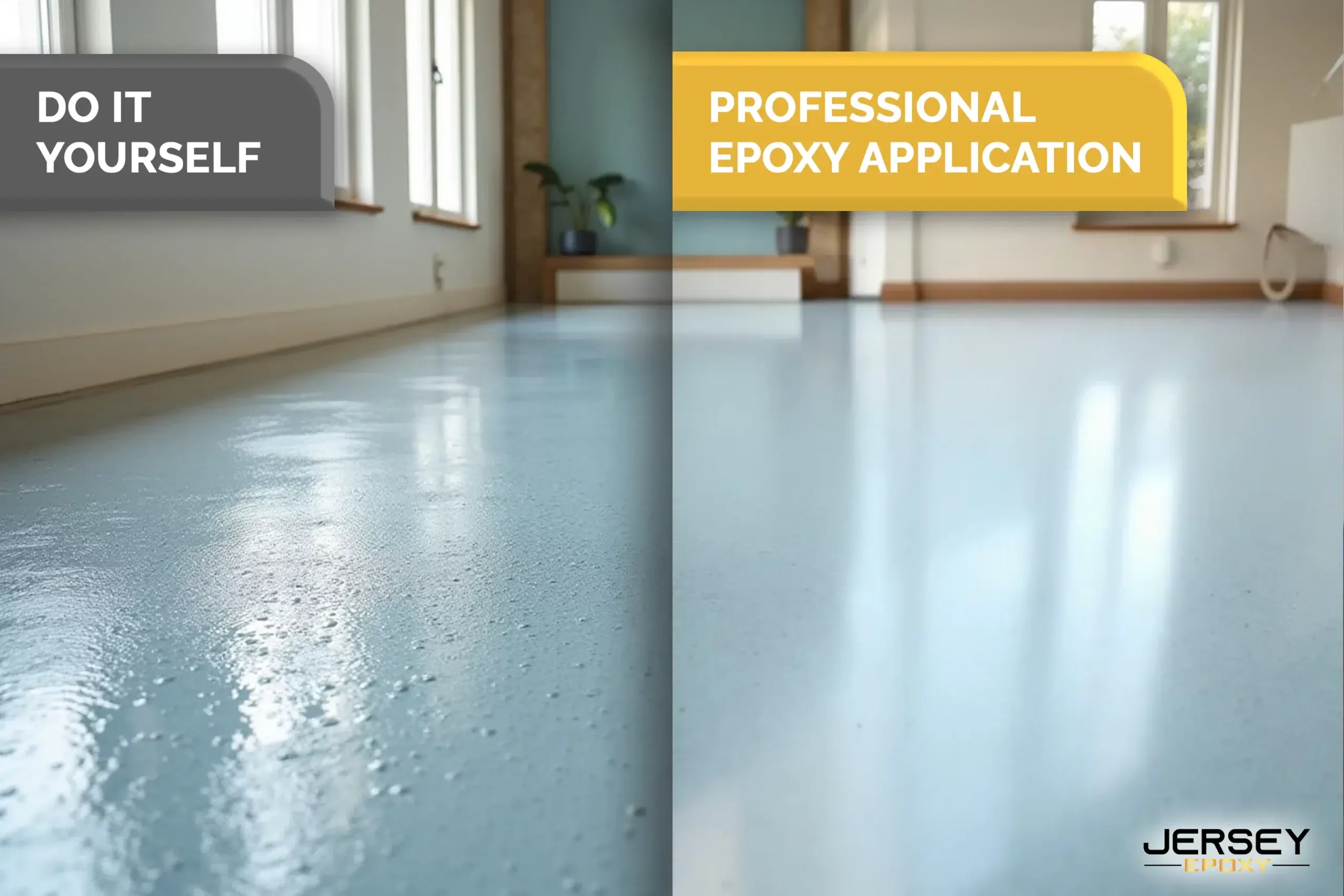
Many homeowners are tempted to install epoxy themselves using DIY kits from hardware stores. While this can be a cost-effective option for small areas, it often comes with challenges. Achieving professional-level adhesion and a flawless finish requires specialized equipment, high-quality products, and experience. Common DIY issues include uneven application, bubbling, peeling, and premature wear.
Professional epoxy floor installers, on the other hand, bring expertise and industrial-grade tools to the project. They know how to properly prep tile, apply multiple layers, and ensure long-lasting results. While hiring a professional may cost more upfront, it often saves money in the long run by avoiding costly mistakes or repairs.
When To Choose Epoxy Over Tile
Of course, it’s not always a good idea to install a floor coating over your existing floor. The conditions and materials have to be right for the project to pay off over time.
Installing epoxy over tile is an excellent choice if:
- Your tile is in good condition, but outdated in style.
- You want a durable, low-maintenance surface.
- You’re looking for a cost-effective alternative to replacing tile.
However, if your tile is damaged, unstable, or exposed to significant moisture, it may be worth investing in new flooring before applying epoxy. This process might take longer, but it will save you serious time and money in the long run.
So, can you put an epoxy floor over tile? The answer is yes! However, the tile must be in good condition, and the surface must be properly prepared. Epoxy flooring offers a durable, attractive, and modern solution for refreshing old tile without the hassle of demolition. While DIY kits exist, professional installation ensures the best results, especially for large or high-traffic areas.
If you’re ready to transform your old tile into a stunning, long-lasting surface, epoxy flooring may be the perfect solution. Consult the team at Jersey Epoxy at 877-376-9965 to assess your tile and start the process of upgrading your space today.

Can You Install Epoxy in a Condo Garage Floor in Winter?
When you manage a condo complex or a multi-unit property in New Jersey, maintaining shared
Read More »
Common Interior Concrete Floor Finishes
When it comes to upgrading your home’s floors, concrete isn’t just for basements and garages
Read More »
Do Polyaspartic Floor Coatings Cure Faster in Cold Weather?
When winter rolls into New Jersey, many homeowners and property managers assume that floor coating
Do Polyaspartic Floor Coatings Scratch Easily?
Do Polyaspartic Floors Scratch Easily? | Jersey Epoxy Do Polyaspartic Floor Coatings Scratch Easily? In
Benefits of Adding a Pool Deck Texture
Benefits of Textured Pool Deck Coatings | Jersey Epoxy Benefits of Adding a Pool Deck

Cool Deck Ideas for Pool Areas
Cool Deck Ideas for Pool Areas | Jersey Epoxy Cool Deck Ideas for Pool Areas