


When you manage a condo complex or a multi-unit property in New Jersey, maintaining shared spaces is essential. Clean and functional spaces help your tenants live smoother lives, but they are also good for your reputation!
One of the most influential spaces in your property is your garage. It needs to be clean, safe, and durable for every person that lives under your roof. So, what happens when your garage floors are due for an upgrade in the middle of winter? Can you install epoxy in a condo garage floor in winter?
The short answer is yes, as long as you work with the right professionals and use the right materials. More important, winter epoxy installation can be a strategic advantage for property managers looking to improve aesthetics and protect long-term assets.
Let’s break down how winter epoxy installations in residential spaces works and what condo managers need to know to benefit both the property and your tenants.
Why Property Managers Consider Epoxy Garage Floors in Winter
Winter may not feel like the ideal time for a flooring upgrade, but for a property manager, it can actually be the most strategic time to get this project done.
1. Off-Peak Scheduling
One of the biggest advantages of installing an epoxy floor in winter is that it can be much easier to schedule your project. Flooring companies often book quickly in the spring and summer, so off-season scheduling gives property managers:
- Faster project timelines
- Better availability
- More flexibility for customized project management
Being able to choose your own timeline can be crucial when you are working with varying schedules and the needs of your tenants. Having a more flexible calendar to work with can make the process much less stressful.
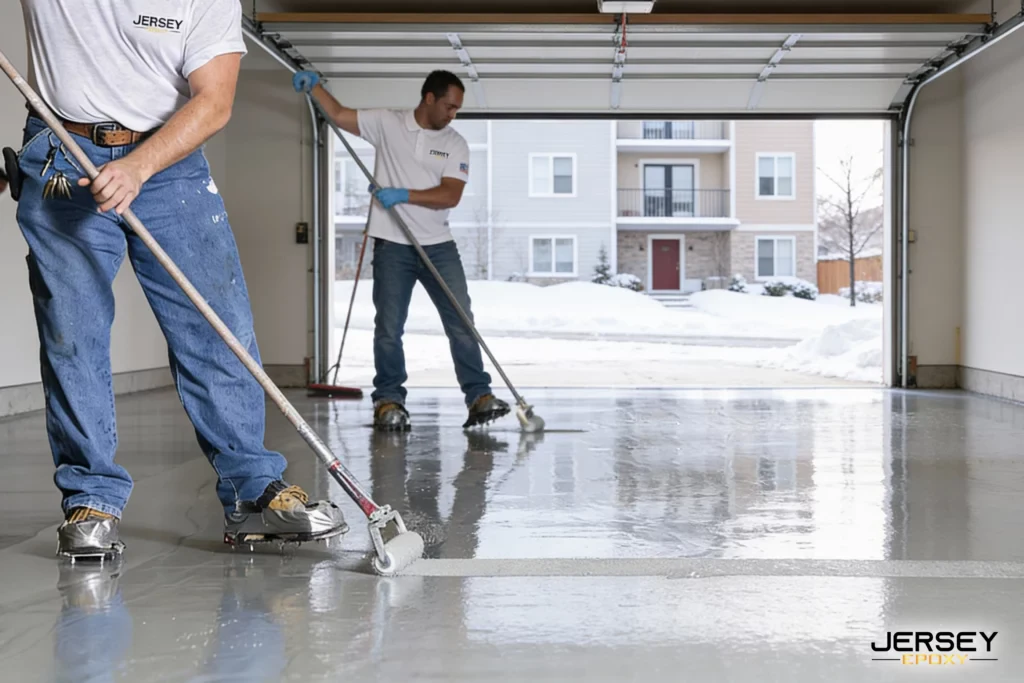
2. Protection Against Winter Damage
If you need to upgrade your garage floor, it probably is either old, worn down, or damaged in some way. If that’s the case, tackling this project early in the winter season is ideal. Waiting until the springtime adds an entire season of exposure from ice, snow, and salt to your already vulnerable floor.
Once installed, epoxy creates a seamless, salt-resistant barrier. Installing it before the worst winter weather hits prevents:
- Deep surface pitting
- Cracks
- Stains
- Moisture intrusion
Covering the floor with a durable epoxy coating adds the water-resistant barrier that your floor needs to thrive in any conditions.
3. Adjusted Garage Traffic
While there might be a greater need for parking space in the garage in the winter, garages tend to be used less frequently for other things during the colder months. Less DIY projects and less need for outdoor equipment can help reduce the disruption during the installation process.
How Cold Weather Installation Works
Traditional epoxy does have temperature considerations. Standard formulas need warmer conditions to cure properly to avoid bubbling, improper bonding, and weak adhesion.
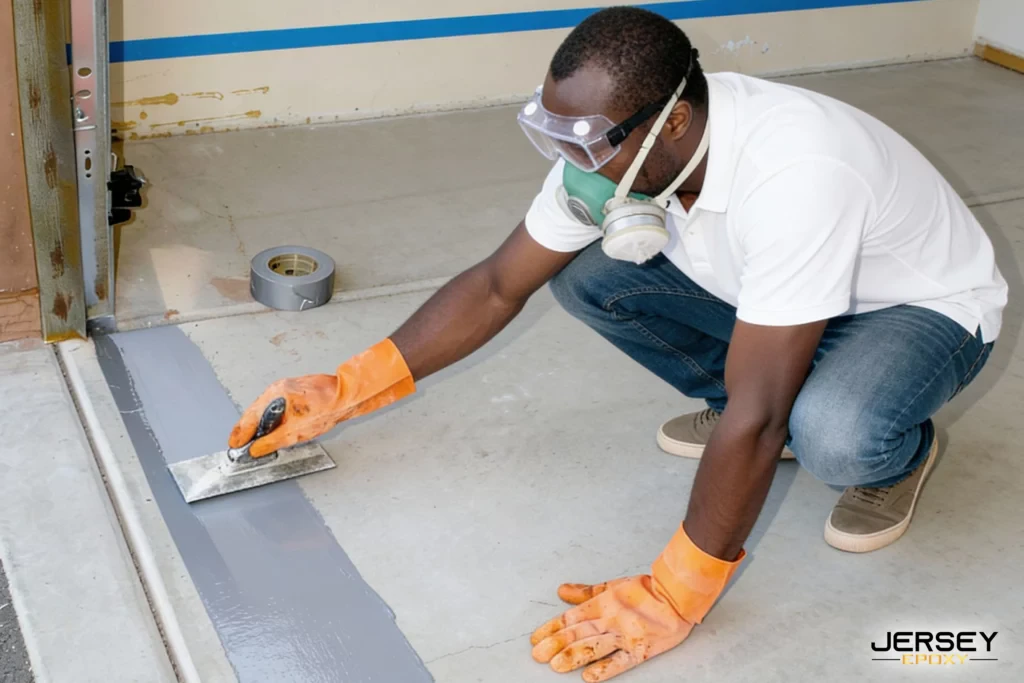
However, modern epoxy solutions and commercial-grade formulas can be installed in more extreme conditions! A professional installer like Jersey Epoxy uses cold-tolerant epoxy coatings designed specifically for winter applications.
Cold Weather Challenges
1. Concrete Temperature
If the air is below 40°F, the concrete slab will most likely be colder than that. In these instances, the concrete may be too cold for a smooth cure to take place.
Contractors use specialized heaters to bring the concrete surface up to the right temperature. They also test slab temperature, not just the air temp.
2. Moisture from Snow and Salt
The concrete subfloor must be completely dry before the epoxy coating is applied. To solve this problem, professional flooring installers use moisture meters to test for moisture, and they also use industrial drying equipment if needed. This prevents issues like delamination or cloudy finishes.
3. Ventilation Needs
Having proper ventilation is crucial during any epoxy project, but especially in winter. Professionals are equipped with safe ventilation methods to protect themselves and tenants from odors or VOCs.
Benefits of Epoxy Garage Floors for Condo Properties
Upgrading to epoxy is a long-term investment in your property’s value, and it also helps safeguard your residents’ satisfaction. In addition, it also benefits your condo in these ways:
1. Dramatically Improves Aesthetics
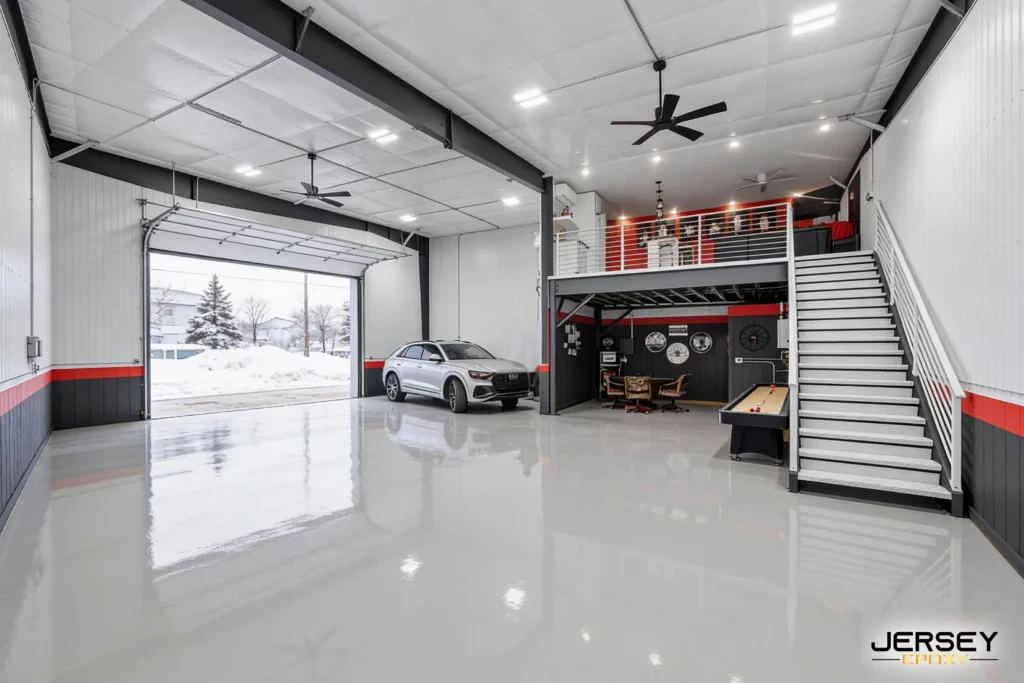
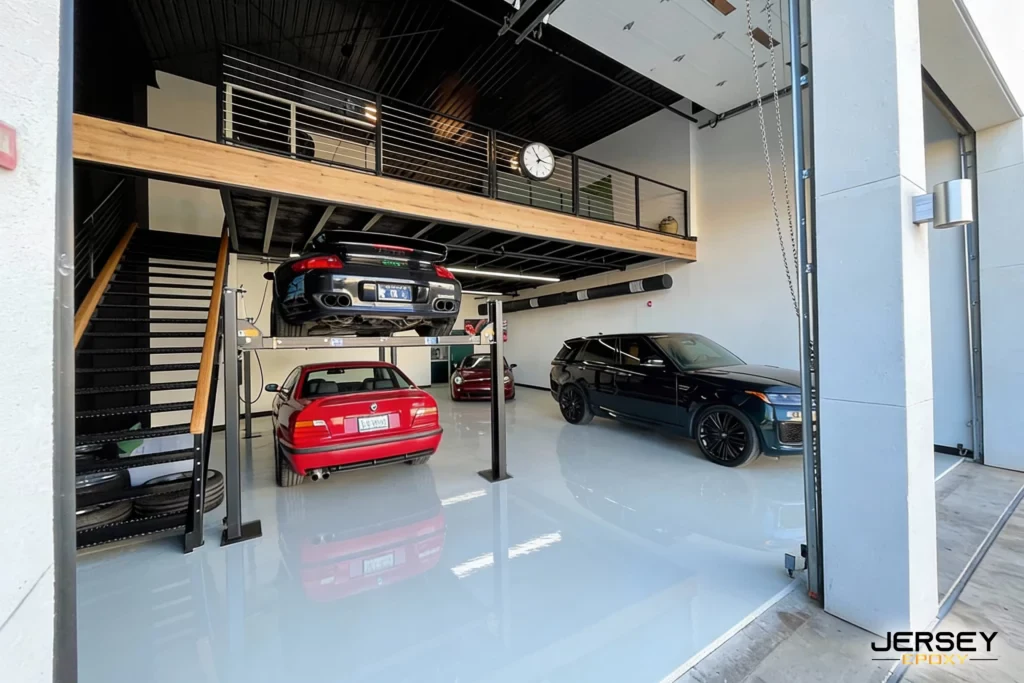
A clean, glossy, uniform garage floor immediately elevates your entire property. For condo communities, garages often serve as the first impression for prospective buyers or new renters.
2. Reduces Liability Risks
Epoxy coatings create a nonslip, easy-to-maintain surface. With additives like decorative flakes, your floor becomes safer for your tenants as they come and go. This is especially important if your condos are in a retirement community.
3. Simplifies Cleaning and Maintenance
Untreated or exposed concrete absorbs oil, road salt, and grime. A fresh epoxy coating resists all of that! The floor becomes easier to clean and requires less pressure washing, routine maintenance, and deep cleans year-round. Tenants will also appreciate a cleaner garage environment.
How the Winter Installation Process Works for Condo Garages
Epoxy installation in a multi-unit environment requires coordination and planning. Here’s how Jersey Epoxy ensures a smooth experience:
1. Site Evaluation
The entire property is assessed to ensure the right temperature conditions, the current concrete moisture levels, ventilation concerns, and traffic flow patterns. This helps determine which products to use and how to create the project timeline.
2. Tenant Notification Plan
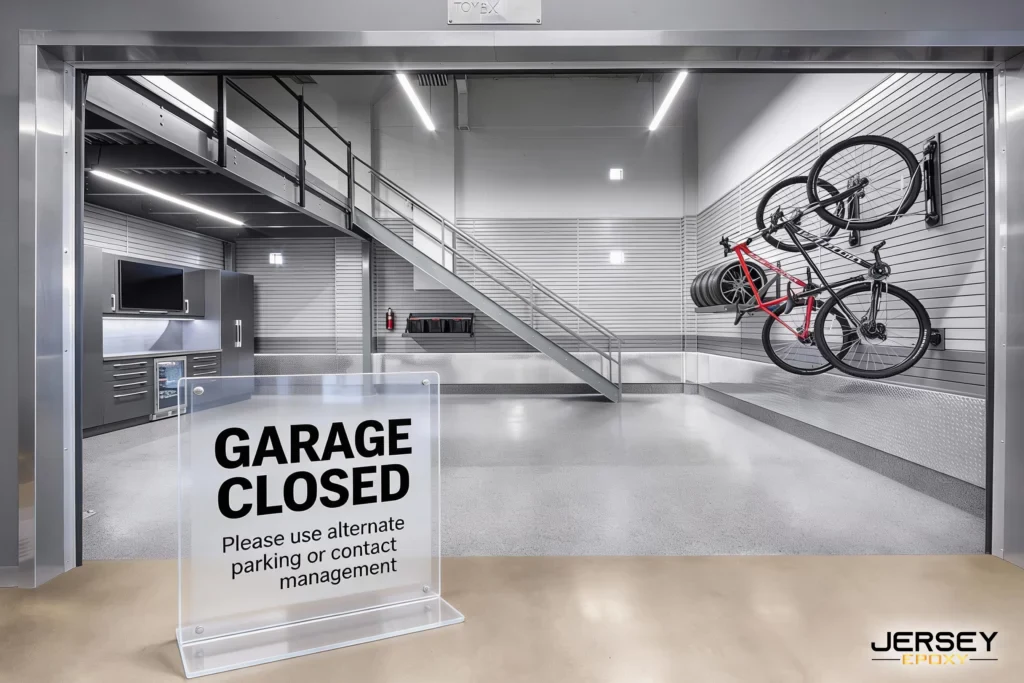
Good communication is a requirement whenever you are disrupting your tenant’s daily rhythm. Most condo properties use email alerts, lobby signage, or garage entry notices to keep everyone informed. You will also need to communicate temporary alternative parking assignments for the duration of the project.
3. Preparation and Application
Cracks are then repaired, moisture is removed, and the surface is ground down for proper adhesion. If the concrete needs to be warmed up, specialized heaters are brought in and turned on. Once the floor is ready for application, your chosen epoxy formula is then poured into place.
Finally, the floor is left to cure until it is safe for normal traffic. This could take anywhere from a few days to a full week, depending on the current conditions.
Should You Schedule Your Condo Garage Epoxy Installation This Winter?
If your garage floors have salt damage, cracks, or stains, winter is the perfect time to take action. With our modern epoxy solutions, you can install epoxy in a condo garage floor in winter!
Jersey Epoxy specializes in cold-weather epoxy and polyaspartic installations that protect your concrete, enhance safety, and keep your property looking its best. Contact our team today for a free evaluation and quote.