


If you live on the East Coast, you know how unpredictable winters can be. Maybe you’ve been thinking about upgrading your garage floor, basement, or workshop with epoxy, but the project kept getting pushed back and now the weather is cooling down. As the winter approaches, you might be wondering, “Can I install epoxy floors when it’s cold outside?”
The short answer is yes, you can, as long as you invest in the right products and a professional installation.
At Jersey Epoxy, we specialize in year-round epoxy flooring across New Jersey homes and businesses. Here’s what you need to know about installing epoxy during the colder months.
Why Temperature Matters for Epoxy Installation
Epoxy flooring systems, which are made from a combination of resin and a hardening compound, are designed to create that strong, seamless, and glossy finish homeowners love. When the resin and hardener are combined, a reaction occurs that allows the compound to harden and cure completely. Because of this, the conditions have to be just right for this curing process to happen properly.
If the conditions aren’t right, it can lead to problems like:
- Slow curing time: the epoxy takes much longer to harden.
- Weaker bonds: The epoxy may not adhere properly to the concrete.
- Imperfections: Bubbles, peeling or soft spots might appear if the temperature is outside of the proper range.
That’s why professional installers take extra precautions to ensure the epoxy cures properly. Without knowing the conditions and how to ensure proper curing even during unpredictable seasons and weather, it can result in serious consequences for your floor now and for years to come.
The Ideal Temperature for Epoxy Floor Installation
Most epoxy coatings cure best between 60°F and 80°F, as long as both the air and the concrete beneath it are within that range.
If your subfloor is colder than that, standard epoxy might not set properly and it can lead to longer curing times. It can also lead to a substandard finish, resulting in negative impacts that go beyond aesthetics.
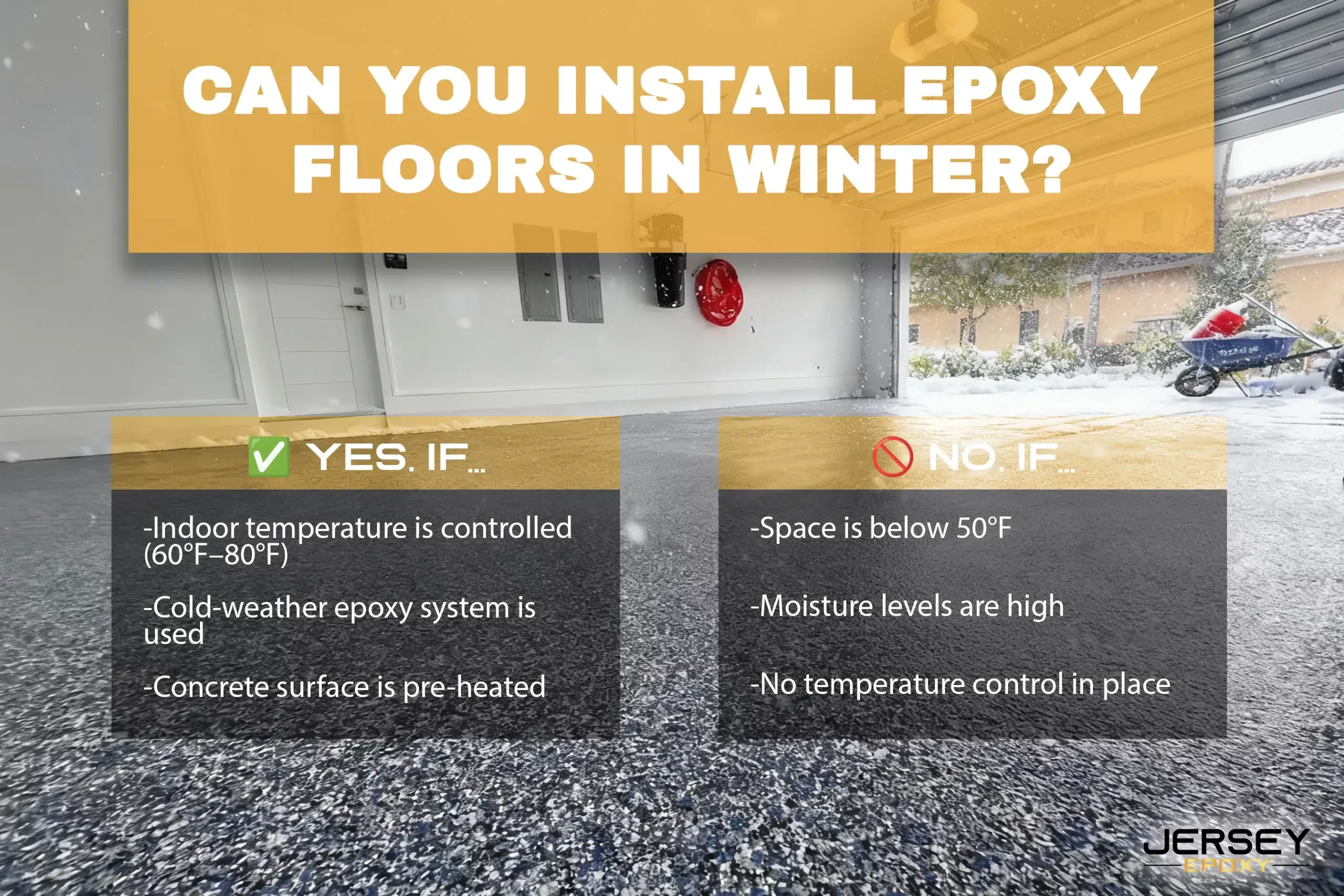
The same troubles arise if the outdoor air and concrete are too warm! If the air is too humid or the concrete is too warm, the curing time becomes unpredictable and soft spots can become common.
So, if the temperature has to be just right for installation, how do professional flooring installers work year-round? Let’s break it down.
How Jersey Epoxy Installs Floors in Cold Weather
Cold weather doesn’t stop professional flooring installers! Knowing how to control your environment and how to plan for “imperfect” weather conditions can ensure a seamless and professional finish no matter how cold it gets.
Here’s how we handle epoxy installation during East Coast winters:
We Use Cold-Weather Epoxy Systems
Our epoxy formulas are engineered to cure at lower temperatures without sacrificing durability or shine.
We Control the Indoor Climate
Portable heaters and air movers help us stabilize the air temperature in garages, basements, and commercial spaces so the epoxy sets evenly while maintaining the room temperature.
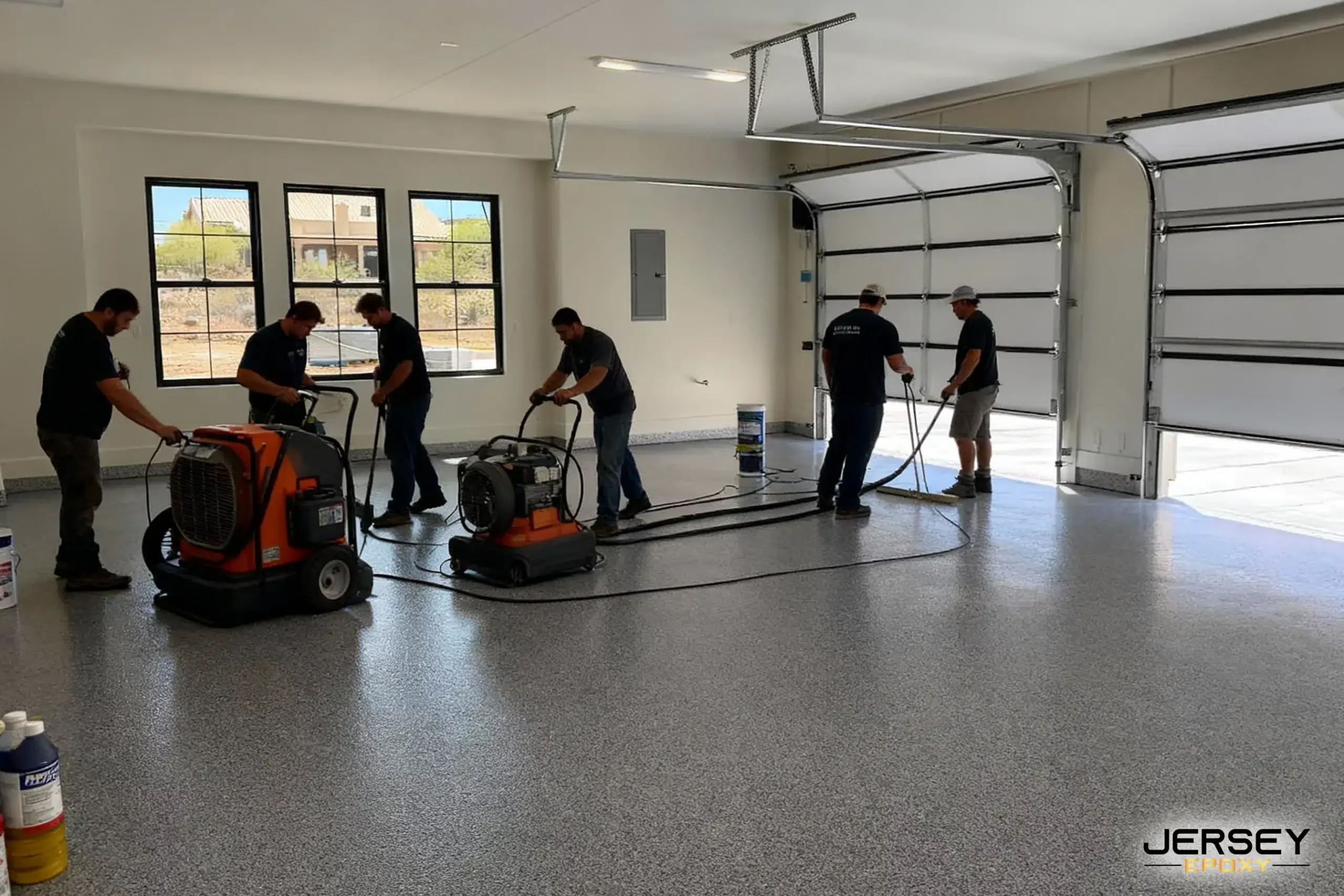
We Monitor the Concrete Surface
Before applying the epoxy, we make sure the concrete is within the ideal temperature range to ensure strong adhesion. We have a specialized process to warm up any concrete that is out of the ideal temperature range.
We Adjust the Curing Schedule
In colder environments, epoxy takes longer to harden. We plan accordingly to give your floor the proper time to cure for a perfect finish. While this may extend your project timeline, this is a necessary step to give you the reliable and durable floor you deserve.
Best Time of Year To Install Epoxy Floors
While spring and fall are generally the most temperature-friendly times for epoxy installations, winter can actually be a great time for indoor projects on the East Coast.
During colder months, your garage or basement likely sees less use, so the project may be less disruptive for your family. In addition, many homeowners wait for warmer weather, so it’s often easier to schedule your project and we can work with your timeline.
That being said, don’t wait until spring! Scheduling your epoxy flooring installation with Jersey Epoxy this winter ensures your floor will be looking brand-new by the time the snow melts.
Why Professional Installation Is Essential in Winter
DIY epoxy kits may seem convenient, but winter conditions make them much harder to work with. Uneven temperatures, improper mixing ratios, or poor curing environments can all lead to peeling, cracking, or a cloudy finish.
Jersey Epoxy’s experienced installers use commercial-grade materials and temperature control techniques that guarantee a smooth, durable, and glossy result. Investing in a professional epoxy installation also ensures you gain access to high-quality materials and industrial-grade epoxy compounds. These formulations are often more predictable than DIY kits and can be worked with in more extreme weather conditions.
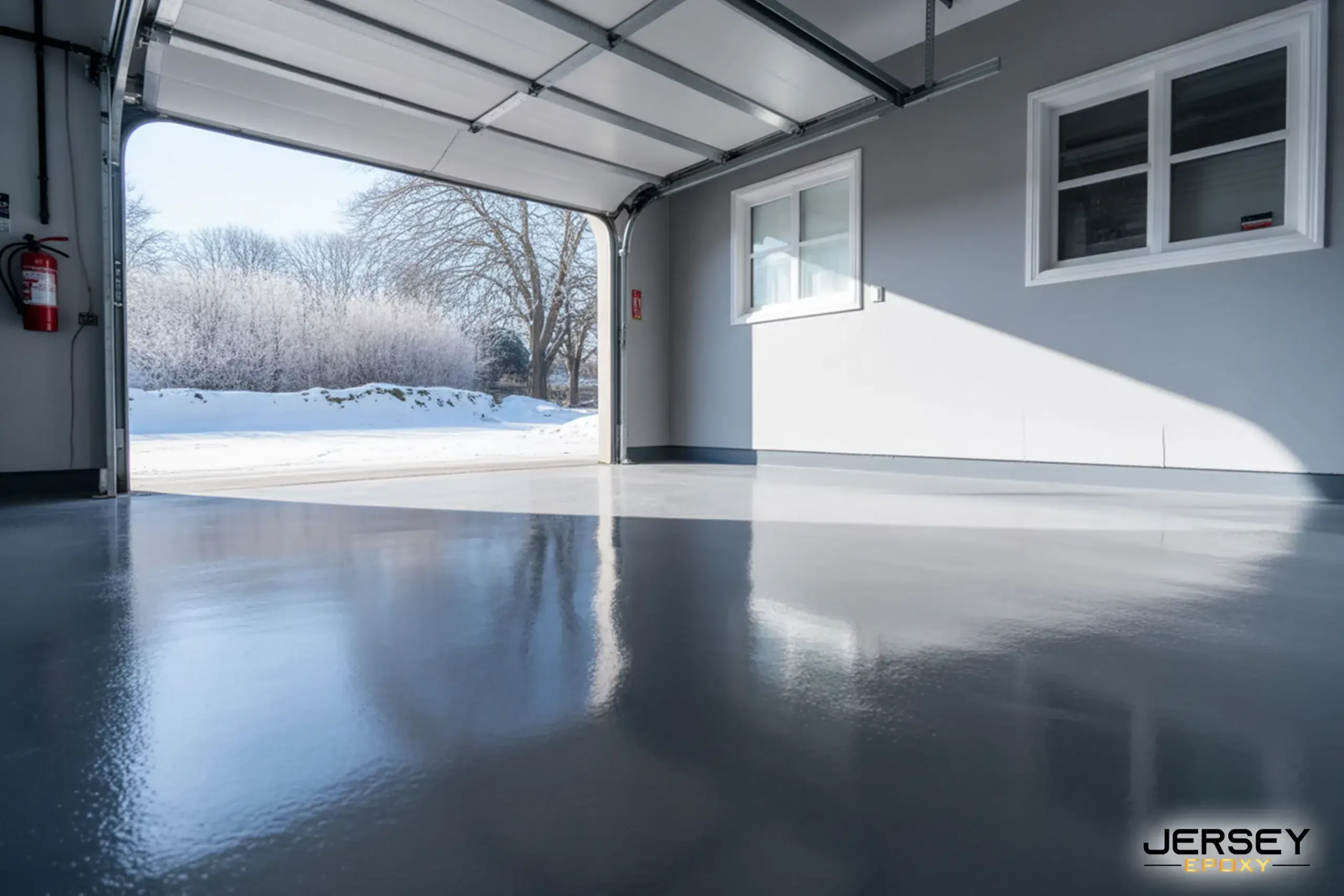
Whether you’re updating a garage floor in New Jersey, a basement in Pennsylvania, or a workshop on the East Coast, professional installation ensures your epoxy lasts for years.
The Bottom Line of Epoxy Floor Coating Installations
Now that you know the answer to the question, “Can I install epoxy floors when it’s cold?”, you know that cold weather doesn’t have to put your flooring project on hold! With the right materials, environmental control, and expertise, epoxy floors can be successfully installed even in the middle of winter.
At Jersey Epoxy, we offer cold-weather epoxy flooring solutions designed specifically for East Coast climates. Our team ensures your floor cures correctly, looks beautiful, and performs flawlessly no matter the season.
Contact Jersey Epoxy today for a free estimate on garage, basement, or commercial epoxy floor installation in New Jersey. Our experts are ready to help you transform your space with a durable, polished finish that shines all year long.
Don’t Wait for Spring to Get Your Perfect Floor!
Our team at Jersey Epoxy is ready to install your epoxy floor this winter. Contact us today to schedule a free, no-obligation evaluation.
Call Us Today: (877) 376-9965