


Keeping your property clean and safe should be a priority, especially when your home is undergoing any sort of remodel or upgrade. Choosing the right building material is not only important for your aesthetic, but it can also contribute to the health of your home. Conversely, choosing the wrong material can increase your risk of premature wear and tear, as well as issues such as water intrusion or mold growth.
This is especially true when it comes to floor upgrades! Your floors endure a lot and are exposed to heavy traffic, dirt, grime, and moisture on a regular basis. Because of this, you want floors that will last without exposing your property to serious issues, such as mold infestations.
If you have been researching epoxy floors as a potential flooring solution, you might be wondering, “Can epoxy floors prevent mold growth?” The quick answer is, they can!
Let’s dive into more about the benefits of epoxy floors, especially in areas that are prone to mold growth below.
Understanding Mold Growth and Moisture
Mold and moisture go hand-in-hand. Mold is a naturally occurring fungus that is found both indoors and outdoors, and it can grow virtually anywhere if the conditions are right. All mold needs is a little moisture and some undisturbed space, and it can start to grow into a colony within 48 hours.
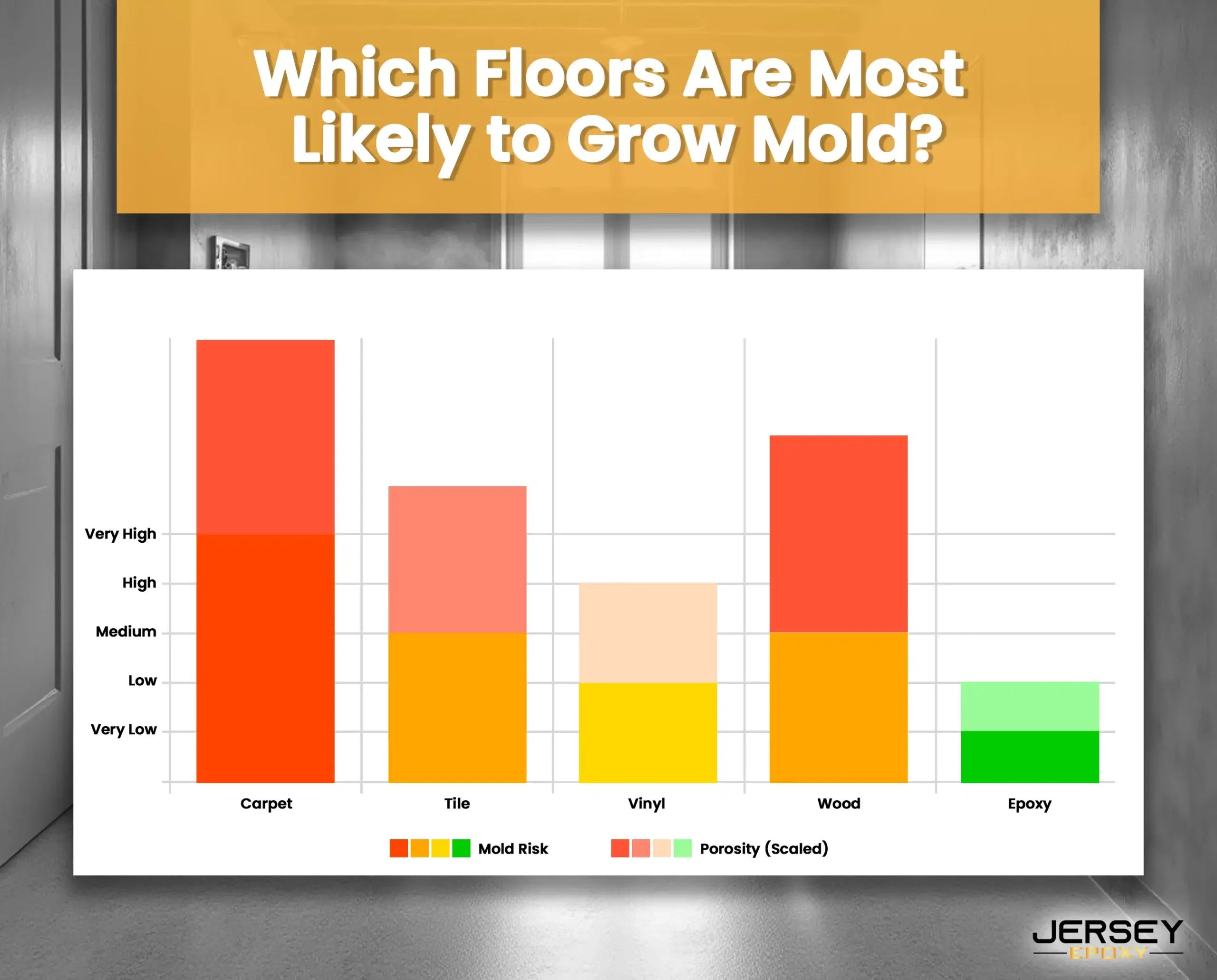
This is why moisture-prone areas, such as your bathroom, kitchen, and basement, are susceptible to mold growth. Traditional flooring solutions like carpet or tile can become a breeding ground for mold. Carpet can soak up moisture and hold onto it for a long time, which can lead to mold infestations in the carpet and under the carpet pad itself.
Tile and vinyl can easily invite water into the grout and joint lines or through the porous material itself, causing lingering moisture to build up under the floor. If the moisture is not properly dried up, it can result in a serious mold problem just out of sight.
Why Mold Thrives in Certain Flooring
Mold requires three key conditions to grow: moisture, warmth, and organic material (like dust or debris). According to the Environmental Protection Agency (EPA), indoor humidity levels above 60% can promote mold growth, especially in areas with poor ventilation. Traditional flooring materials like carpet and tile contribute to mold growth because they can trap and hold moisture. Carpet absorbs moisture and retains it, creating a damp environment both within the carpet fibers and underneath the padding. Tile and vinyl can allow water to seep into grout lines, joint lines, or through their porous material, leading to moisture buildup hidden beneath the surface. If this trapped moisture is not thoroughly dried, it provides the necessary conditions for mold to grow and spread.
How Epoxy Floors Prevent Mold
Thankfully, not all flooring is susceptible to mold growth! Epoxy floors are impermeable to water and moisture, ensuring moisture cannot get into the floor’s surface. There are also several other factors that come into play to prevent mold growth in your spaces.
Seamless Surface
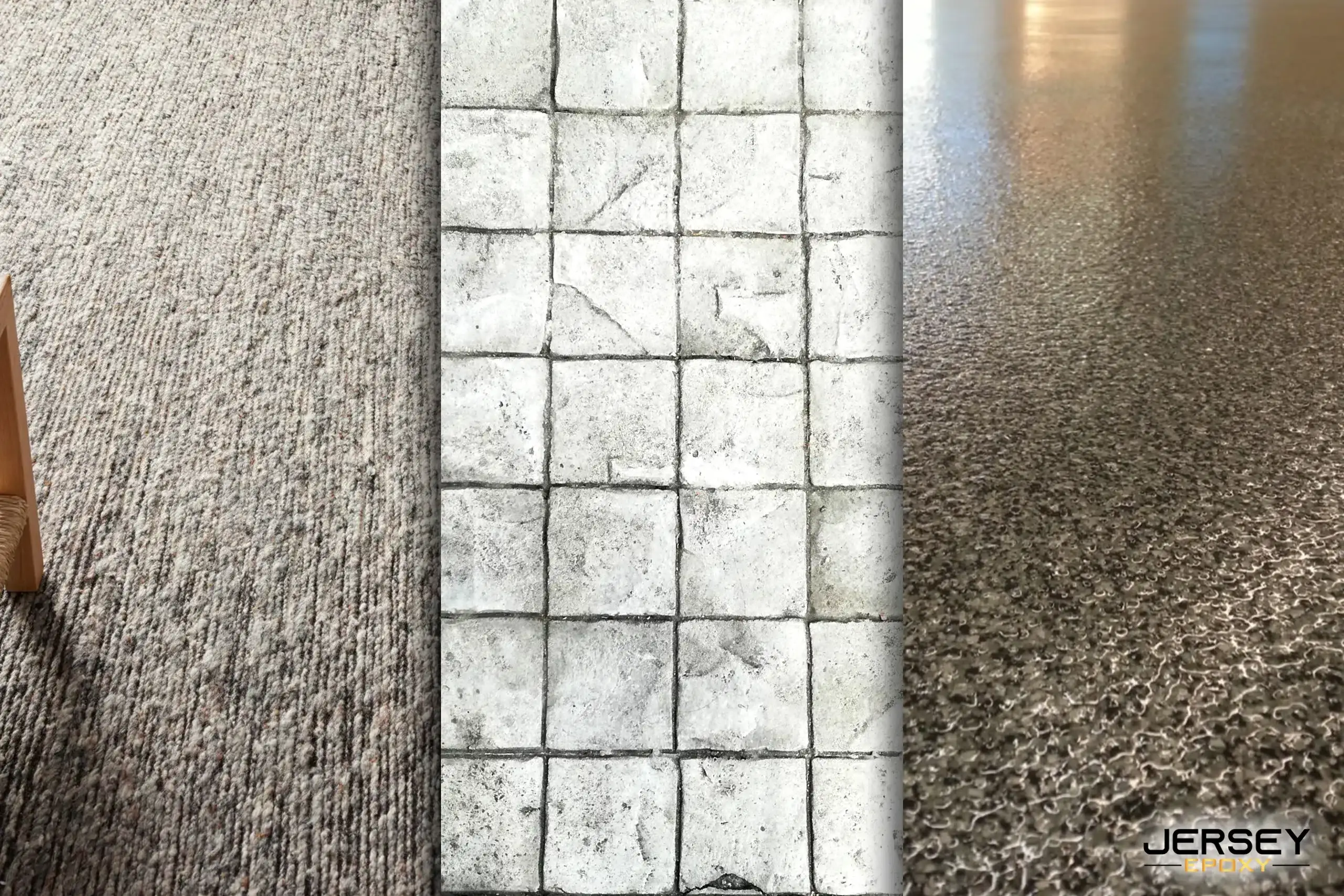
Epoxy is created by combining liquid resin with a hardening agent. This composition is then poured directly onto your prepared subfloor and is then left to harden and cure over a period of a few days. The final result is a seamless floor without joints or grout lines. These areas in vinyl, tile, and even hardwood are notorious for collecting moisture, which can easily lead to mold.
Thankfully, the seamless surface of epoxy doesn’t allow for this, and any residual moisture can be cleaned up promptly.
Non-Porous Nature
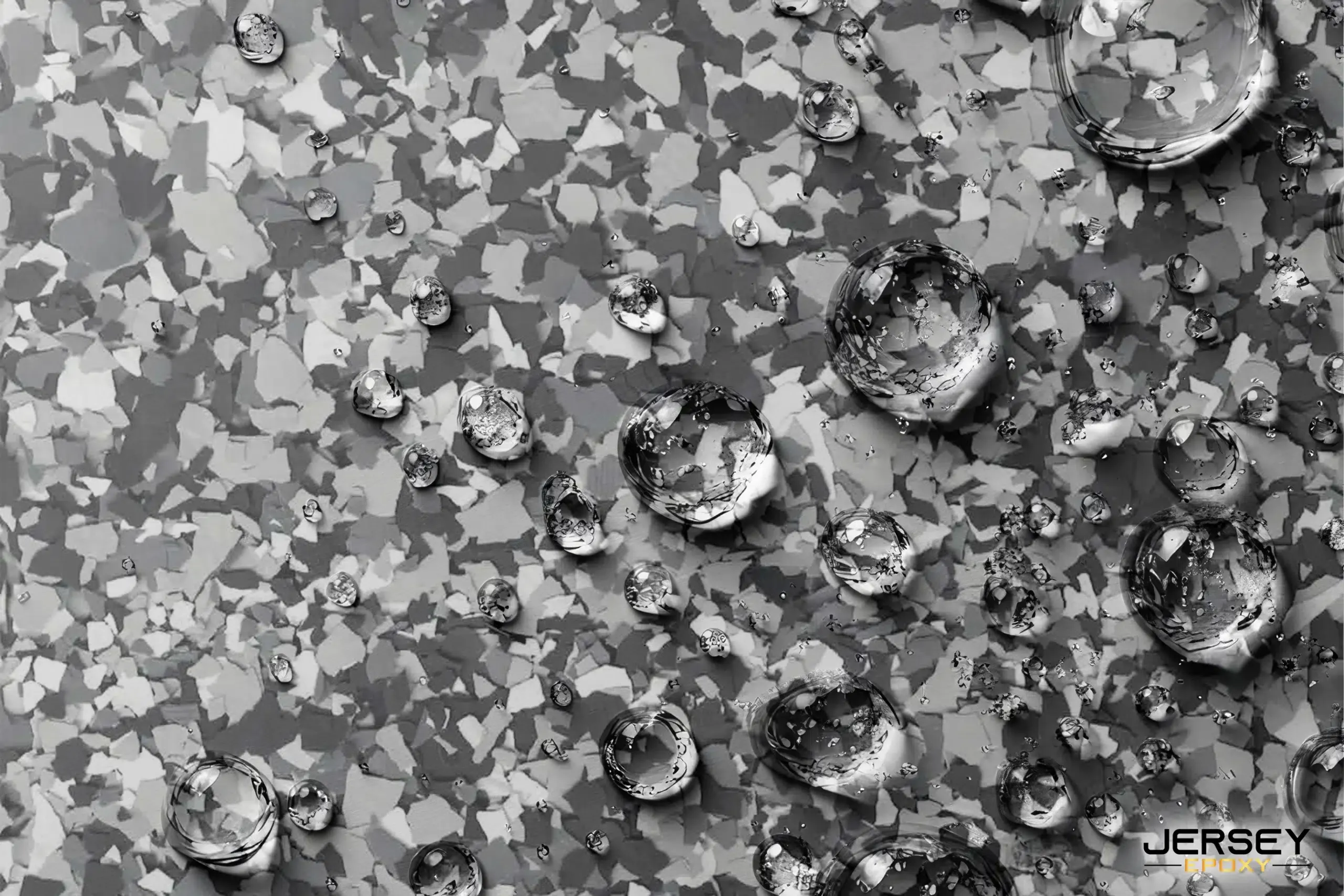
Another benefit of epoxy is that it is non-porous, which means it doesn’t absorb any liquid if water or other spills land on the surface. Carpet will easily soak up spills, and wood naturally has holes and other imperfections that will soak up moisture if left for too long. Epoxy cures to a completely uniform finish, effectively blocking any water from sneaking its way inside.
Easy Maintenance
One of the biggest factors when it comes to preventing mold growth is keeping moisture at bay. This can be hard to do when it comes to your bathroom spaces and your basement! Other flooring materials can be hard to keep clean and dry, but not epoxy. A quick wipe down will remove lingering moisture, and occasional sweeping will help keep it in tip-top shape.
Comparison of Flooring Types
To better understand why epoxy stands out for mold prevention, the table below compares common flooring types on the two properties that matter most for mold: whether the material absorbs water, and whether it has seams or fibers where moisture can hide.
| Flooring type | Absorbs water? | Seams or fibers? | Mold considerations |
|---|---|---|---|
| Epoxy coating | No, non-porous when cured | No, seamless | Nothing to absorb moisture and no joints for it to collect in; spills wipe up off the surface |
| Carpet | Yes, highly absorbent | Yes, dense fibers and padding | Holds moisture against the subfloor; padding can stay damp long after the surface feels dry |
| Hardwood | Yes, natural wood grain | Yes, board joints | Swells and traps moisture in joints; standing water can reach the subfloor |
| Tile | Tile no; grout yes | Yes, grout lines | Porous grout lines absorb water and are the classic place mold shows up first |
| Bare concrete | Yes, porous | Joints and cracks | Wicks ground moisture upward; surface dampness supports mold in humid basements |
Considerations for Epoxy Floors and Mold Prevention
Epoxy floors have so many benefits when it comes to preventing mold growth, but it is important to remember that the epoxy floor coating needs to be installed the right way to provide these benefits.
To start, the surface of the existing floor must be prepared properly for the best adhesion of the resin. It must be cleaned and sanded down to ensure there is no residual debris or moisture on the floors.
If you are remodeling a space that has dealt with water issues in the past, these problems must be addressed before your epoxy floor is installed. For example, if you have a water leak in your foundation, installing your epoxy flooring directly over that problem area can lead to improper curing. It can bubble, chip away faster, or even form soft spots in the floor.
The water leak can also cause mold growth around the foundation, which can continue to grow on your concrete blocks and around your home’s foundation. Taking care of these problems first will ensure you get the most out of your newly installed epoxy floor coating.
Importance of Subfloor Preparation
Proper subfloor preparation is critical for epoxy’s mold-resistant properties. The Centers for Disease Control and Prevention (CDC) emphasizes that addressing existing mold and moisture issues is essential before any renovation to prevent recurring problems. For epoxy, this means ensuring the concrete subfloor is dry (typically below 4-5% moisture content) and free of contaminants. Professional installers often use moisture meters and perform surface treatments to achieve optimal adhesion, enhancing the floor’s ability to block moisture.
Additional Mold Prevention Strategies
While epoxy itself can help prevent mold growth in moisture-prone areas, it is still important that you take the time to ventilate and dehumidify your spaces regularly. Removing moisture from the air is not only important to curb mold issues, but it also ensures your air is safe and comfortable to breathe.
In addition, you should also inspect your epoxy floor regularly for any signs of damage. Epoxy is incredibly durable, but it can chip or experience unforeseen issues that can allow moisture to infiltrate the surface. Catching these problems early can help you prevent future issues down the road.
Enhancing Indoor Air Quality
Ventilation and dehumidification are key to maintaining a mold-free environment. The EPA recommends keeping indoor humidity between 30-50% and using exhaust fans or dehumidifiers in high-moisture areas like bathrooms and basements. Regular inspections, as the blog suggests, ensure that any minor damage to the epoxy surface is addressed promptly, maintaining its protective qualities.
Tips for Installing Epoxy Floors
The biggest tip when it comes to installing epoxy floors is to leave it to the professionals. Epoxy can be tricky, especially in moisture-prone areas. If you are upgrading your bathroom or mud room floor, skip the stress and let a professional epoxy floor installer handle it for you.
They will know the right time of year and temperature to allow for a proper cure, and they will do a full inspection to identify any moisture issues before the floor coating is applied. Investing in a professional flooring contractor ensures you are getting the floor you deserve without all the increased risk of mold and moisture!
Choosing the Right Installer
Professional installation ensures that epoxy floors perform as intended, especially in challenging environments. Installers follow industry best practices, such as maintaining optimal temperatures (typically 50-90°F) during application and curing, to achieve a durable, seamless finish. By addressing potential issues like subfloor moisture upfront, professionals help maximize the mold-resistant benefits of epoxy.
Contact Jersey Epoxy for Your Flooring Needs
Protect the health of your home by installing an epoxy floor coating on your bathroom floor! Contact Jersey Epoxy today at (877) 376-9965 for a complete installation.

Can You Install Epoxy in a Condo Garage Floor in Winter?
When you manage a condo complex or a multi-unit property in New Jersey, maintaining shared
Read More »
Common Interior Concrete Floor Finishes
When it comes to upgrading your home’s floors, concrete isn’t just for basements and garages
Read More »
Do Polyaspartic Floor Coatings Cure Faster in Cold Weather?
When winter rolls into New Jersey, many homeowners and property managers assume that floor coating
Do Polyaspartic Floor Coatings Scratch Easily?
Do Polyaspartic Floors Scratch Easily? | Jersey Epoxy Do Polyaspartic Floor Coatings Scratch Easily? In

Benefits of Adding a Pool Deck Texture
Benefits of Textured Pool Deck Coatings | Jersey Epoxy Benefits of Adding a Pool Deck

Cool Deck Ideas for Pool Areas
Cool Deck Ideas for Pool Areas | Jersey Epoxy Cool Deck Ideas for Pool Areas